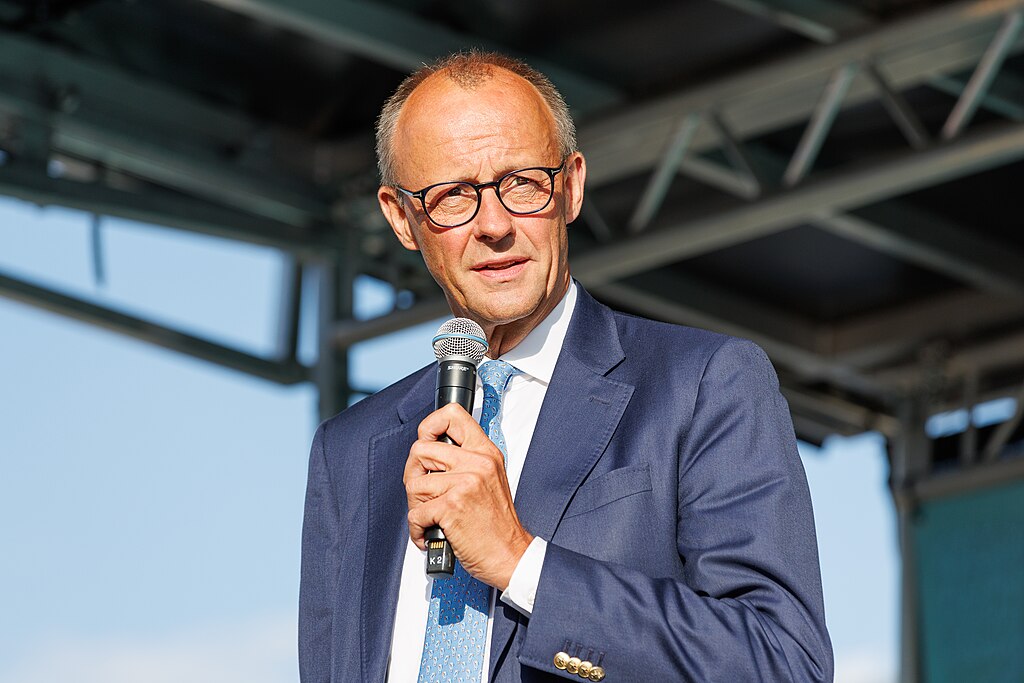
German Chancellor Questions U.S. Leadership as NATO Debate Heats Up
At the high-profile Munich Security Conference, German Chancellor Friedrich Merz delivered pointed remarks suggesting that America’s global leadership role has weakened — and he directed much of that concern toward President Donald Trump’s America-First foreign policy.
Speaking before world leaders, military officials, and diplomats, Merz warned that the United States’ long-standing position as the leader of the Western alliance has been “challenged and possibly lost.”
For many Americans who remember the Cold War, the rebuilding of Europe, and decades of NATO strength, those words hit hard.
Europe Pushes Back on Trump’s Foreign Policy Strategy
Merz’s comments come amid growing European anxiety over:
- President Trump’s tough tariff policies
- Questions surrounding NATO defense spending commitments
- U.S. skepticism toward international institutions
- Rising military pressure from China
- Continued tensions with Russia
While some European leaders have called for forming new coalitions to counterbalance both Washington and Beijing, Merz stopped short of abandoning the United States.
Instead, he urged President Trump to repair what he described as a strained transatlantic partnership.
“In the era of great power rivalry, even the United States will not be powerful enough to go it alone,” Merz said in English, addressing Washington directly.
NATO: Strength or Strain?
At the center of the debate is NATO — the alliance that has defined Western security since World War II.
Merz argued that NATO remains a competitive advantage for both Europe and the United States. He called for rebuilding “transatlantic trust” and strengthening joint defense commitments.
President Trump, however, has repeatedly insisted that European nations must pay their fair share and stop relying disproportionately on American taxpayers to fund their security.
For many conservative voters over 50, this debate feels familiar. For decades, the United States has carried the largest share of NATO defense spending. Trump’s position has been clear: America will lead — but not at America’s expense.
Cultural Divide: Europe vs. America First
Merz also referenced remarks made in 2025 by Vice President J.D. Vance at the Munich conference, where Vance criticized Europe over free speech restrictions and cultural shifts tied to mass migration.
Merz acknowledged that a divide exists.
He defended Europe’s interpretation of free speech laws and rejected tariffs and protectionist trade measures. He reaffirmed support for global climate agreements and institutions like the World Health Organization — policies that differ sharply from President Trump’s more nationalist economic strategy.
This growing cultural and economic divide highlights a larger question:
Is the future of the West built on global institutions — or sovereign nations acting independently?
Secretary of State Rubio Signals “New Era”
Marco Rubio is expected to address the conference this weekend and previewed what he described as a shifting geopolitical landscape.
“The old world is gone,” Rubio said, emphasizing that global power structures are evolving.
That statement reflects what many Americans already feel: the post-Cold War order no longer exists. China’s military expansion, Russia’s assertiveness, and shifting alliances have reshaped global politics.
What This Means for Trump’s Second Term
President Trump has made it clear that his foreign policy is rooted in:
- Fair trade over one-sided agreements
- Strong borders and national sovereignty
- Pressuring allies to contribute more
- Countering China’s military expansion
- Ending endless global financial commitments
European leaders appear divided between adapting to this new American posture or resisting it.
For American voters — especially those who lived through the Cold War and remember strong U.S. leadership — the key question remains:
Can America remain the world’s leading power while demanding fairness from its allies?
The Bigger Picture: A Shift in Western Power
The Munich Security Conference revealed more than just diplomatic tension. It exposed a deeper shift in how Western nations view leadership, sovereignty, and responsibility.
President Trump’s America-First doctrine has reshaped global expectations. Whether Europe adjusts — or continues pushing back — could determine the future of NATO, trade policy, and the Western alliance itself.
One thing is certain: the debate over U.S. leadership is far from over.