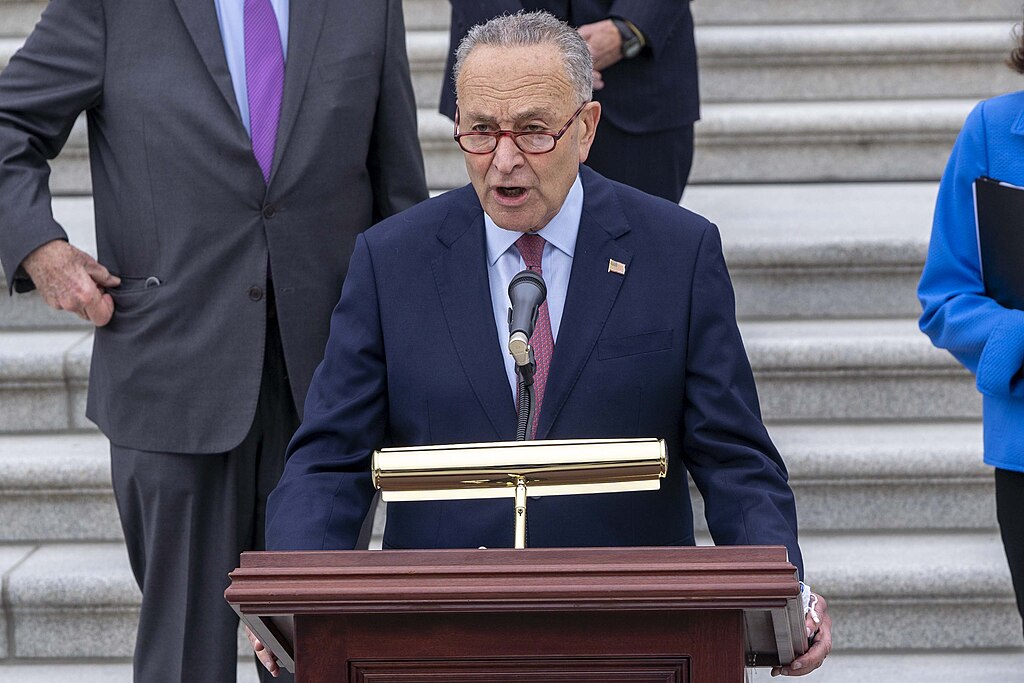
Schumer is standing firm this time.
A new funding standoff in Washington is putting immigration enforcement, border security, and thousands of federal workers in limbo.
Senate Minority Leader Chuck Schumer (D-NY) is standing firm on three key demands tied to funding for the Department of Homeland Security (DHS), as a partial shutdown now affects several major agencies — including TSA, FEMA, and the Coast Guard.
At the center of the debate: Immigration and Customs Enforcement (ICE) and how President Donald Trump’s administration conducts border and interior enforcement.
What Triggered the DHS Shutdown?
The partial shutdown began after lawmakers failed to reach an agreement on updated funding terms for DHS operations. While ICE and Customs and Border Protection previously received allocations under earlier legislation, broader DHS funding expired at the end of the week.
Unlike a full federal shutdown, most other government agencies remain funded through September 30. However, DHS components are now operating under limited authority, and many federal employees are temporarily working without pay.
Border policy chief Tom Homan confirmed that ICE operations are continuing nationwide — but officers are not currently receiving paychecks during the lapse.
Historically, shutdown-related back pay has been approved once funding is restored.
Schumer’s Three Core Demands on ICE
During an appearance on CNN’s State of the Union, Schumer made clear that Democrats will not support a funding agreement unless three changes are made:
- End what he described as “roving” ICE patrol operations
- Increase accountability measures for immigration enforcement officers
- Prohibit ICE agents from wearing masks during enforcement actions
Schumer argues these measures are necessary to reform immigration enforcement practices. Republicans counter that such restrictions could weaken officer safety and hinder operational effectiveness.
Republican Leaders Push Back
Senate Majority Leader John Thune (R-SD) reportedly pushed for a longer negotiation period, while House Speaker Mike Johnson (R-LA) has rejected several of the Democratic proposals outright.
One major point of disagreement is the mask policy. Republican lawmakers argue that ICE agents often operate against dangerous criminal networks and international cartels, and protective measures are sometimes necessary.
Democrats maintain that transparency and identification standards should mirror those of local law enforcement agencies.
White House Counteroffer Rejected
The Trump administration recently proposed expanded use of body cameras for immigration officers and adjustments to certain regional enforcement operations. Democratic leadership declined the offer, saying it did not sufficiently address their reform priorities.
This is now the third government shutdown within three months — although officials note that the current situation is classified as a partial shutdown rather than a full government closure.
What This Means for Border Security and Federal Workers
For many Americans — especially those concerned about border control, public safety, and national security — the shutdown highlights ongoing political divisions over immigration policy.
Key impacts include:
- TSA employees working without immediate pay
- Coast Guard personnel operating under limited funding
- FEMA administrative delays
- Continued ICE enforcement, despite funding uncertainty
While federal workers are expected to receive back pay once funding resumes, the immediate disruption raises concerns about morale and operational strain.
The Bigger Political Picture
Immigration enforcement has been a defining issue of President Trump’s leadership. Supporters argue strong border security policies are necessary to protect American communities and uphold the rule of law. Critics say reforms are needed to increase oversight and limit enforcement practices.
With Congress currently on recess, negotiations are paused — leaving DHS funding unresolved for now.
As lawmakers return, the question remains: Will border enforcement funding move forward unchanged, or will new conditions reshape how ICE operates nationwide?
Why This Story Matters
For Americans — particularly those who prioritize security, fiscal responsibility, and public safety — this funding standoff is more than a political dispute. It directly impacts:
- Border enforcement strategy
- Federal workforce stability
- Taxpayer-funded security operations
- National security readiness
The outcome could influence immigration policy for the remainder of the fiscal year — and potentially shape the broader debate heading into future elections.