This is shocking to see.
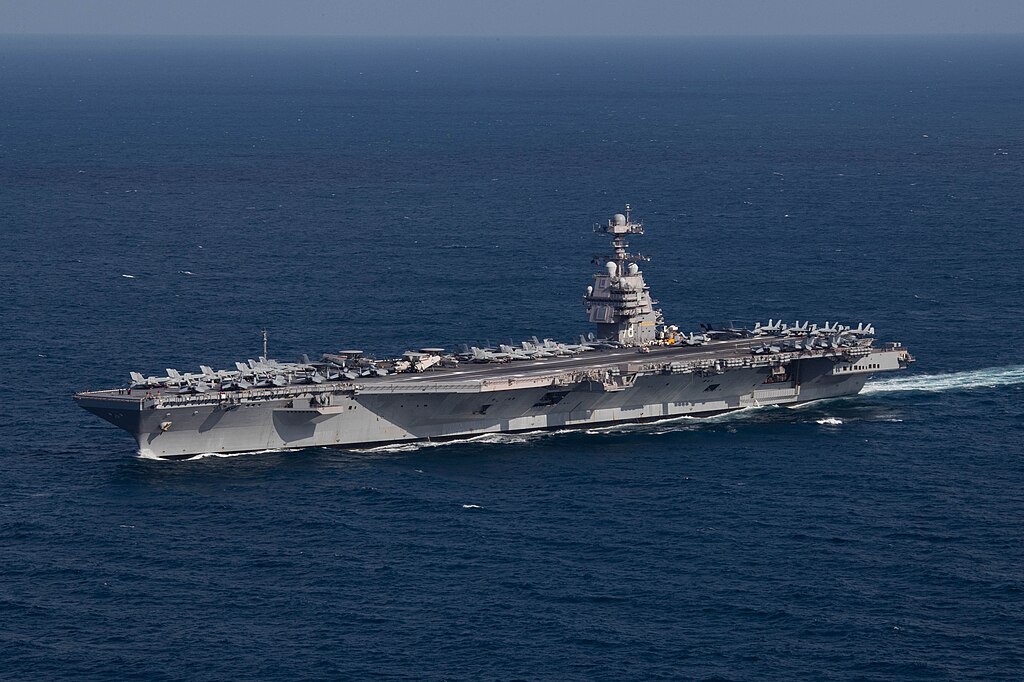
President Donald Trump has ordered one of the most powerful military deployments in recent years, sending the world’s largest aircraft carrier to the Middle East as tensions with Iran escalate.
The move is being widely viewed as a major signal that the United States is prepared for military action if nuclear negotiations with Tehran collapse.
USS Gerald R. Ford
The USS Gerald R. Ford (CVN-78), a nuclear-powered supercarrier and the most advanced warship ever built, has departed the Atlantic and is heading toward the Mediterranean Sea via the Strait of Gibraltar.
Defense analysts say this is not routine positioning — it is a strategic show of force.
The Ford can carry more than 75 aircraft, including stealth strike fighters and electronic warfare jets capable of neutralizing advanced enemy air defenses.
America’s Military Strength on Full Display
The Ford will join the USS Abraham Lincoln carrier strike group already operating in the Middle East. Two carrier strike groups operating simultaneously in the region significantly increases America’s rapid-strike capability.
Alongside the carriers:
- Multiple guided-missile destroyers are operating in the Arabian Sea and Persian Gulf
- Additional naval assets are patrolling the Strait of Hormuz
- U.S. forces are maintaining presence in the Red Sea
This coordinated deployment strengthens both offensive strike capacity and defensive protection for American troops and allies.
Advanced Fighter Jets Moved Into Position
Reports also confirm that more than 50 U.S. fighter aircraft have been relocated to key bases across the Middle East.
These include:
- F-22 Raptor
- F-35 Lightning II
- F-16 Fighting Falcon
The stealth capabilities of the F-22 and F-35 allow them to conduct deep strike missions while avoiding radar detection. Aerial refueling tankers have also been deployed, extending mission range and operational endurance.
This airpower surge dramatically expands U.S. options if military action becomes necessary.
Why Iran Is at the Center of the Crisis
The deployment comes amid stalled negotiations over Iran’s nuclear program. Tehran has long insisted its nuclear activities are peaceful, while U.S. officials warn the regime could move closer to weapons capability.
At the same time, Iran has issued threats of retaliation should the United States strike its facilities. Military drills conducted near the Strait of Hormuz — a vital global oil chokepoint — have added to the tension.
For Americans watching from home, the implications are significant:
- Oil prices and gas costs could fluctuate
- U.S. troops stationed in the region face heightened risk
- America’s credibility on the world stage is being tested
President Trump has repeatedly stated that all options remain on the table if diplomacy fails.
Strategic Message to the World
To supporters, this buildup represents a return to strong deterrence — projecting American military power to prevent conflict before it starts.
Two carrier strike groups.
Stealth fighter squadrons.
Missile-armed destroyers guarding global shipping lanes.
It is one of the clearest signals yet that the United States will not tolerate nuclear escalation in the Middle East.
Whether this show of force pushes Iran back to negotiations — or leads to further confrontation — remains to be seen.
But one thing is certain: America’s military is now firmly positioned at the center of the unfolding crisis.