Here’s what Americans need to know.
President Donald Trump has ordered a major military deployment to the Middle East, sending additional troops and naval power to the region as tensions with Iran continue to rise.
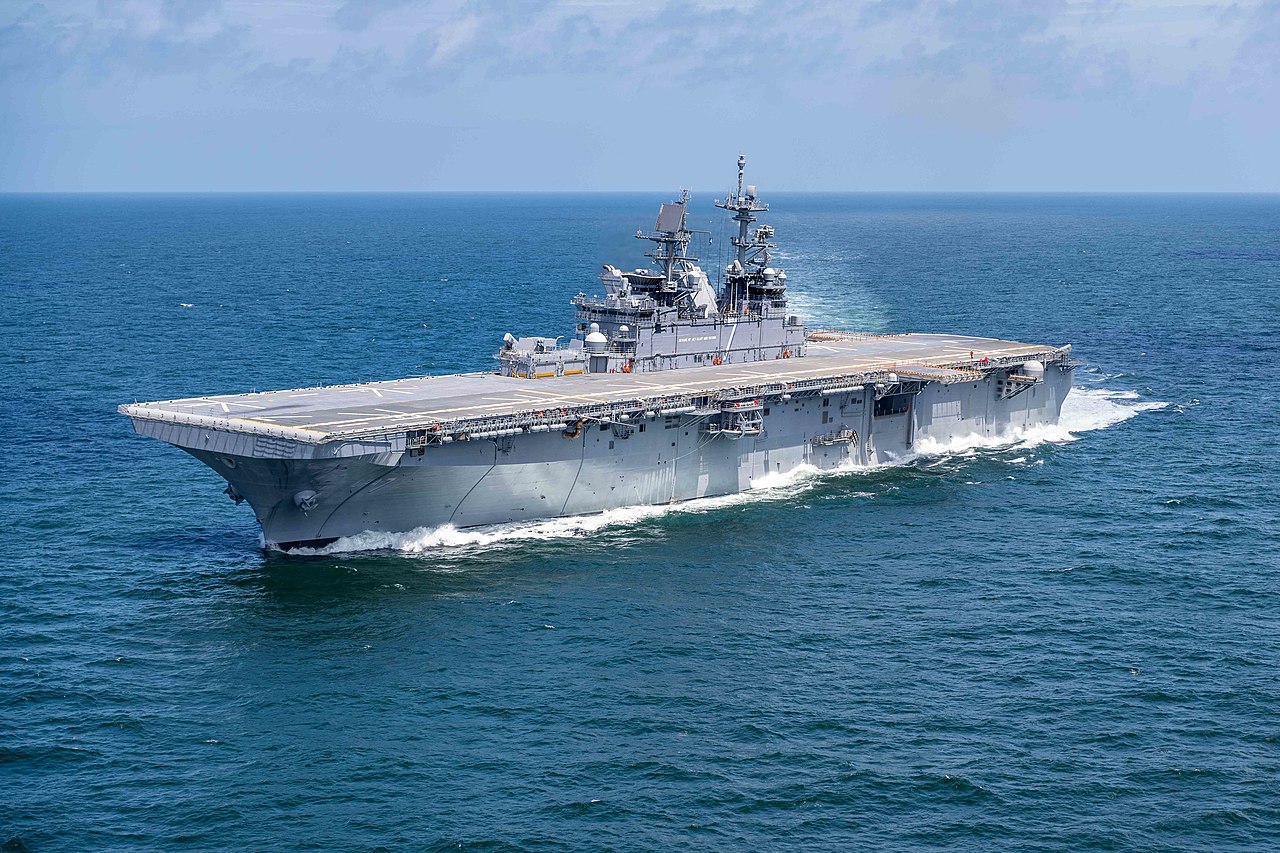
The Pentagon is moving the USS Tripoli, a powerful amphibious assault ship, along with thousands of American service members. The move comes after Trump warned that the United States is prepared to unleash “unparalleled firepower” if Iran continues threatening global stability.
The deployment signals that the Trump administration is taking a harder military stance against Iran, particularly around the critical Strait of Hormuz, one of the most important oil shipping routes in the world.
USS Tripoli Heads Toward Middle East
The USS Tripoli, currently based in Japan, has begun moving toward the Middle East. The ship resembles a small aircraft carrier but is designed for amphibious combat operations and rapid troop deployment.
According to reports, Defense Secretary Pete Hegseth authorized sending an element of an Amphibious Ready Group along with a Marine Expeditionary Unit.
These military groups often include multiple warships and thousands of Marines capable of launching operations from the sea.
Some reports suggest the deployment could involve as many as 5,000 Marines and sailors, while other sources indicate roughly 2,500 Marines are currently part of the repositioning.
Satellite tracking previously spotted the Tripoli sailing south of Taiwan, leaving analysts unsure whether it will soon link up with the rest of its strike group.
Additional Warships May Join the Operation
Military observers say the USS Tripoli could be joined by two large amphibious transport ships:
- USS San Diego
- USS New Orleans
These vessels are designed to move Marines, aircraft, and military equipment into combat zones quickly.
Together, these ships form the Tripoli Amphibious Ready Group, a powerful naval force capable of conducting rapid military operations close to shore.
Pentagon officials have not confirmed the exact scale of the deployment.
A Defense Department official said the military does not discuss future troop movements for security reasons.
Strait of Hormuz Remains a Global Flashpoint
The growing U.S. military presence comes as tensions remain high around the Strait of Hormuz, a narrow but critically important waterway.
Roughly 20 percent of the world’s oil supply passes through this shipping route every day. Any disruption can immediately impact global energy prices.
Energy Secretary Chris Wright previously predicted that efforts were underway to stabilize the region and restore full access to the waterway by the end of the month.
However, Iranian forces continue to exert influence in the area, making it one of the most dangerous geopolitical flashpoints in the world.
Iran’s Oil Infrastructure Also Under Scrutiny
Military planners have reportedly evaluated several strategies for weakening Iran’s economic power.
One potential target discussed by officials is Kharg Island, the location responsible for roughly 90 percent of Iran’s oil exports.
If Iran lost control of that infrastructure, analysts say it could deal a severe blow to the country’s economy.
However, President Trump suggested that such an option is not currently the top priority.
Speaking in a recent Fox News Radio interview, Trump made it clear that the administration is keeping its options open.
“It’s not high on the list, but it’s one of many things we could do,” Trump said. “I can change my mind in seconds.”
For now, reports indicate that Iran’s oil exports have continued despite the ongoing conflict.
U.S. Sends Thousands of Interceptor Drones
The Trump administration is also strengthening defenses against Iranian drone attacks.
Army Secretary Dan Driscoll confirmed that the United States has sent 10,000 interceptor drones to the Middle East.
These drones are designed to shoot down Iranian attack drones targeting American forces and U.S. allies in the region.
The interceptor drones, known as Merops drones, were developed by the defense technology program Project Eagle, which has backing from former Google CEO Eric Schmidt.
Each drone costs between $14,000 and $15,000, making them significantly cheaper than Iran’s Shahed drones, which cost roughly $20,000 or more.
That price difference gives the United States a financial advantage in prolonged drone warfare.
“We’re actually on the better end of the cost curve,” Driscoll explained in an interview.
“So every time Iran launches a drone that we destroy, they’re losing a meaningful amount of money.”
Trump Rejects Foreign Help on Drone Defense
Ukraine President Volodymyr Zelensky recently offered assistance in shooting down Iranian drones in the region.
But President Trump dismissed the idea, saying the United States already leads the world in drone technology.
“We don’t need their help,” he said. “The United States understands drone technology better than anyone, and we already operate the most advanced drones anywhere in the world.”
Growing Military Pressure on Iran
With additional troops, naval forces, and advanced drone defenses being deployed, the United States is building significant military pressure on Iran.
The Trump administration appears determined to ensure that American forces and allies in the Middle East remain protected while also defending critical global shipping routes.
Whether the deployment is meant purely as a deterrent or signals preparation for broader military action remains uncertain.
What is clear, however, is that the U.S. military presence in the Middle East is rapidly expanding, and the situation could evolve quickly in the weeks ahead.