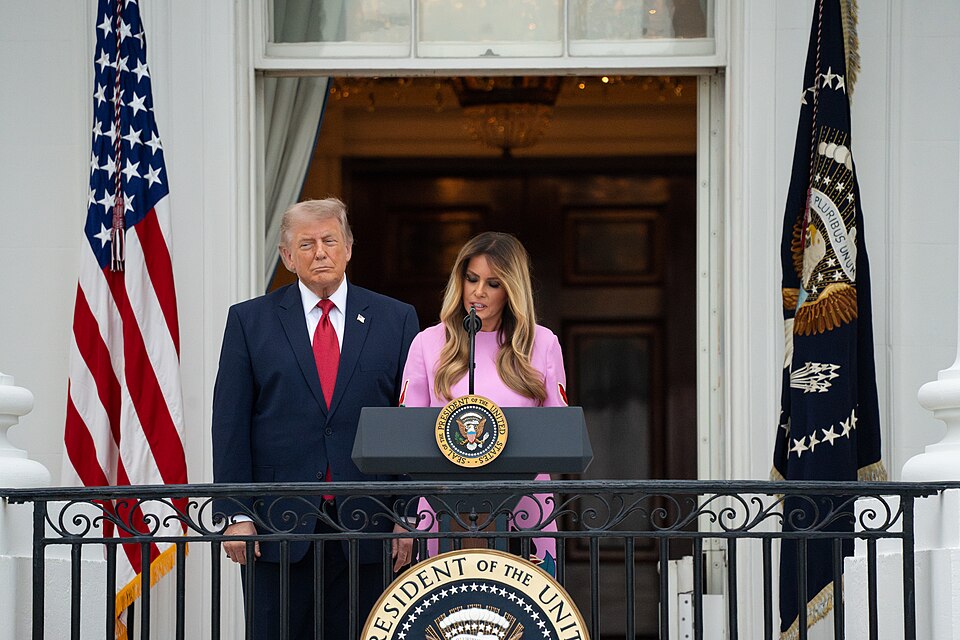
This is what a REAL First Lady does things.
First Lady Melania Trump is launching a new initiative designed to give some of America’s most vulnerable children a stronger financial foundation and a better chance at achieving the American Dream.
Standing alongside Treasury Secretary Scott Bessent on Thursday, Melania announced the creation of Fostering the Future Accounts, a program that expands access to investment accounts for children growing up in foster care.
Supporters say the effort could help thousands of young Americans build savings, learn the value of investing, and enter adulthood with greater financial security.
Giving Foster Children a Financial Head Start
The new program builds upon the Trump Administration’s Trump Accounts initiative, which provides a $1,000 government-funded investment contribution for eligible newborns when an account is opened in their name.
Under new federal guidance, state child welfare agencies will now be allowed to act as guardians for foster children for the purpose of opening and managing these accounts.
Melania Trump said the goal is to ensure foster children have access to the same opportunities available to other American children.
“This initiative gives foster children the same opportunity for asset ownership and long-term financial growth as every other child,” the First Lady said during the announcement.
For many children in foster care, supporters argue that even a modest financial foundation can make a meaningful difference later in life.
A Long-Term Investment in America’s Future
The accounts are scheduled to open on July 4, a symbolic date that underscores the program’s focus on opportunity and independence.
Eligible children must be U.S. citizens born between January 1, 2025, and December 31, 2028.
According to predictions from the White House Council of Economic Advisers, a baby born in 2026 who receives the initial contribution could see the account grow to around $5,800 by 18 and more than $18,000 by the age of 28—even if no additional contributions are made.
Families, employers, charitable organizations, and private donors may also contribute additional funds, potentially increasing the long-term value of the accounts significantly.
Supporters say the program encourages financial literacy, personal responsibility, and wealth-building at an early age.
Addressing Challenges Facing Foster Youth
The announcement comes as many foster care advocates continue to raise concerns about the challenges young adults face after leaving the foster care system.
National adoption organizations estimate that roughly 330,000 children currently live in foster care across the United States.
Many struggle to find stable housing, secure steady employment, or pursue higher education after aging out of the system.
Treasury Secretary Scott Bessent said those statistics should motivate leaders to pursue practical solutions.
“Those outcomes are troubling, but we do not accept them as inevitable,” Bessent said. “The American Dream belongs to every child.”
Administration officials believe providing financial assets at an early age can help improve long-term outcomes and create new opportunities for foster youth as they transition into adulthood.
Governors and Business Leaders Join the Effort
Melania Trump also announced that 23 governors have already pledged to work with their state agencies to begin enrolling eligible children.
She called on additional governors, community leaders, businesses, and philanthropists to support the initiative and expand its reach.
“I encourage every governor and business leader to help make these accounts a success,” she said.
Private-sector support has already begun flowing into the broader Trump Accounts program.
Business leaders and major philanthropists have pledged significant resources to help grow the accounts and increase participation.
Among the most notable commitments, Michael and Susan Dell announced plans involving billions of dollars in charitable support tied to the initiative. Investor Ray Dalio and his wife Barbara have also pledged substantial funding to support children and families.
Strengthening the American Dream
Supporters argue that the program reflects a simple but powerful principle: every child deserves the opportunity to build a better future.
Rather than relying solely on government assistance later in life, the initiative seeks to help young Americans begin adulthood with savings, investment experience, and a financial asset that can support education, homeownership, entrepreneurship, or other life goals.
For foster children who often face significant obstacles, advocates say that opportunity could prove life-changing.
As enrollment begins later this year, the Trump Administration says its focus remains on helping more American children gain access to financial tools that encourage independence, responsibility, and long-term success.
For many supporters, the program represents more than a savings account. It is an investment in the next generation of Americans and a renewed commitment to ensuring that every child has a chance to pursue the American Dream.