Here’s what Newsom is claiming now.
California Governor Gavin Newsom is once again taking aim at President Donald Trump, this time claiming the president refused to sign a bipartisan housing bill because it resembled policies already being used in California.
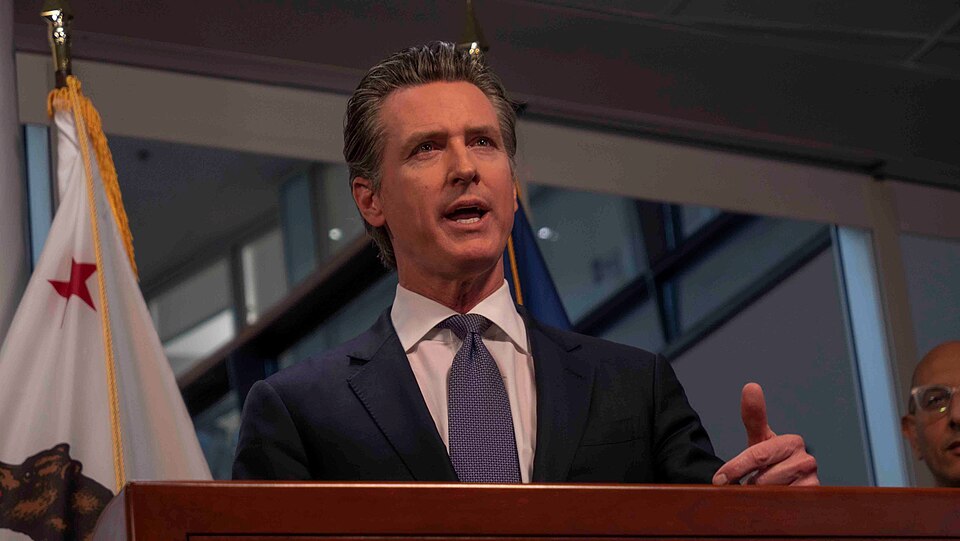
The comments came Monday as Newsom signed new affordable housing legislation in California. During the event, he argued that government leaders should focus on cutting construction costs, reducing unnecessary regulations, and building more homes to address the nation’s housing shortage.
According to Newsom, many of the ideas included in the federal housing package closely mirror reforms California has already pursued.
“The president may not know because he didn’t take the time to sign the bill,” Newsom said. “Take a look at the federal housing legislation. It looks a lot like what we’ve been doing here in California.”
The Democratic governor pointed to reforms involving the National Environmental Policy Act (NEPA) and California’s Environmental Quality Act (CEQA), two environmental review laws that critics argue have slowed construction projects and driven up housing costs through lengthy permitting requirements.
Newsom praised the 21st Century ROAD to Housing Act, saying it contains several proposals designed to increase the nation’s housing supply, improve affordability, and reduce barriers to new residential development. The legislation also includes provisions intended to discourage large investment firms from purchasing excessive numbers of single-family homes.
Later in the event, Newsom suggested the similarities between the federal bill and California’s approach may explain why Trump chose not to sign it.
“I wasn’t joking when I said it looks a lot like California,” Newsom said. “That may have been one reason President Trump didn’t sign it, even though I believe there were a number of smart ideas included.”
The governor also acknowledged that Washington had recently produced some bipartisan legislation he viewed positively, adding that the housing measure could complement efforts already underway in states and local communities to expand housing opportunities.
Why the Bill Became Law Without Trump’s Signature
Although President Trump declined to sign the legislation, the measure still became law over the weekend under a constitutional provision that allows bills approved by both the House and Senate to automatically take effect if the president neither signs nor vetoes them within 10 days, excluding Sundays.
The housing bill passed both chambers of Congress with overwhelming bipartisan support.
Trump had originally been scheduled to sign the legislation during a ceremony on Capitol Hill. However, he canceled the event at the last minute and instead urged lawmakers to focus on one of his top legislative priorities: the Safeguard American Voter Eligibility (SAVE America) Act, which seeks to strengthen election security by requiring proof of citizenship for federal voter registration.
Speaking afterward, Trump dismissed the housing legislation as a lower priority.
“It’s so unimportant compared to the SAVE America Act,” Trump told reporters. “Compared to election security, just about everything else is a big yawn.”
Political Fight Continues
The latest exchange highlights the ongoing political rivalry between Trump and Newsom, who have frequently clashed over housing policy, immigration, environmental regulations, and the role of the federal government.
With the 2028 presidential election already generating speculation, their public disagreements continue to draw national attention as both leaders promote sharply different visions for the country’s future.