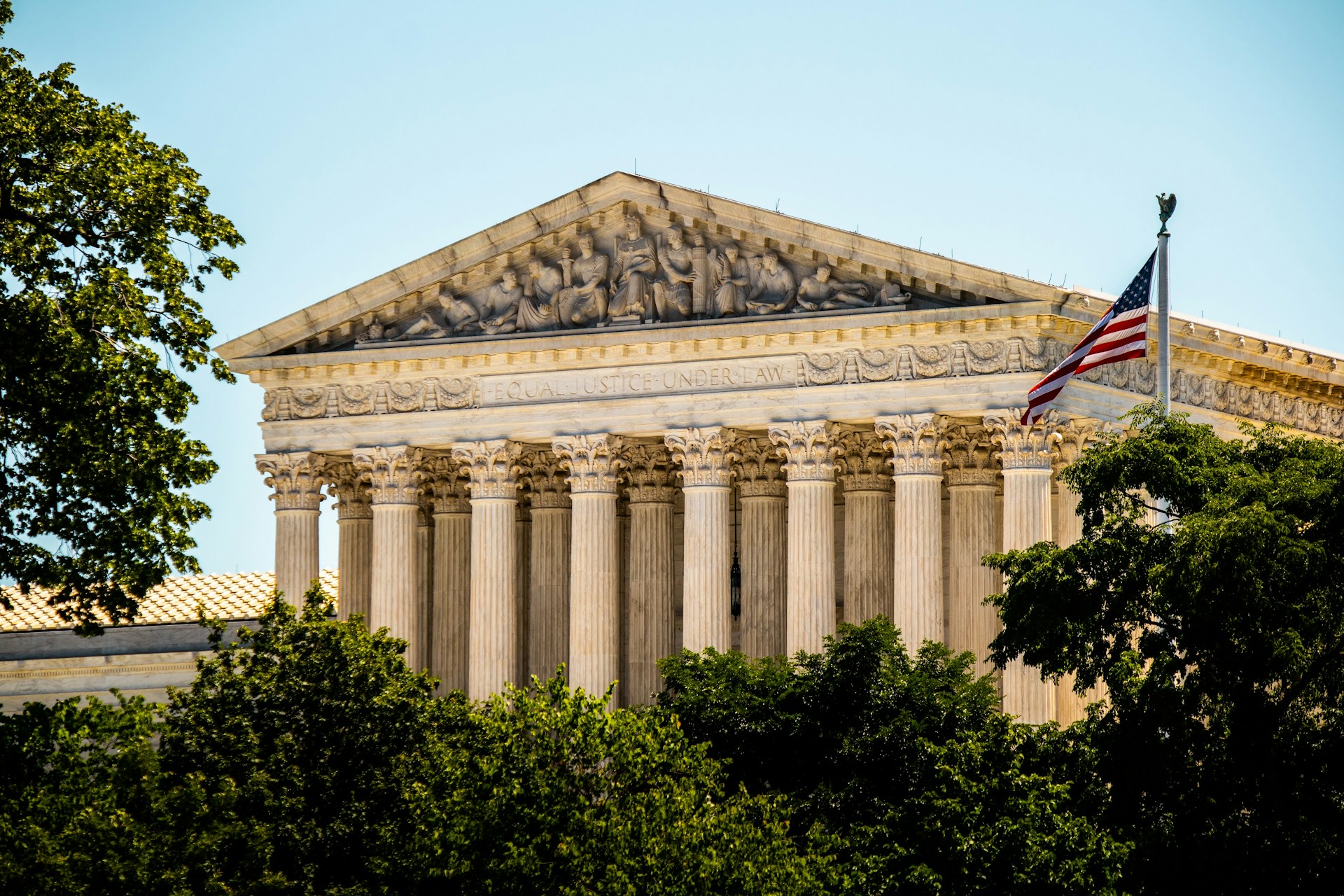
A new national poll is sending a clear message about how many Americans view the U.S. Supreme Court after one of its most consequential terms in years.
While the court delivered several major victories for President Donald Trump, many Americans remain divided over whether the justices are deciding cases based on the Constitution and the law—or allowing politics to influence their decisions.
According to a new Washington Post-Ipsos poll, 46 percent of Americans believe the Supreme Court’s decisions involving Trump administration policies are driven primarily by the political views of the justices. Only one in four respondents said the court is ruling strictly according to the law, while nearly 30 percent said they were unsure.
Among those who believe politics plays the biggest role, roughly two-thirds said the court’s rulings have generally favored Trump. Seventeen percent said the decisions have mostly worked against him, while another 17 percent believe the rulings have been balanced.
The survey follows a Supreme Court term packed with high-profile decisions that reshaped several major areas of federal policy.
During the term, the Supreme Court expanded presidential authority by giving the Trump administration broader power to dismiss leaders of certain independent federal agencies. The justices also cleared the way for tougher asylum enforcement at the southern border, allowed the administration to end deportation protections for thousands of Haitian and Syrian migrants, and upheld state laws that limit transgender athletes from participating in girls’ and women’s school sports.
Those rulings were viewed by many conservatives as victories for state authority, border security, and executive power.
However, the Supreme Court did not side with Trump in every major legal battle.
Earlier this year, the Supreme Court blocked the administration’s sweeping global tariff plan, overturned an executive order aimed at ending birthright citizenship, and determined that a Federal Reserve governor could not be dismissed under the specific circumstances involved in the case.
Despite those mixed outcomes, overall public approval of the Supreme Court remains below water.
The Washington Post-Ipsos poll found that 55 percent of Americans disapprove of the court’s overall performance, while 41 percent approve.
The divide becomes even more noticeable when viewed through a political lens.
Nearly two-thirds of Republicans said they approve of the Supreme Court, which currently holds a 6-3 conservative majority. In contrast, roughly three-quarters of Democrats disapprove, while nearly six in ten independents also hold an unfavorable view of the court.
The results reflect a broader decline in public trust toward many of America’s major institutions.
Recent surveys have found declining confidence not only in the Supreme Court but also in Congress, the presidency, public schools, the criminal justice system, and other long-standing institutions.
A separate Gallup survey reached a similar conclusion, finding that only 27 percent of Americans have either “a great deal” or “quite a lot” of confidence in the Supreme Court. That figure is roughly equal to public confidence in the presidency.
Justice Amy Coney Barrett acknowledged this week that the Supreme Court is facing increasing public scrutiny.
Appearing before lawmakers during budget hearings on Capitol Hill, Barrett said the justices recognize the importance of maintaining the public’s trust and demonstrating that they take their constitutional responsibilities seriously.
“I think we have to demonstrate at every turn that we are understanding of the kind of morality that we need to have, and that we need to demonstrate to the public about how important we take the roles that we have, and that we’re not somehow abridging the system or abusing the system,” Barrett said.
As the Supreme Court prepares for another term filled with major constitutional disputes, public confidence in the nation’s highest court is likely to remain under close scrutiny. With landmark decisions continuing to shape immigration, executive authority, and other key issues, the debate over the court’s role in American government is unlikely to fade anytime soon.