This was surprising to see.
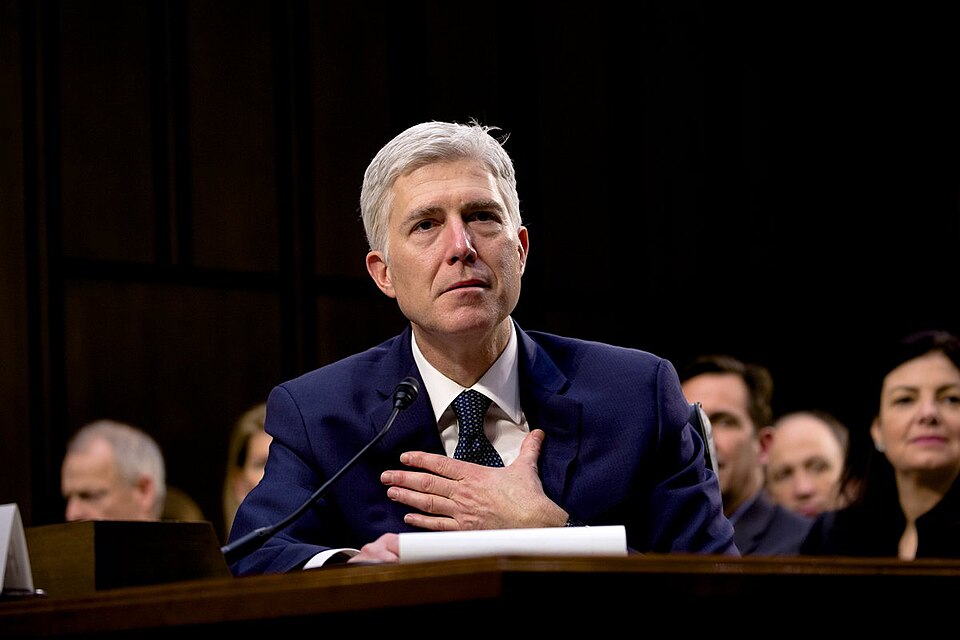
Supreme Court Justice Neil Gorsuch is making headlines after comments that appeared to put him at odds with a position championed by Vice President JD Vance, sparking a fresh debate among conservatives over America’s founding principles, religious liberty, and the Constitution.
Speaking during a recent appearance on PBS’ Firing Line, Gorsuch argued that the United States was founded on the ideals of freedom and equality under the law rather than as a nation dedicated to a single race or religion. His remarks have drawn attention because they contrast with Vance’s previous statements emphasizing Christianity’s central role in shaping the nation’s identity.
Gorsuch Defends America’s Founding Principles
During the interview, Gorsuch said the American colonies attracted people from a wide range of religious backgrounds who sought the freedom to worship according to their own beliefs. He argued that religious pluralism has been woven into the nation’s history since its earliest days.
According to Gorsuch, the country’s greatest strength lies in the timeless principles outlined by the Founding Fathers, including life, liberty, and the pursuit of happiness. He said those ideals speak to people of every background and continue to unite Americans regardless of political or religious differences.
The Supreme Court justice also stressed that the Constitution was designed to protect individual freedoms instead of establishing a government centered on one particular faith. His comments immediately fueled discussion across conservative circles about how America’s religious heritage should be understood alongside its constitutional framework.
JD Vance Presents A Different Perspective
Gorsuch’s remarks stand in contrast to comments made by Vice President JD Vance during Turning Point USA’s AmericaFest conference last year.
Vance argued that Christianity has served as America’s shared moral foundation throughout much of the nation’s history, influencing everything from the Revolutionary War to the Civil War and beyond. He said many of the country’s defining debates have revolved around questions of faith, morality, and how Americans should honor God in public life.
The vice president also pointed to Christian teachings as a major influence on America’s understanding of natural rights, personal responsibility, caring for neighbors, protecting the vulnerable, and respecting individual conscience.
In Vance’s view, even the nation’s commitment to religious liberty reflects Christian principles because every individual is created by God and deserves the freedom to seek Him according to their own conscience.
Gorsuch Points To The Constitution
While acknowledging America’s deep religious roots, Gorsuch emphasized that the Constitution protects every citizen equally regardless of religious affiliation.
He noted that Charles Carroll—the only Catholic signer of the Declaration of Independence—worked alongside founders from a variety of Christian traditions. He also highlighted the presence of religious communities such as the Amish and Quakers, many of whom came to the American colonies seeking protection from religious persecution in Europe.
For Gorsuch, those historical examples reinforce the idea that America has long welcomed people of different faiths while protecting their right to worship freely.
The justice also pointed directly to the First Amendment, which prohibits the establishment of a national religion while guaranteeing freedom of religion and freedom of speech for every American.
According to Gorsuch, equal treatment under the law remains one of the nation’s defining constitutional principles and serves as common ground for citizens with differing political and religious beliefs.
Why The Debate Matters
The exchange between Gorsuch and Vance highlights an ongoing conversation within the conservative movement about America’s identity.
Many conservatives argue the United States cannot be fully understood without recognizing Christianity’s profound influence on the country’s laws, customs, and moral traditions. Others emphasize that while faith played a significant historical role, the Constitution deliberately protects religious freedom by preventing the federal government from establishing an official national religion.
The discussion also reflects broader questions surrounding constitutional originalism, religious liberty, and the role faith should play in public life—issues that continue to shape Supreme Court cases and national political debates.
Looking Ahead
Justice Gorsuch’s comments are unlikely to end the discussion. Instead, they have reignited an important constitutional debate over how Americans should interpret the nation’s founding principles while preserving the freedoms guaranteed by the Constitution.
As President Donald Trump’s administration continues to shape the federal judiciary and the Supreme Court prepares to hear another series of high-profile cases, questions surrounding religious liberty, constitutional rights, and America’s founding ideals are expected to remain at the center of public debate.
Whether Americans agree more with Gorsuch’s constitutional interpretation or Vance’s emphasis on the country’s Christian heritage, the conversation underscores how the nation’s founding principles continue to influence politics, the courts, and the future of the United States.