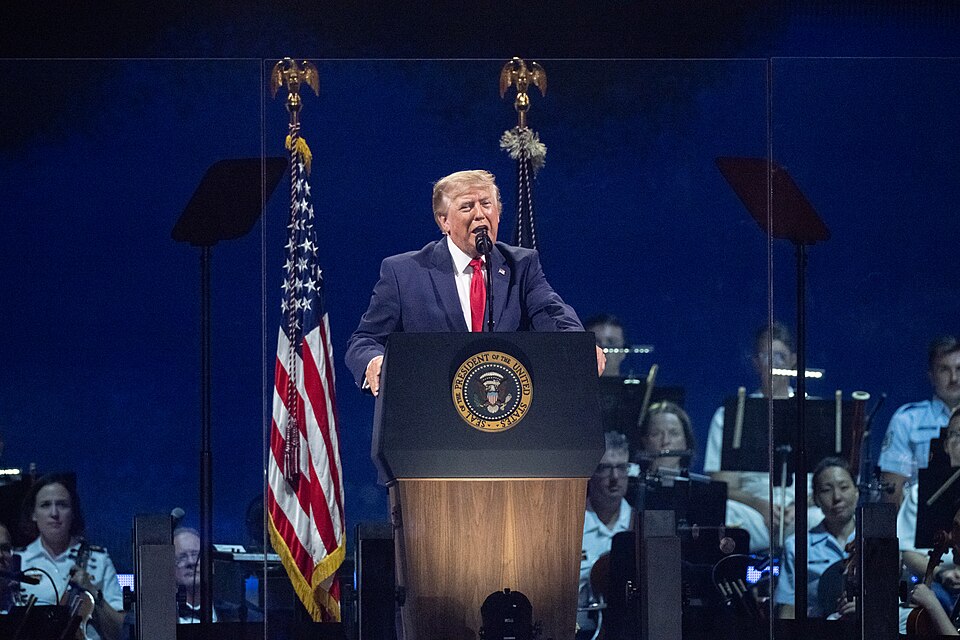
Trump and MAGA are not happy with these troublesome “republicans”.
President Donald Trump’s effort to secure Senate confirmation for acting Attorney General Todd Blanche has reached a pivotal moment after one Republican senator announced she will oppose his nomination.
Blanche recently cleared an important hurdle by advancing through the Senate Judiciary Committee, but the battle is far from over. As the nomination heads to the full Senate, Republicans have almost no room for error, making every vote critical.
That reality became even clearer when Sen. Susan Collins (R-Maine) revealed she will vote against confirming Blanche, creating a new challenge for Republican leaders hoping to finalize one of President Trump’s most important Justice Department appointments before lawmakers leave Washington for the August recess.
In a statement explaining her decision, Collins praised Blanche’s legal credentials but said she could not support his nomination because of concerns about the direction of the Department of Justice.
According to Collins, the Justice Department has become increasingly political in recent years, and she believes several actions taken during Blanche’s tenure have further weakened the agency’s independence.
After reviewing Blanche’s record, written responses to senators, and testimony during his confirmation process, Collins concluded that she could not support placing him in the nation’s top law enforcement position.
Among the issues she highlighted were reports involving IRS audit protections connected to President Trump and members of his family, as well as the now-defunct anti-weaponization fund that sparked debate among Senate Republicans earlier this year.
Collins also pointed to Blanche’s positions on enforcing federal abortion laws, his efforts involving Democratic Sens. Mark Kelly of Arizona and Elissa Slotkin of Michigan, and criticism voiced by more than 1,200 current and former Justice Department employees.
Following that review, Collins announced she would vote against the nomination, delivering an important setback for the Trump administration at a crucial stage of the confirmation process.
While her opposition does not automatically derail Blanche’s nomination, it significantly tightens the vote count.
Republicans hold only a narrow majority in the Senate, meaning party leaders can afford very few defections if they hope to confirm President Trump’s nominee.
The situation is made even more complicated because Sen. Mitch McConnell (R-Ky.) remains away from the Senate while recovering from health issues. With no firm timetable for his return, Republican leaders cannot count on his vote as they calculate the path to confirmation.
Attention is now turning toward several Republican senators who have not publicly committed to supporting Blanche.
Among those being closely watched are Sens. Lisa Murkowski (R-Alaska), John Curtis (R-Utah), and Bill Cassidy (R-La.). Their decisions could ultimately determine whether Blanche receives enough support to become attorney general.
Earlier in the confirmation process, Blanche and the Department of Justice reached an agreement with Sens. Thom Tillis (R-N.C.) and John Cornyn (R-Texas) that helped secure their support in committee.
As part of that agreement, the administration formally ended the proposed anti-weaponization fund and narrowed the reported scope of IRS audit protections involving President Trump and his family.
That compromise helped Blanche advance out of committee, but it has not ended the controversy.
Some lawmakers remain skeptical, arguing there is no binding legal mechanism preventing a future attorney general from reversing parts of the agreement after confirmation.
Those concerns continue to fuel debate inside the Republican conference as senators weigh whether the commitments made during the nomination process are sufficient.
The uncertainty also creates a major challenge for Senate Majority Leader John Thune (R-S.D.), who has been working to move President Trump’s nominees through the confirmation process before lawmakers depart Washington for the Senate’s extended August break.
With the legislative calendar quickly shrinking, Republican leaders are under increasing pressure to lock down every available vote.
For President Trump, confirming Blanche would represent another key victory as his administration continues reshaping the Justice Department and advancing its broader legal and law enforcement agenda.
For opponents, however, the nomination has become another high-profile battle over the future direction and independence of the Department of Justice.
As the Senate prepares for a final vote, the outcome may ultimately hinge on whether Republican leadership can unify nearly every member of its conference.
With Susan Collins firmly opposed, Mitch McConnell still absent, and several Republican senators yet to publicly declare their positions, Todd Blanche’s confirmation remains one of the most closely watched political fights on Capitol Hill.
The coming days will reveal whether President Trump can secure another major confirmation victory or whether a handful of Republican votes will determine the fate of one of his most important Cabinet-level appointments.