Here’s what happened.
America’s emergency oil stockpile has fallen below 300 million barrels for the first time in more than four decades, putting renewed attention on U.S. energy security as President Donald Trump confronts disruptions to the global oil market.
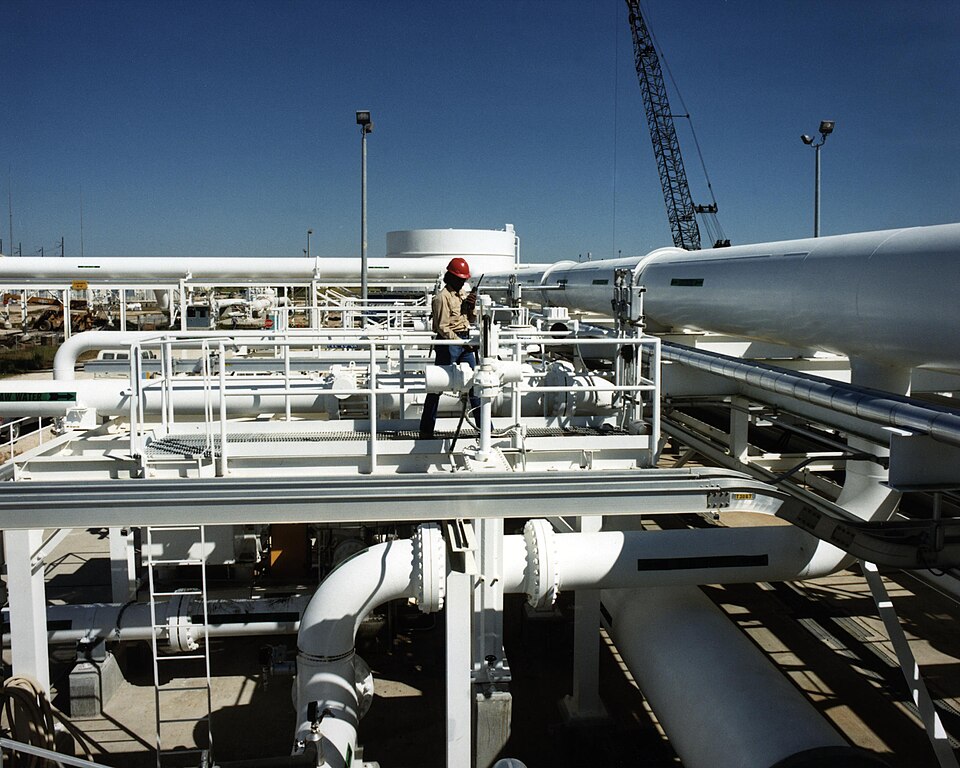
The Strategic Petroleum Reserve, or SPR, contained approximately 298.7 million barrels of crude oil as of Friday, according to new data from the U.S. Department of Energy.
The milestone puts America’s emergency reserve at a level not seen since the early 1980s, when the federal government was still building the stockpile.
And the decline may not be over yet.
Additional withdrawals are expected as previously authorized releases continue, potentially leaving the Trump administration with an important decision about when — and how aggressively — to begin rebuilding America’s emergency oil supplies.
Why Is the Strategic Petroleum Reserve Falling?
The decline below 300 million barrels was not unexpected.
The Trump administration announced in March that 172 million barrels would be released from the Strategic Petroleum Reserve over a 120-day period.
Those withdrawals are taking place as instability involving Iran has created new concerns about global energy supplies and shipping through the Strait of Hormuz.
The Strait of Hormuz is one of the world’s most important oil transportation routes. Any significant disruption to shipping through the region can tighten global supplies and contribute to higher crude oil prices.
That can eventually hit Americans where they notice it most: the gas pump.
Higher energy prices can also spread throughout the economy because trucking companies, airlines, manufacturers, farmers and other businesses rely heavily on fuel.
When transportation and production expenses increase, consumers can ultimately face higher prices for everyday goods and services.
What Is the Strategic Petroleum Reserve?
The Strategic Petroleum Reserve is the federal government’s emergency supply of crude oil.
Congress established the SPR in 1975 after the Arab oil embargo exposed America’s vulnerability to major disruptions in foreign energy supplies.
The reserve was designed to provide the country with an emergency cushion that could be tapped during severe supply interruptions and other major energy emergencies.
It is important, however, to distinguish the SPR from America’s overall oil supply.
A declining Strategic Petroleum Reserve does not mean the United States is running out of oil.
Private energy companies maintain substantial commercial inventories, while domestic producers continue extracting oil across the country.
Instead, the SPR functions as a national emergency backup.
That distinction is particularly important when evaluating what the latest decline actually means for American consumers.
America’s Reserve Can Hold Far More Oil
The Strategic Petroleum Reserve is authorized to hold as much as 714 million barrels of crude oil.
Actual inventories have fluctuated significantly over the years as Republican and Democratic administrations — along with Congress — authorized sales and emergency releases for various purposes.
At its current level of approximately 298.7 million barrels, the reserve contains less than half of its authorized capacity.
That leaves Washington facing a familiar debate over how much oil America should keep available for a future emergency.
Biden Also Made Historic Withdrawals
The current situation comes several years after former President Joe Biden authorized one of the largest releases in the history of the Strategic Petroleum Reserve.
In 2022, the Biden administration announced that 180 million barrels would be released after Russia’s invasion of Ukraine contributed to soaring global energy prices.
The decision became a major political issue.
Republican critics argued that draining such a large amount from America’s emergency stockpile could leave the country more vulnerable to a future crisis.
The Biden administration defended the decision as necessary to increase supplies during a period of rapidly rising fuel prices and international uncertainty.
Now the Trump administration faces its own challenge involving the reserve.
Trump Faces a Difficult Energy Decision
President Trump must balance two competing priorities.
The first is protecting American families and businesses from energy price spikes during a period of international instability.
The second is ensuring the United States maintains enough emergency oil to respond if another major supply disruption occurs.
Releasing oil from the SPR can put additional crude onto the market during periods of tight supply.
But every barrel withdrawn also reduces the country’s emergency cushion until that oil is eventually replaced.
For Americans who remember the gasoline shortages and long lines of the 1970s, the purpose of maintaining a strong emergency reserve is especially clear.
America learned decades ago that energy security and national security can be closely connected.
Strategic Petroleum Reserve Could Fall Further
Patrick De Haan, head of petroleum analysis at GasBuddy, has indicated that the reserve’s decline is likely to continue for several more weeks while the authorized release is completed.
That means the 300-million-barrel threshold may not represent the bottom.
The key question will be how low inventories ultimately fall — and what the Trump administration decides to do afterward.
Replenishing the reserve would provide greater protection against another emergency, but purchasing millions of barrels also requires federal spending and must be managed carefully.
Waiting too long presents a different risk.
Another geopolitical conflict, hurricane, infrastructure problem or major disruption to global oil supplies could leave Washington wishing it had a larger emergency stockpile available.
Why This Matters for American Drivers
For most households, the immediate concern is gasoline prices.
The amount of oil stored in the SPR does not directly determine what motorists pay at the pump. Gas prices are influenced by numerous factors, including global crude prices, refinery operations, seasonal fuel requirements, transportation costs, taxes and supply and demand.
Still, the SPR gives the federal government another tool for responding when severe disruptions threaten energy markets.
With the reserve now below 300 million barrels, that emergency cushion has become considerably smaller than it once was.
Energy Independence Returns to the Spotlight
The latest numbers are likely to strengthen conservative arguments for expanding American energy production and reducing dependence on unstable foreign suppliers.
The United States possesses enormous oil and natural gas resources.
Supporters of Trump’s energy agenda have long argued that increasing domestic production, expanding infrastructure and maintaining adequate emergency reserves can help shield American consumers from turmoil overseas.
Critics may counter that aggressively expanding production alone cannot insulate Americans from a global oil market where prices respond to international events.
Both realities make the size of America’s emergency stockpile worth watching.
What Happens Next?
The Trump administration’s next move could be just as important as the withdrawals themselves.
Once the current releases are completed, Washington will have to determine whether to begin rebuilding the Strategic Petroleum Reserve, how quickly to purchase replacement oil and what inventory level provides sufficient protection for another emergency.
Those decisions will involve more than numbers on an Energy Department spreadsheet.
They involve taxpayer dollars, gasoline prices, domestic energy production and America’s ability to respond to the next unexpected global crisis.
The United States created the Strategic Petroleum Reserve after learning a painful lesson about relying on an unpredictable global energy market.
More than 50 years later, that lesson has suddenly become relevant again.
With America’s emergency oil reserve now below 300 million barrels and additional declines potentially ahead, Trump faces a critical question: How low can the nation’s emergency stockpile safely go?