Here’s what happened.
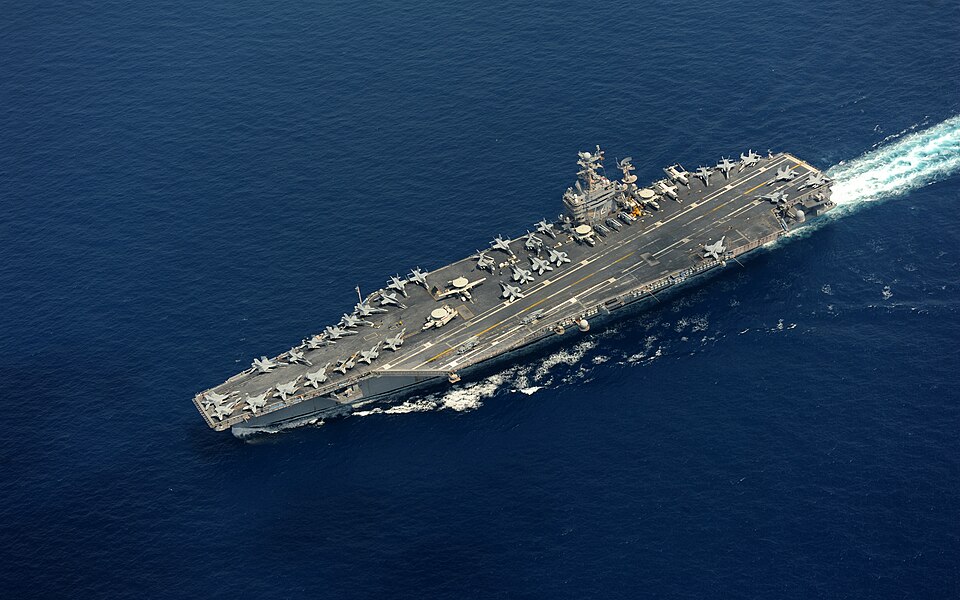
President Donald Trump’s administration is facing growing pressure over reports of difficult conditions aboard the USS Abraham Lincoln, as lawmakers demand answers about the treatment and well-being of thousands of American sailors and Marines serving far from home.
The massive aircraft carrier has spent months supporting U.S. military operations in the Middle East, and its extended time at sea is now drawing scrutiny in Washington.
Reports from military families and news organizations have raised concerns about morale, basic supplies, plumbing problems and the mental strain placed on the crew.
War Secretary Pete Hegseth is pushing back, saying the situation aboard the Lincoln has been “completely misrepresented” and insisting that military leaders are doing everything possible to support the ship and its crew.
The controversy leaves the Trump administration confronting a difficult question: How long can America ask sailors to remain at sea under wartime conditions before the strain begins affecting personnel and military readiness?
Lawmakers Demand Answers About USS Abraham Lincoln
Democratic lawmakers have begun pressing the War Department and Navy leadership for more information about conditions aboard the USS Abraham Lincoln.
The carrier has approximately 5,000 sailors and Marines aboard and has been deployed since November 2025.
It was originally sent to the South China Sea before being redirected to the Middle East in January to support U.S. operations against Iran.
That change dramatically altered what had already been a lengthy deployment.
The ship has now gone more than 200 days without a port call, according to lawmakers raising concerns about the situation.
Port visits are more than an opportunity for sailors to get off the ship. They can provide crews with valuable rest while allowing ships to replenish supplies and address maintenance needs.
Months without that break can put enormous pressure on personnel.
Troubling Reports From Military Families
Some of the most serious concerns involve the mental well-being of sailors aboard the Lincoln.
Navy Times reported that at least two sailors were reportedly prevented from going overboard during the deployment.
The Wall Street Journal separately reported that one person went overboard in early August and was quickly rescued.
Family members have also described troubling communications from loved ones serving aboard the carrier.
More than 200 relatives reportedly attended a meeting with acting Navy Secretary Hung Cao to discuss their concerns.
One military spouse reportedly described receiving an alarming message from her husband indicating that he did not want to wake up the following day.
Those accounts have intensified questions about what months of sustained military operations may be doing to the crew.
The Navy, however, disputes suggestions that suicidal behavior has increased aboard the Lincoln.
“We have not observed an increase in suicidal ideations or attempts aboard the ship,” the Navy said in a statement reported by CNN.
Officials said medical, mental health and religious personnel are available to sailors who need assistance.
Reports Of Supply And Living Problems
Mental health isn’t the only issue attracting attention.
Rep. Mike Levin, a California Democrat whose district includes part of San Diego County, has publicized allegations from military families involving moldy showers, broken toilets, hot-water problems and shortages of basic hygiene products.
Other reports have raised concerns about food supplies, water, mail deliveries and general living conditions aboard the ship.
Those allegations have not gone unchallenged by Pentagon leadership.
U.S. officials have indicated that some hardships aboard the Lincoln are consistent with the difficult realities of an extended wartime deployment.
That distinction could prove important as Congress investigates whether the situation represents a leadership failure or the unavoidable strain of maintaining American military power during a prolonged conflict.
Democrat Calls For Trump To Fire Hegseth
Levin has gone considerably further than simply requesting information.
The Democratic congressman called on Trump to fire Hegseth, arguing that new leadership at the War Department would make American troops safer.
That immediately adds a political dimension to what is already a serious military issue.
Sen. Richard Blumenthal of Connecticut, the ranking Democrat on the Senate Armed Services Committee, has also demanded answers from Hegseth and Cao.
Blumenthal wants the Navy to provide its assessment of conditions aboard the Lincoln, including the physical and mental readiness of its personnel.
He is also asking whether keeping the carrier deployed remains necessary for accomplishing U.S. military objectives against Iran.
Those are questions that could extend well beyond one aircraft carrier.
The controversy is increasingly becoming a debate about how the United States maintains a powerful global military presence without exhausting the people responsible for carrying out those missions.
Hegseth Fires Back At Critics
Hegseth strongly disputes the portrayal of the Lincoln as a ship in crisis.
While visiting American service members in Panama, he told reporters that reports about conditions aboard the carrier had been “completely misrepresented.”
“We ensure every vessel, crew member and captain receives all the support and resources we’re able to provide at all times,” Hegseth said.
He also acknowledged something military families already understand: Some deployments are considerably harder than others.
Hegseth praised the Lincoln’s sailors for operating in difficult conditions with fewer port calls and said Americans who have never experienced such a deployment may not fully appreciate what those service members are enduring.
As an Army National Guard veteran who served on lengthy deployments himself, Hegseth said he understands the desire of sailors and their families to get personnel home.
“I want them home as soon as everybody else, too,” he said.
Hegseth added that commanders, service secretaries and Trump all understand the importance of rotating personnel as quickly as circumstances permit.
He also praised the Lincoln crew’s performance.
“They’ve held the line for the country; they’ve done a fantastic job,” Hegseth said.
The Bigger Problem Facing America’s Navy
Beyond the partisan fight in Washington, the USS Abraham Lincoln controversy highlights a larger challenge for the United States.
Aircraft carriers are among the most visible symbols of American military power.
But even the world’s most advanced warships depend on sailors working long hours under stressful conditions, often thousands of miles from their families.
Extended deployments can become particularly difficult during wartime, when crews must remain prepared for possible missile, drone or other attacks.
Keeping a carrier in the fight isn’t simply a question of fuel, aircraft and ammunition.
The sailors operating the ship are part of military readiness, too.
If personnel become exhausted after months at sea, that can create concerns not only for their well-being but potentially for America’s ability to respond to the next international crisis.
That is why the questions surrounding the Lincoln matter beyond the political argument between Democrats and the Trump administration.
Relief Could Soon Be On The Way
There is some encouraging news for the Lincoln’s crew and their families.
The USS George Washington is heading toward the Middle East and is expected to replace the Lincoln as part of a planned carrier rotation.
Officials have indicated that the move was planned before the latest controversy became public.
That could eventually allow the Lincoln and its crew to leave the region after an extraordinarily demanding deployment.
But questions about what happened aboard the carrier aren’t likely to disappear when the ship heads home.
Congressional lawmakers want answers about supplies, living conditions, personnel readiness and whether America’s current military strategy is placing too much pressure on the Navy.
Trump Administration Faces A Delicate Test
For Trump, the controversy presents a politically sensitive challenge.
The president has made rebuilding American military strength and supporting U.S. service members major themes of his administration.
Democrats will undoubtedly attempt to use the Lincoln controversy to criticize Trump’s Pentagon leadership, particularly Hegseth.
But the issue shouldn’t simply become another Washington partisan battle.
Conservatives have traditionally argued that a strong national defense requires more than advanced weapons and massive military budgets. It also requires taking care of the men and women expected to use those weapons and defend the country.
There is also an important distinction between allegations and established facts.
Some military families and lawmakers have described serious problems aboard the Lincoln. Hegseth and Navy officials dispute portions of that portrayal and maintain that the crew continues to receive necessary support.
Getting reliable answers should therefore be the priority.
If serious deficiencies occurred, they should be corrected.
If reports have exaggerated the situation, the Navy should provide the facts necessary to demonstrate that.
Either way, America’s sailors shouldn’t become political pawns.
Americans Want Their Troops Taken Care Of
The men and women aboard the USS Abraham Lincoln have spent months away from their spouses, children and communities while carrying out orders from America’s elected leaders.
They don’t decide where the carrier goes.
They don’t decide how long America’s military operations continue.
Their responsibility is to carry out the mission.
Washington’s responsibility is to make certain they have the food, supplies, equipment, medical care and support necessary to do it.
The political battle over who deserves blame may continue.
But Republicans and Democrats should be able to agree on something much more fundamental: When America sends its sons and daughters into dangerous waters, the country has an obligation to take care of them.
The USS Abraham Lincoln controversy will now test whether Washington can put that responsibility ahead of politics.