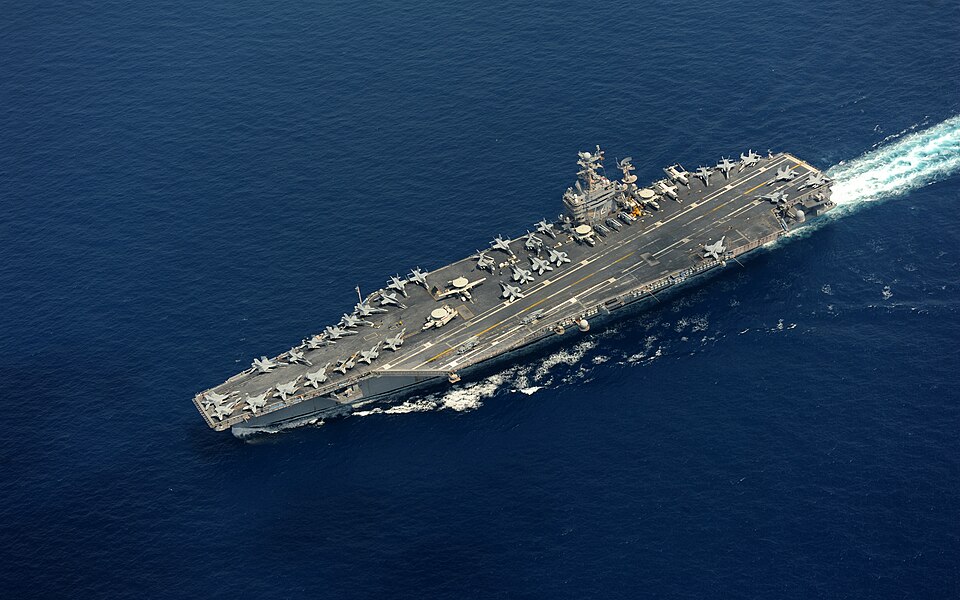
A growing controversy surrounding conditions aboard the USS Abraham Lincoln is putting President Donald Trump, his administration and the U.S. military under an intense media spotlight.
Reports about food shortages, lengthy deployments and the well-being of American sailors have generated alarming headlines. One journalist even compared some meals allegedly served aboard deployed U.S. vessels to food given to prison inmates.
But Trump administration officials are pushing back hard, arguing that Americans are being given a distorted picture of what is actually happening aboard the aircraft carrier.
That disagreement has created a much larger debate: Are serious concerns involving American service members finally receiving necessary attention, or are those concerns increasingly being used to drive a political narrative against Trump and his military leadership?
For Americans who support both President Trump and the men and women serving in uniform, separating verified facts from political rhetoric has become increasingly important.
Journalist Makes Stunning Claim About Sailors’ Meals
Independent journalist Aaron Parnas appeared on CNN with host Laura Coates to discuss accounts involving sailors and Marines deployed aboard American warships.
Parnas said he has spoken with military families concerned about conditions their loved ones are experiencing.
Among the reported complaints are shortages of fresh food and hygiene products, along with the tremendous emotional strain that can accompany spending months at sea and away from family.
Parnas then made a particularly dramatic comparison.
Drawing from his previous experience as a lawyer, he said he had witnessed prison inmates receiving better meals than some service members are allegedly receiving aboard American aircraft carriers.
That is a serious allegation.
However, the comparison represents Parnas’ personal assessment and should not be confused with an official determination that prisoners generally receive better food than U.S. sailors.
That distinction is especially important as the story becomes increasingly political.
USS Abraham Lincoln Faces Extraordinary Deployment
At the center of the controversy is the USS Abraham Lincoln, one of America’s massive Nimitz-class nuclear-powered aircraft carriers.
The carrier departed San Diego in November and has remained deployed during U.S. military operations involving Iran.
Its crew includes roughly 5,000 sailors and Marines.
By August, the deployment had stretched beyond 250 days, making the amount of time these Americans have spent away from home a major part of the national discussion.
Recent reporting confirms that the carrier’s extraordinarily long deployment has attracted concerns from military families and lawmakers. A replacement carrier, the USS George Washington, is heading toward the region to relieve the Lincoln.
Long deployments are part of military life, particularly during wartime. America’s sailors understand when they volunteer to serve that their country may require tremendous sacrifices from them.
But an unexpectedly extended deployment can still create enormous challenges.
Families must continue life at home without husbands, wives, fathers, mothers, sons and daughters. Meanwhile, those aboard the ship continue performing demanding military duties thousands of miles from American shores.
That human cost deserves serious attention regardless of politics.
Military Families Raise Concerns
Parnas told CNN that families have described service members struggling with the length of the mission and uncertainty surrounding their return.
He argued that this should not become a Republican-versus-Democrat controversy because the Americans serving aboard these ships represent the entire country.
On that point, most Americans can probably agree.
The sailors and Marines aboard the USS Abraham Lincoln did not deploy to advance a political party. They deployed because the United States ordered them to serve.
Their political beliefs are irrelevant to whether they deserve proper food, supplies, equipment, leadership and support.
If legitimate problems exist aboard an American warship, they should be corrected.
But allegations involving military conditions also deserve careful verification before the most alarming versions of those claims are treated as established fact.
Pete Hegseth Pushes Back Against Reports
Secretary of War Pete Hegseth has strongly disputed the portrayal of conditions aboard the USS Abraham Lincoln.
Hegseth said reports describing deteriorating conditions have been “completely misrepresented.”
Military officials have likewise challenged some of the most serious claims surrounding the mental health situation aboard the carrier.
The Navy has not confirmed reports of an increase in suicidal ideation among the crew, although officials have acknowledged mental-health incidents during the lengthy deployment.
Acting Navy Secretary Hung Cao said a small number of mental-health incidents had been treated without loss of life and praised the crew for completing an exceptionally demanding mission. He also said the USS Abraham Lincoln would be returning home soon.
Those statements provide important context that can disappear when dramatic accusations dominate television coverage.
Trump Responds to USS Abraham Lincoln Controversy
President Trump was questioned Friday about the extraordinary length of the deployment.
Asked about sailors spending more than eight months at sea, Trump responded that it was “not nearly long enough.”
The remark immediately generated headlines and criticism.
Trump also indicated that another carrier would replace the USS Abraham Lincoln, which is consistent with reports that the USS George Washington is moving toward the Middle East to provide relief.
Critics interpreted Trump’s comment as dismissive of sailors who have endured an extremely demanding deployment.
Supporters of the administration, meanwhile, may see the larger controversy differently — particularly given that Hegseth and Navy officials dispute some of the most severe portrayals of conditions aboard the carrier.
The disagreement illustrates why Trump’s brief comment should be considered alongside the military’s fuller explanation rather than in isolation.
Is the Media Turning Military Concerns Into Another Trump Fight?
This is where the controversy becomes particularly important.
There is nothing inherently partisan about investigating conditions aboard a U.S. aircraft carrier.
If sailors are receiving inadequate food or supplies, Americans should know about it.
If service members are experiencing serious mental-health problems after an exceptionally long deployment, military leadership should respond.
Supporting the military does not mean ignoring problems within it.
But responsible reporting also requires presenting what military officials say in response to those allegations.
The danger comes when the story is reduced to another familiar political battle in which Americans are encouraged to choose between supporting Trump and supporting the troops.
Those positions are not mutually exclusive.
Americans can support President Trump while demanding excellent treatment for service members. They can also question military leadership without automatically accepting every allegation made about conditions aboard a particular ship.
America’s Sailors Should Come Before Political Narratives
The most important people in this story are not television hosts, journalists or politicians.
They are the thousands of Americans serving aboard the USS Abraham Lincoln.
Many have spent the better part of a year separated from their families while operating in an extremely dangerous part of the world.
Their mission has required long hours, tremendous discipline and sacrifices that most civilians will never experience.
They deserve America’s respect.
They also deserve the truth.
If shortages or unacceptable conditions occurred, those problems should be investigated and fixed. If reports exaggerated the situation, Americans deserve to know that as well.
Trump Administration Says Americans Aren’t Getting the Full Story
The competing accounts leave Americans with dramatically different versions of events.
Some sailors’ families and journalists describe severe problems involving food, supplies and morale.
Trump administration officials say significant portions of that portrayal are misleading.
Meanwhile, the deployment itself is unquestionably extraordinary. The USS Abraham Lincoln has spent more than 250 days deployed, and another American carrier is being sent to relieve it.
Those facts make legitimate scrutiny appropriate.
But scrutiny should not automatically become partisan warfare.
The welfare of American service members is too important to become another political weapon.
The Bottom Line
President Trump and his military leadership are facing increasingly aggressive questions about conditions aboard the USS Abraham Lincoln, while administration officials insist the situation has been misrepresented.
Americans should demand transparency from everyone involved.
Military leaders should be accountable for providing sailors with proper food, supplies and support. Journalists should be equally careful about distinguishing documented facts from allegations and personal accounts.
Above all, Americans should reject the idea that they must choose between supporting their president and supporting their military.
The sailors and Marines serving aboard the USS Abraham Lincoln deserve better than becoming pieces in Washington’s endless political battles.
They deserve the resources necessary to accomplish their mission, the support of the American people and a safe return home after an exceptionally long deployment.