President Donald Trump is facing unexpected resistance from within his own party after a Republican senator threatened to hold up future administration nominees over a controversial Biden-era policy.
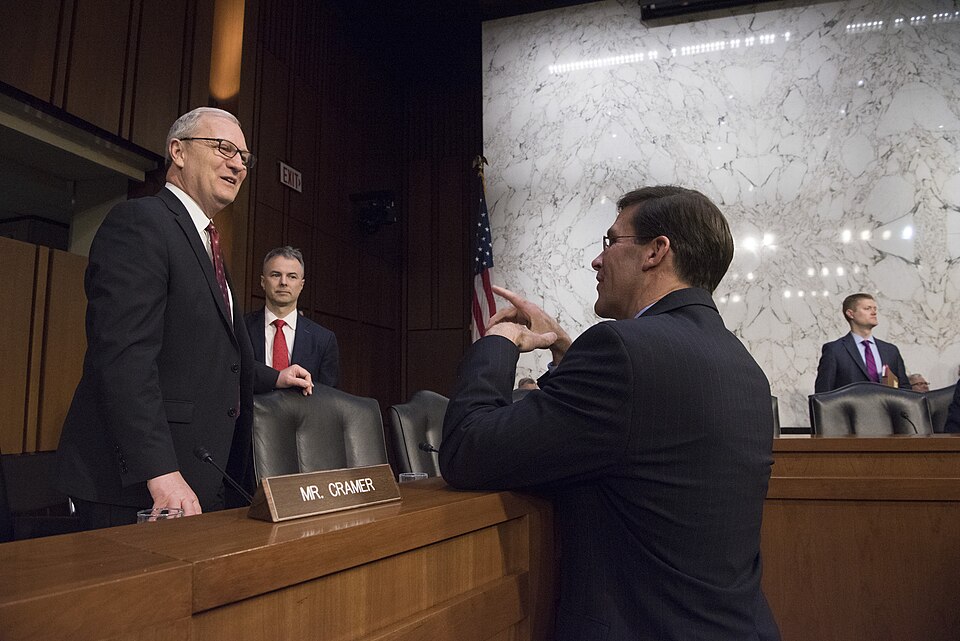
Sen. Kevin Cramer of North Dakota says he will block the routine advancement of Trump nominees until the administration addresses a federal wetlands policy that has angered farmers and raised concerns about private property rights.
The Republican senator’s move creates an unusual confrontation between the Trump administration and one of its GOP allies — and could make it considerably harder for the White House to get key officials confirmed by the Senate.
At the center of the dispute is a question familiar to farmers and rural landowners across America: How far should the federal government be allowed to go in restricting the use of private property in the name of environmental protection?
Cramer Draws a Line Over Biden-Era Policy
Cramer announced the hold after the U.S. Fish and Wildlife Service decided not to move forward, for now, with potential changes to a wetlands policy established during the Biden administration.
The North Dakota Republican argues that the existing approach places an unfair burden on farmers at a time when agricultural producers are already confronting serious economic pressures.
Cramer said he was baffled that the administration continued defending a Biden-era policy backed by environmental activists, arguing that the approach hurts farmers at a time when agricultural producers are already struggling.
He followed that criticism with a direct warning to the administration.
The senator said farmers in his state are outraged and that he shares their frustration, warning that he will hold up additional nominees unless the administration changes course.
That threat could turn a relatively obscure regulatory disagreement into a much larger political headache for Trump.
What Cramer’s Hold Means for Trump
A Senate hold does not necessarily give one senator the power to permanently defeat a presidential nominee.
What it can do is eliminate shortcuts normally used to move nominations through the Senate, potentially requiring additional debate and votes.
When applied to numerous nominees, those delays can consume valuable Senate floor time and make it much more difficult for an administration to fill important government positions.
Republicans saw just how powerful the tactic could become in 2023, when Sen. Tommy Tuberville of Alabama held up hundreds of military promotions during his confrontation with the Pentagon over abortion-related policies.
Cramer’s dispute is much smaller at the moment, but his ultimatum could become increasingly consequential if it remains in effect when senators return to Washington.
The Senate is currently in recess and therefore isn’t actively processing nominations. But Republicans could seek to confirm additional Trump administration officials this fall while the GOP remains assured of its Senate majority.
That gives Cramer leverage at a potentially important moment for the White House.
Why Farmers Are Fighting the Wetlands Rule
The disagreement centers on agricultural drainage near wetlands protected through federal conservation easements.
Farmers commonly use underground drain tile systems to remove excess water from fields. Proper drainage can make farmland more productive and prevent water from interfering with planting and harvesting.
Federal officials, however, also have an obligation to protect wetlands covered by conservation easements.
The controversy involves how far drainage systems should be set back from those protected wetlands.
The Biden-era approach was designed to prevent drainage on surrounding property from effectively draining wetlands that the federal government has paid to protect.
Critics argue that the policy can go too far.
They contend that setback requirements may restrict what farmers can do with privately owned land located outside the actual boundaries of a conservation easement.
For farmers and property-rights advocates, that distinction is critical.
North Dakota Farm Bureau Raises Property-Rights Concerns
The North Dakota Farm Bureau has argued that the federal government’s setback requirements effectively expand restrictions beyond the land originally covered by conservation agreements.
The organization said in public comments that formula-based setback requirements can impose substantial limitations on surrounding private property.
In its view, farmers who agreed to restrictions involving specific wetlands can find themselves facing additional limitations on neighboring acreage without receiving additional compensation.
That argument has considerable significance in an agricultural state such as North Dakota, where productive farmland represents both a livelihood and a major family asset.
The dispute therefore reaches beyond environmental regulation. It raises broader questions involving federal power, property rights and the economic pressures facing American farmers.
Those concerns appear to be driving Cramer’s willingness to confront an administration controlled by his own party.
Trump Administration Keeps Policy in Place for Now
Earlier this year, the Fish and Wildlife Service sought public input on whether it should reconsider how acceptable drainage setbacks near protected wetlands are calculated.
But the agency ultimately decided against immediate action.
The Fish and Wildlife Service said it is committed to protecting both federally purchased wetland easements and the ability of private landowners to use property outside those easement boundaries.
The agency also said that no additional action is currently planned while officials review the information they received.
For Cramer and agricultural advocates seeking a policy change, that wasn’t enough.
Hunters Have a Different Concern
The issue is politically complicated because farmers aren’t the only traditionally conservative constituency with a stake in the outcome.
Hunters also have a major interest in wetlands conservation.
Wetlands provide important breeding and nesting habitat for ducks and other waterfowl. If that habitat disappears, hunting organizations fear duck populations — and ultimately hunting opportunities — could suffer.
Illinois Ducks Unlimited argued during the public-comment process that maintaining strong habitat is essential for healthy duck populations and sustainable hunting.
That puts two groups that frequently find themselves on the same side politically in direct competition over federal wetlands policy.
Farmers and property-rights advocates want to ensure federal restrictions do not unnecessarily interfere with privately owned agricultural land.
Hunters and conservation groups want to make sure drainage activity doesn’t undermine wetlands that have been legally protected for wildlife.
A Difficult Choice for the Trump Administration
The controversy presents the Trump administration with a delicate balancing act.
Trump has long emphasized reducing federal regulation, supporting American agriculture and protecting private property. Those priorities give Cramer and his allies a strong argument for reconsidering restrictions they believe originated under the Biden administration.
At the same time, hunting and conservation are deeply rooted traditions throughout rural America, including many Republican-leaning states.
Weakening wetland protections could therefore generate opposition from voters who might otherwise support the administration’s broader agenda.
The challenge for federal officials will be finding a policy that protects legitimate conservation easements without unnecessarily restricting farmers’ ability to use land that falls outside those protected areas.
Cramer Turns Up the Pressure on Trump
For now, Cramer appears unwilling to wait quietly for the administration to resolve the matter.
By tying Trump’s nominees to the wetlands dispute, the North Dakota senator has dramatically increased the political stakes.
Instead of limiting his objections to letters, hearings or public statements, Cramer is using one of the most valuable tools available to an individual senator: the ability to make Senate business more difficult and time-consuming.
That puts pressure directly on the Trump administration.
It also creates an unusual Republican-versus-Republican battle involving three issues important to many conservative voters — government regulation, private property rights and America’s farmers.
Whether the White House changes course remains to be seen.
But Cramer has made his position clear: Unless something changes with the wetlands policy, he intends to use Trump’s nominees as leverage.
What began as a technical disagreement over agricultural drainage could now become a much bigger test of how the Trump administration handles opposition from within its own party.