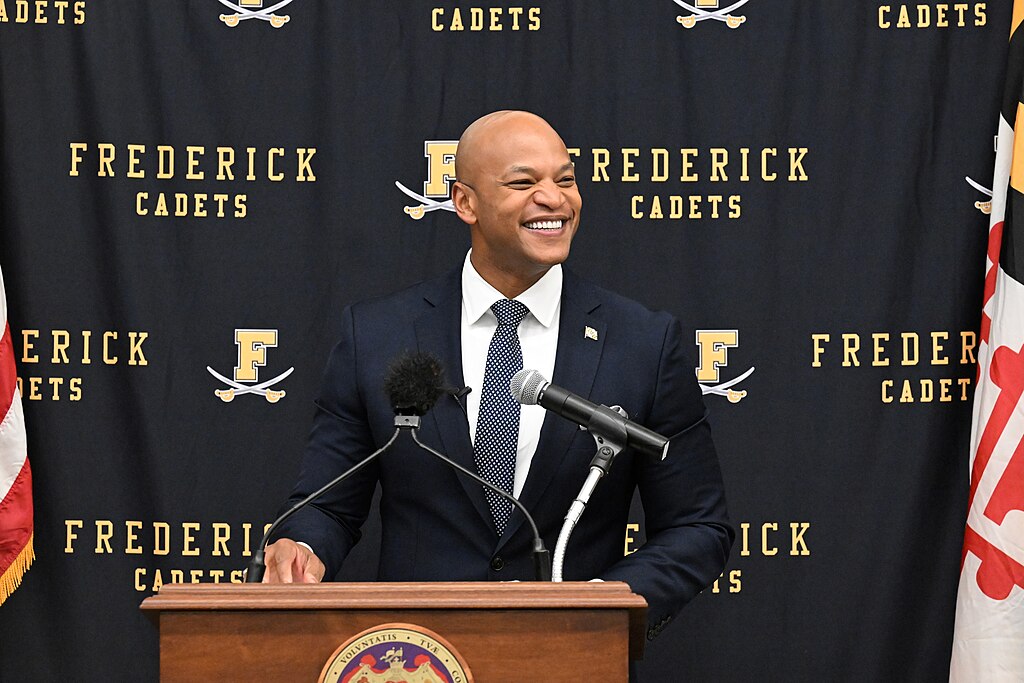
More questions are beginning to arise.
As speculation builds around the 2028 presidential election, Maryland Governor Wes Moore — a Democrat frequently critical of President Donald Trump — is facing renewed scrutiny over questions tied to his academic credentials and family history.
For voters who prioritize transparency and credibility, especially those who have watched decades of political controversies unfold, the developments are raising serious questions.
2028 Presidential Contender Under Scrutiny
Governor Moore has been mentioned by political observers as a possible Democratic contender in 2028. With that kind of attention comes deeper examination of personal records and past statements.
Recent investigative reporting has highlighted discrepancies involving:
- His Oxford University degree
- The status of his graduate thesis
- The timeline of his academic completion
- Claims about his family’s history involving the Ku Klux Klan
While Moore maintains that his record is accurate, critics argue that clarification is necessary given the stakes of national office.
Questions About Oxford Degree and Missing Thesis
Moore has long stated that he earned a Master of Letters (MLitt) in international relations from Oxford University. He has also referenced being the first African American Rhodes Scholar in Johns Hopkins University history.
However, reporting in December noted that Oxford reportedly did not have a publicly archived copy of his thesis on file. Additionally, differences were cited between the thesis title listed on various documents and the university’s degree confirmation.
Questions were also raised about graduation dates. One résumé reportedly listed 2004, while a separate confirmation referenced completion in November 2005.
During a CBS News town hall, Moore was asked directly whether he submitted his thesis and why Oxford would not have a copy.
Moore responded that Oxford has verified he completed his degree. He did not directly address why a thesis was not archived but reiterated that there is “no denying” his academic credentials.
For many voters — particularly older Americans who value educational achievement and documentation — such details matter.
Fellowship Application and “Expert” Claim
Separate reporting also highlighted Moore’s description of himself as a “foremost expert” on radical Islam in the Western Hemisphere in a 2006 White House Fellowship application.
At the time, Moore had completed military service in Afghanistan. While ambitious language in applications is not uncommon, critics suggest the wording adds to broader concerns about résumé presentation.
In today’s political environment, even small discrepancies can become significant campaign issues.
Dispute Over Family History Claims
Another area drawing attention involves Moore’s public account of his great-grandfather allegedly being forced out of the United States by the Ku Klux Klan.
Moore has stated that his family fled to Jamaica due to Klan threats and that some relatives vowed never to return to America.
However, historical church records and archived newspaper reports indicate that his great-grandfather transferred from a South Carolina church to Jamaica in December 1924 to assume a pastoral position following another minister’s death.
The reporting suggested that available records do not confirm elements of Moore’s account, including claims that the relocation was sudden or directly tied to Klan intimidation.
When questioned during the town hall, Moore stood firmly by his family’s version of events and dismissed the criticism as politically motivated.
He later reiterated on social media that he knows his family’s history.
Why This Matters to 2028 Voters
For Americans over 50 — many of whom have seen political reputations rise and fall — issues of integrity, accuracy, and transparency carry real weight.
With the 2028 presidential race on the horizon, early scrutiny is often just the beginning. History shows that questions raised during state-level leadership frequently resurface during national campaigns.
Supporters argue that Moore’s accomplishments and leadership record speak for themselves. Critics maintain that unresolved discrepancies deserve straightforward answers.
As voters look ahead to another pivotal election cycle, these issues could shape perceptions long before primary ballots are cast.
Final Takeaway
At this stage, no formal findings of wrongdoing have been issued. However, in modern politics, perception and credibility can be just as influential as policy positions.
With national ambitions possibly in play, Governor Wes Moore’s background will likely continue to draw attention.
And as always, voters will ultimately decide what matters most.