Why the heistation?
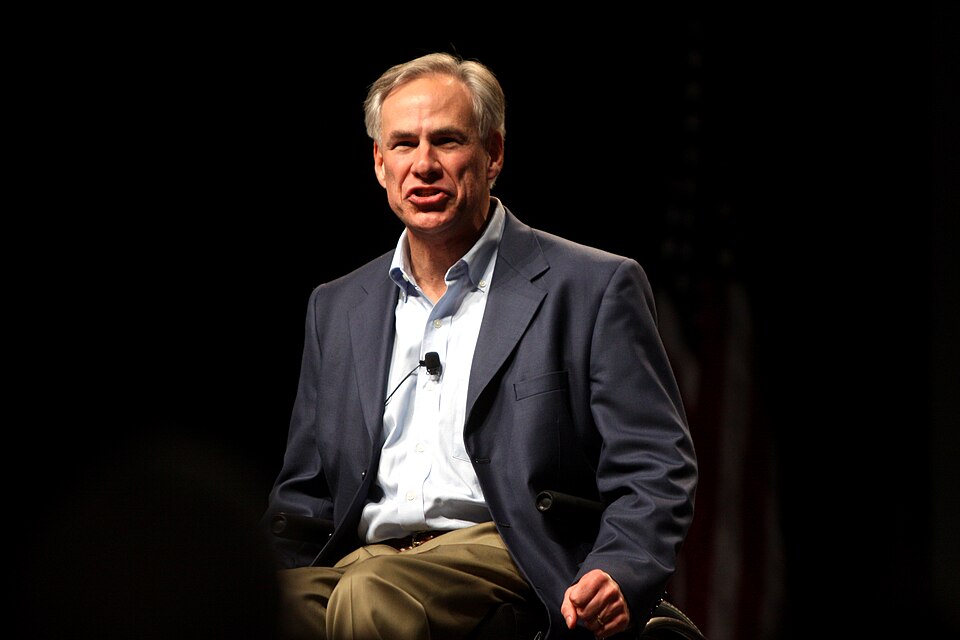
Texas Gov. Greg Abbott faced an uncomfortable line of questioning Sunday after ABC News host Jonathan Karl repeatedly challenged the Republican governor to grade President Donald Trump’s performance on one of the biggest issues facing American families: the cost of living.
Abbott never gave him the letter grade he wanted.
Instead, the Texas governor repeatedly steered the conversation toward his own affordability agenda, the differences between Republicans and Democrats, and his belief that voters will consider far more than gasoline prices when they cast their ballots in November.
The exchange immediately raised an intriguing political question: Was Abbott distancing himself from Trump, or simply refusing to play along with an attempt to turn a complicated economic debate into a television sound bite?
ABC Host Presses Abbott on Trump’s Economy
Karl zeroed in on Trump’s handling of prices, noting that lowering costs was a major issue for voters during the previous presidential campaign.
He asked Abbott directly what grade he would give Trump for his efforts to keep prices down.
Abbott did not answer with an A, B, C or any other grade.
Instead, he said the Texans he encounters on the campaign trail are focused on the differences between Republicans and Democrats in their own state.
That wasn’t enough for Karl.
The ABC host continued pressing Abbott for a direct assessment of Trump’s record on prices, putting the Republican governor in the position of either openly grading a president from his own party or refusing to accept the premise of the question.
Abbott chose the latter.
Abbott Turns Attention to Affordability in Texas
Rather than focusing exclusively on Washington, Abbott highlighted his own plans for addressing the financial pressures facing Texas families.
The governor pointed to housing, health care, auto insurance and property taxes as expenses he wants to reduce.
Those issues can be especially important for homeowners, retirees and families trying to make household budgets stretch further.
Abbott’s argument was straightforward: Texas leaders have tools of their own for addressing affordability, regardless of what happens in Washington.
He also acknowledged one particularly visible economic concern — gasoline prices.
Americans want relief at the pump, Abbott said, and he believes Trump is moving in the right direction.
“We all need to have prices lowered, especially at the price at the pump,” Abbott told Karl.
He added that he believes the president is “on a track to get us there.”
That was hardly a repudiation of Trump, but Karl still wasn’t finished.
Abbott Confronted Over His $2 Gas Prediction
The interview became more pointed when Karl brought up Abbott’s own prediction about gasoline prices in Texas.
Abbott previously predicted that Texans could see gasoline below $2 per gallon before the end of summer.
Karl noted that gasoline was still averaging roughly $3.60 per gallon in Texas with August already more than halfway over.
The gap between Abbott’s prediction and the price motorists were seeing at the pump gave Karl an obvious opening.
Could Republicans pay a political price in November if gasoline remained significantly above the level Abbott predicted?
Abbott again resisted reducing the election to a single economic number.
He argued that Texans will ultimately compare Republican and Democratic candidates across a wide range of issues before deciding how to vote.
“The answer to that’s far more complex than just one price point,” Abbott said.
Gas Prices Remain a Major Issue for American Families
Gasoline prices have become an increasingly important economic and political issue as Americans continue watching their household expenses.
The Trump administration has been taking steps aimed at easing pressure at the pump, including moving to end federal summer-blend gasoline requirements earlier than usual in an effort to increase available fuel supplies.
For working families and older Americans living on fixed incomes, even relatively small changes in fuel prices can add up.
Higher gasoline costs don’t end at the filling station, either. Transportation expenses can eventually affect the price of delivering groceries and other consumer goods, making energy policy an issue that reaches into virtually every household.
Texas occupies a particularly important place in that debate because of its enormous oil and natural gas industry.
For Republicans, bringing energy costs down could therefore become an important part of their economic message heading into November.
Karl Keeps Pushing Abbott
Karl wasn’t ready to move on.
He again reminded Abbott of his prediction that gasoline would fall below $2.
“I get it,” Abbott responded.
But rather than continue debating one specific price target, Abbott shifted toward another issue Republicans believe gives them an advantage with voters: public safety.
The governor argued that Texans will consider whether they want communities governed according to Republican policies or those promoted by Democrats.
Abbott specifically raised the debate over policing and accused political opponents of supporting efforts to defund law enforcement.
The exchange illustrated Abbott’s broader strategy throughout the interview.
Every time Karl attempted to narrow the discussion to Trump or gasoline prices, Abbott widened the lens to include taxes, affordability, crime and the overall contrast between the two parties.
Was Abbott Distancing Himself From Trump?
Abbott’s refusal to grade Trump will inevitably generate political speculation.
But the governor never actually condemned Trump’s economic record.
Quite the opposite.
Abbott said he believes Trump is moving toward lower prices, particularly at the gas pump.
What Abbott refused to do was attach a simple letter grade to the president’s performance.
That distinction matters.
A Republican governor declining to answer a television host’s question is not necessarily the same thing as breaking with the president. Abbott appeared more interested in keeping attention on his own Texas campaign and forcing voters to consider the broader Republican-versus-Democrat choice.
Still, Karl’s persistence highlighted a political vulnerability Republicans cannot simply ignore.
Voters may care about crime, immigration, taxes and cultural issues, but they also know what they pay for gasoline, groceries, insurance and housing.
Trump’s Push to Bring Gas Prices Down
The White House is under pressure to produce tangible relief.
The Trump administration recently moved to allow an earlier transition away from more restrictive summer gasoline requirements, a step intended to increase fuel availability and potentially reduce prices.
Whether those efforts will produce the dramatic decline motorists want remains uncertain.
Energy prices depend on far more than presidential decisions. Global oil markets, international conflicts, refinery capacity, regulations, transportation networks and supply disruptions can all affect what Americans ultimately pay.
That makes promises about a specific future gasoline price politically risky.
Consumers don’t necessarily care which economic force caused the increase when they’re standing at a pump watching the numbers climb.
They care about what comes out of their wallets.
Why This Could Matter in November
Abbott’s interview offers a preview of an argument Republicans could encounter repeatedly before the midterm elections.
Democrats and major media outlets are likely to keep asking Republicans whether Trump has delivered on his economic promises.
Republicans, meanwhile, will likely argue that voters should compare the parties on the entire picture — including taxes, regulation, energy production, immigration, crime and the cost of government.
Abbott clearly prefers that broader debate.
For conservative voters, the important question may not be what letter grade a television host can persuade a Republican governor to give Trump.
It may be whether their family’s financial position is improving when Election Day arrives.
That is ultimately the economic test no politician can dodge.