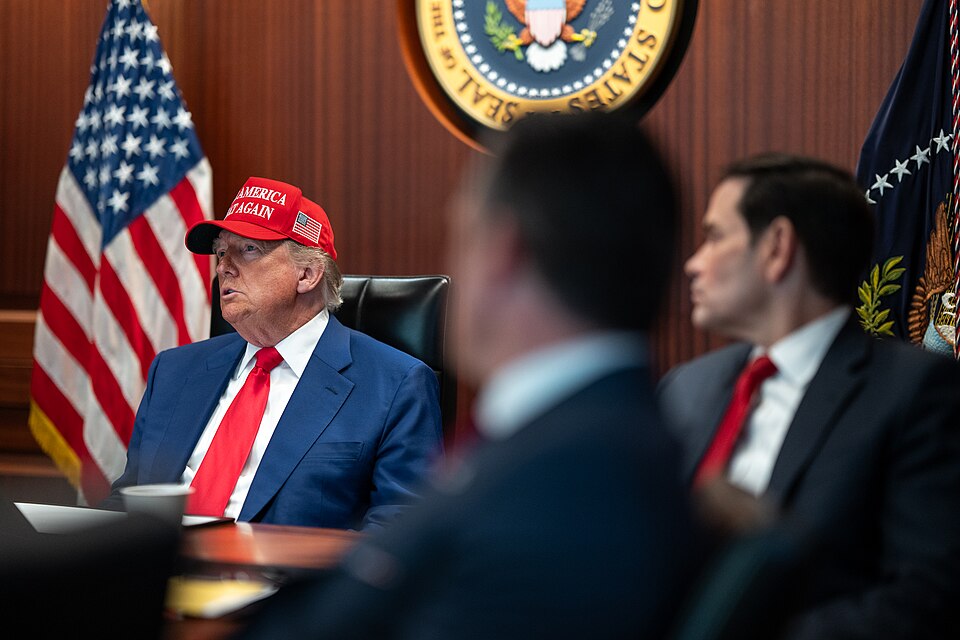
Here’s what Trump is doing now.
President Donald Trump’s administration has ordered a worldwide pause affecting immigrant visa interviews at U.S. embassies and consulates, creating new uncertainty for people seeking permanent entry into the United States.
The sweeping move comes as the Trump administration intensifies its focus on legal immigration, public benefits and financial self-sufficiency — issues that have become increasingly important in the national debate over America’s immigration system.
But has Trump actually canceled all immigration to the United States?
Not exactly.
The new action temporarily disrupts immigrant visa interviews while U.S. consular officers undergo additional training. It does not mean that every form of immigration or every type of U.S. visa has been permanently shut down.
Still, the worldwide scope of the decision makes it a significant development in Trump’s broader immigration agenda.
Trump Administration Pauses Immigrant Visa Interviews Worldwide
The State Department has instructed American embassies and consulates worldwide to delay immigrant visa interviews until consular officials finish training on the federal government’s “public charge” requirements.
Applicants who already had interviews scheduled have reportedly received notices informing them that their appointments would be rescheduled.
For many applicants, however, there is one major problem: they do not yet know when their new interviews will take place.
The State Department has not announced a universal date for normal interview scheduling to resume.
That uncertainty could leave families and prospective legal immigrants waiting for answers as diplomatic posts work through the new requirements.
Why Is Trump Pausing Immigrant Visa Interviews?
The administration says the training is designed to ensure that consular officers properly evaluate whether prospective immigrants are likely to become financially dependent on certain government benefits after arriving in the United States.
That question falls under what immigration law calls the public charge standard.
Federal immigration law allows officials to find certain applicants inadmissible if they determine that those individuals are likely to become a public charge.
For the Trump administration, the issue fits into a larger argument about immigration and taxpayer responsibility: People seeking permanent admission to the United States should generally be capable of supporting themselves rather than expecting American taxpayers to provide for them.
The State Department said it launched its worldwide training initiative in early August and is adjusting visa appointments to accommodate the program.
Officials say the goal is to make sure consular officers evaluate applicants thoroughly and consistently.
What Does “Public Charge” Mean?
The phrase may sound complicated, but the basic principle has existed in American immigration law for generations.
A public-charge determination allows immigration officials to consider whether certain prospective immigrants are likely to become dependent on government assistance.
The Trump administration has placed renewed emphasis on financial self-sufficiency as part of its immigration policies.
That means an applicant’s financial situation and other legally relevant circumstances can become important factors when officials determine whether the individual qualifies for admission.
For Americans concerned about government spending and taxpayer-funded benefits, the policy raises a larger question:
Who should be financially responsible for people admitted to the United States?
Trump has repeatedly argued that the interests of American citizens and taxpayers should come first when immigration policies are written and enforced.
Does This Stop All Immigration Into America?
No.
Despite the enormous scope of the announcement, it is important to distinguish between a temporary pause affecting immigrant visa interviews and a complete shutdown of immigration into the United States.
The current action centers on immigrant visas, which are generally used by foreign nationals seeking to move permanently to the United States.
Nonimmigrant visas are a separate category and include visas used for temporary tourism, business, study and other purposes.
The available information does not indicate that every visa category has been halted.
The administration also has not announced that legal immigration has been permanently suspended.
Instead, immigrant visa interviews are being postponed while consular personnel complete the required training.
That distinction is important — especially for applicants trying to determine whether their cases have been denied or simply delayed.
Trump Takes Tougher Approach to Legal Immigration
The latest development is part of a much broader transformation of U.S. immigration policy under Trump.
Border security and illegal immigration were major themes of Trump’s 2024 presidential campaign, but his administration’s second-term immigration agenda has gone considerably further.
The White House has also pursued changes affecting people seeking to enter or remain in the United States legally.
Those efforts have included tougher visa screening, additional scrutiny of foreign nationals, changes involving certain work visas and restrictions affecting some foreign students and journalists.
The administration has also aggressively reviewed visas held by foreign nationals accused of crimes, immigration violations or other conduct officials say makes them ineligible to remain in the country.
Taken together, the policies demonstrate that Trump’s immigration strategy is no longer focused solely on people crossing the border illegally.
Legal immigration is receiving increased scrutiny as well.
Up to 200,000 Foreign Visas Could Be Revoked
Another major immigration action could affect as many as 200,000 foreign nationals.
The Trump administration is moving toward canceling business and tourist visas for foreign nationals who have filed asylum claims or are currently pursuing asylum in the United States.
The administration argues that foreign nationals should not use temporary business or tourist visas as a pathway to enter the country and then attempt to remain permanently through an asylum claim.
If carried out on the projected scale, the action could become the largest mass visa revocation in American history.
The proposed visa cancellations would not automatically result in immediate deportation for everyone affected, but they could end the temporary legal status that allowed those individuals to originally enter the United States.
The issue highlights the administration’s increasingly aggressive effort to examine not only how foreigners enter the United States, but whether they continue to comply with the purpose and conditions of their visas.
Trump Administration Has Already Revoked Thousands of Visas
The government’s increased scrutiny is already producing significant numbers.
The State Department announced in August that it had revoked more than 175,000 visas since Trump returned to office.
Officials have cited criminal activity, immigration violations, fraud, national security concerns and other grounds in defending the administration’s visa enforcement campaign.
For Trump supporters, those actions represent a long-promised effort to restore enforcement to an immigration system they believe has been abused for years.
Critics counter that the administration is making lawful immigration more difficult and argue that some of its policies stretch executive authority too far.
That debate is increasingly being fought in federal court.
Federal Judge Blocks Separate Trump Visa Policy
Trump’s immigration agenda has already encountered a major legal obstacle.
A federal judge recently overturned a separate State Department policy that had halted the issuance of immigrant visas to people from 75 countries.
The court determined that the policy exceeded the statutory authority granted to Secretary of State Marco Rubio.
The ruling did not end the administration’s broader push for tougher immigration screening, however.
Instead, the latest worldwide training initiative places renewed attention on individual public-charge determinations made by consular officers.
That could make the coming weeks particularly important for the future of Trump’s legal immigration policies.
What Happens to People With Canceled Interviews?
For immigrant visa applicants, the immediate advice is straightforward: watch closely for communications from the U.S. embassy or consulate handling the case.
A postponed interview does not automatically mean that an immigrant visa application has been rejected.
Applicants may instead receive a new appointment after consular officers complete the required training.
However, because the State Department has not announced exactly how quickly every postponed interview will be rescheduled, delays could continue even after training concludes.
A backlog of canceled appointments could also create additional waiting time at some diplomatic posts.
Trump’s Immigration Agenda Enters a New Phase
The latest move sends a clear message about the direction of U.S. immigration policy under President Trump.
The administration is no longer concentrating exclusively on illegal border crossings.
It is applying greater scrutiny to the legal immigration system as well — including who receives visas, whether applicants can financially support themselves and whether foreign nationals comply with the terms under which they entered the country.
For conservatives who have long argued that immigration policy should prioritize American workers, taxpayers and national interests, the shift represents a broader interpretation of Trump’s “America First” approach.
Opponents are likely to continue challenging parts of that agenda in federal court.
The ultimate impact may depend on how aggressively the State Department applies its updated public-charge standards once immigrant visa interviews resume.
For now, Trump has not canceled all immigration to the United States.
However, the global delay in immigrant visa interviews, along with widespread visa reviews, stricter financial requirements and additional restrictions, signals a major expansion of the administration’s oversight of America’s legal immigration process.