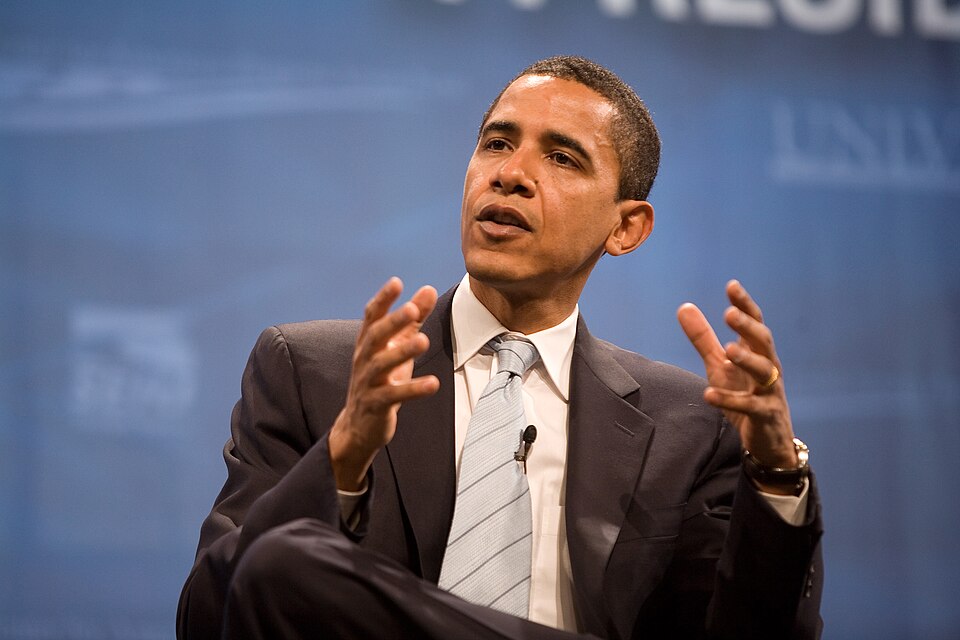
Obama is back. Sadly,
Former President Barack Obama is come back to the political spotlight as Democrats look for a way to counter President Donald Trump’s powerful fundraising operation and Republican advantages heading into the 2026 midterm elections.
Former President Barack Obama is set to be the featured speaker at a Democratic fundraising event Monday on Martha’s Vineyard benefiting the National Democratic Redistricting Committee, which is chaired by his former attorney general, Eric Holder.
The timing is significant.
Republicans are fighting to protect their narrow majority in the House of Representatives while also defending control of the Senate. At the same time, GOP redistricting victories and an enormous political war chest connected to Trump have given Republicans important advantages heading into November.
Democrats are now turning to one of their most famous political figures for help.
Obama’s return could provide the party with fundraising power, national attention and an experienced campaign surrogate capable of energizing Democratic donors and voters during the final stretch of the midterm campaign.
Obama Steps Back Into the Political Fight
Obama has largely remained outside the day-to-day battles of Washington since leaving the White House, but he continues to play an important role during major elections.
His latest appearance is focused on redistricting, an issue that could have a lasting effect on which party controls Congress.
According to the Washington Examiner, recent redistricting efforts have given Republicans an advantage in at least 10 additional congressional districts that now favor the GOP.
That could prove especially important in the House, where Republicans have little room for error.
A relatively small number of competitive races could determine whether Speaker Mike Johnson keeps his majority or Democrats regain control of the chamber for the final two years of Trump’s presidency.
The stakes extend far beyond individual congressional races.
Control of the House will determine which party runs powerful committees, controls the legislative agenda and has substantial influence over taxes, federal spending, immigration, energy policy, government regulation and investigations of the executive branch.
Trump Has a Massive Financial Advantage
Democrats aren’t simply confronting a difficult political map. They also have to compete against Trump’s formidable fundraising operation.
MAGA Inc., the super PAC aligned with Trump, reported approximately $403 million in cash on hand at the end of July, according to Federal Election Commission records.
That gives Trump’s allies an extraordinary amount of money that could potentially be used to influence competitive races around the country.
Trump has also spoken publicly about the broader financial resources available to his political operation as Republicans prepare for November.
The president has made it clear that he intends to campaign for Republican candidates and use his political organization to help the GOP maintain control of Congress.
That could mean significant spending on television advertising, digital campaigns, voter outreach and other efforts in closely contested House and Senate races.
Why Democrats Are Turning to Obama
For Democrats, Obama offers something few other members of the party can match: a nationally recognized political brand combined with a well-established fundraising network.
The former president can attract wealthy donors while also generating media attention and enthusiasm among Democratic voters.
His involvement therefore gives Democrats another weapon as they try to narrow the Republican financial advantage.
Obama’s fundraiser also puts a renewed spotlight on the battle over congressional maps.
Redistricting may sound like an obscure political process, but its consequences can last for years. The boundaries of congressional districts can determine which communities vote together and whether a particular district naturally favors Republican or Democratic candidates.
Both parties understand what is at stake.
Democrats are investing heavily in efforts to counter Republican gains, while Republicans are trying to preserve every advantage they can before voters decide control of Congress.
Republicans Warn About Democratic Control
House Speaker Mike Johnson has repeatedly urged Republicans to take the midterm threat seriously.
Republican leaders argue that a Democratic House majority would give Trump’s opponents the power to launch investigations, control congressional committees and block important parts of the president’s agenda.
Democrats, of course, see the election very differently.
They are presenting the midterms as an opportunity for voters to place a check on Republican control of Washington and are focusing heavily on economic issues they believe could hurt the GOP.
That leaves voters with a consequential decision in November.
If Republicans maintain their congressional majorities, Trump would have a much stronger opportunity to continue pursuing his agenda during the second half of his term.
If Democrats capture the House, Washington could instead enter another period of divided government and intense political confrontation.
Democrats Bet on the Cost of Living
Despite the Republican fundraising advantage, Democrats have one issue they believe could work in their favor: affordability.
Democratic candidates are emphasizing household expenses and the cost of living as they try to persuade voters that economic concerns should outweigh the GOP’s advantages in fundraising and organization.
Republicans are expected to offer a very different economic argument, highlighting taxes, domestic energy production, jobs, deregulation and other elements of Trump’s agenda.
For Americans over 50, many of these debates have immediate consequences.
The direction of Congress can affect retirement planning, taxes, healthcare policy, energy costs, government spending and the broader economy.
That makes the 2026 midterms more than another political contest in Washington. The outcome could influence household finances and federal policy for years.
Trump Is Trying to Defy Midterm History
Even with money and redistricting advantages, Republicans face a political problem that has challenged presidents from both parties.
The president’s party has historically had difficulty during midterm elections.
Trump has acknowledged the trend.
“We’ve had good presidents, and even good presidents, they tend to lose the midterms,” Trump said recently.
“So I don’t know what that is.”
Trump nevertheless expressed confidence in the GOP’s chances.
“Other than that, I’d say we should win easily,” he said.
Republicans are trying to make that prediction a reality by taking an unusual approach to the midterms: keeping Trump at the center of the campaign.
Instead of treating the election as hundreds of separate congressional races, the GOP is increasingly presenting November as a national choice over the direction of the country.
Trump has traveled to battleground states, endorsed candidates and promoted his administration’s accomplishments. The Republican National Committee has also organized a major midterm convention as part of the effort to energize conservative voters.
Obama and Trump Could Define the Midterm Battle
Obama’s reappearance adds another dimension to an election that was already shaping up to be one of the biggest political fights of Trump’s second term.
On one side is a sitting Republican president with an enormous fundraising operation, a loyal political base and a determination to preserve GOP control of Washington.
On the other is a Democratic Party attempting to overcome its disadvantages by deploying one of its most successful fundraisers and campaigners.
Obama’s return doesn’t erase the Republican Party’s financial advantages. But it could help Democrats raise money, motivate voters and attract attention to congressional races that might otherwise receive little national coverage.
For Trump, that means the political operation that helped Democrats win two presidential elections under Obama is once again entering the fight.
And with control of Congress potentially coming down to a relatively small number of competitive districts, neither party can afford to ignore the other side’s advantages.
The real test comes in November, when voters — not fundraising totals, political endorsements or former presidents — will decide whether Republicans keep control of Congress or Democrats gain the power to challenge Trump’s agenda during the final two years of his presidency.