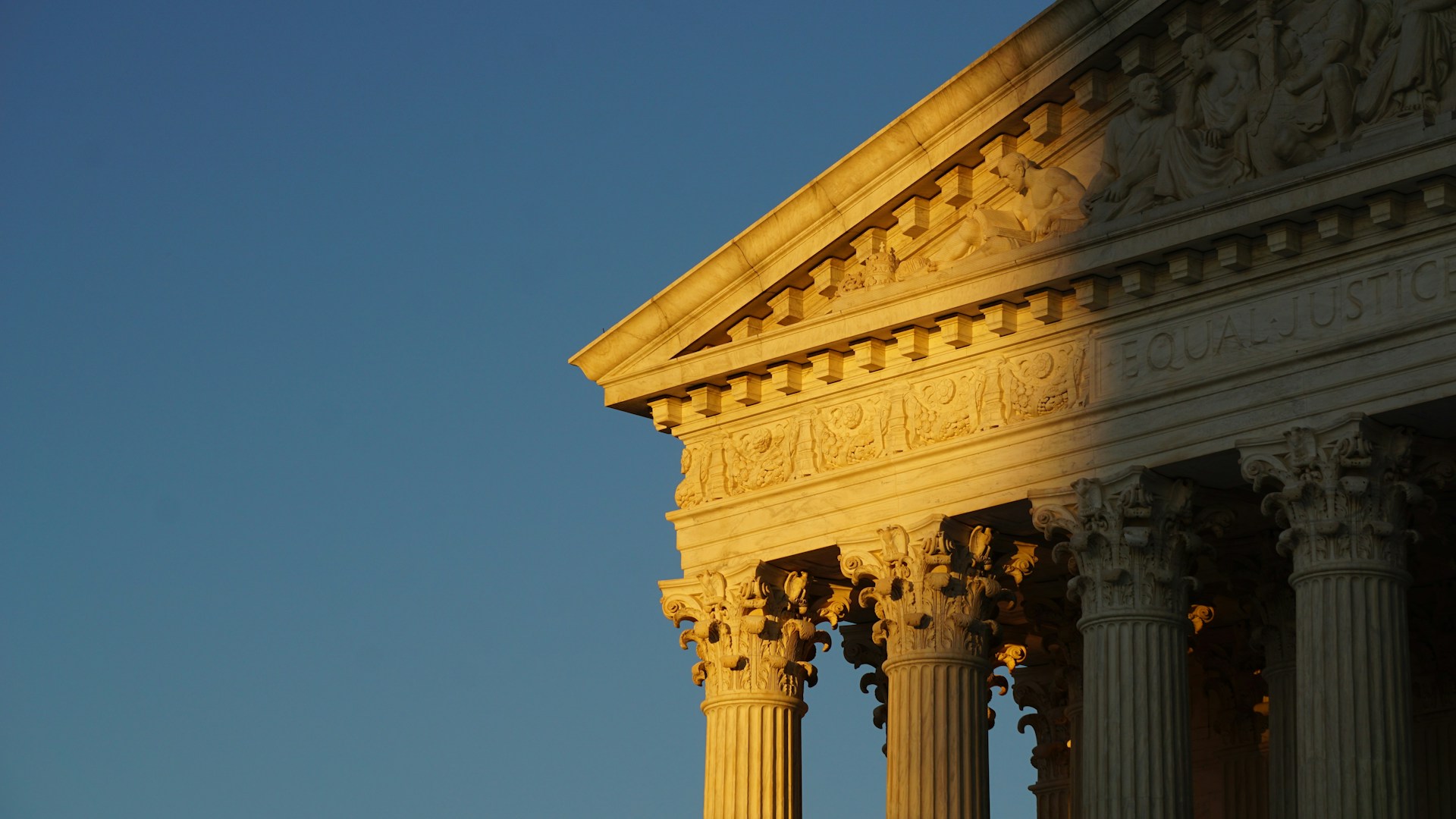
President Donald Trump just won an important Supreme Court battle over his ambitious White House construction project — but one of the strongest objections came from a surprising source.
Chief Justice John Roberts, a member of the Supreme Court’s conservative wing, joined the three liberal justices in opposing the 5-4 decision that allows construction of Trump’s new White House ballroom complex to continue.
Roberts went considerably further than simply disagreeing with the majority.
He raised serious questions about whether the construction itself is legal.
The ruling nevertheless represents a significant victory for Trump, whose plans to transform parts of Washington, D.C., have become the subject of multiple legal challenges.
Supreme Court Clears the Way for Trump
The dispute centers on Trump’s massive new White House ballroom project, which is expected to cost at least $400 million.
The National Trust for Historic Preservation sought to stop construction, arguing that a project of this magnitude could not legally proceed without congressional authorization.
Five Supreme Court justices rejected the organization’s attempt to halt the project.
But there is an important distinction in what the court actually decided.
The majority did not rule that Trump’s construction project is unquestionably legal.
Instead, the justices concluded that the National Trust is unlikely to have the legal standing necessary to challenge the project in federal court.
That technical distinction handed Trump an immediate practical victory: Construction can keep moving forward.
Trump Celebrates the Decision
The president wasted little time celebrating.
Trump announced on Truth Social that he was pleased with the Supreme Court’s decision allowing the ballroom and military complex to proceed.
He also predicted that the completed structure would become one of the most impressive buildings constructed in Washington.
For an administration facing several lawsuits over Trump’s plans for the nation’s capital, the decision removes — at least temporarily — one of the biggest obstacles facing the White House project.
But then came the surprise from Chief Justice Roberts.
Conservative Chief Justice Turns Against Trump
Roberts sided with the Supreme Court’s three liberal members in dissent.
His assessment of the construction was striking.
“That construction is likely unlawful,” Roberts wrote.
The statement immediately stood out because Roberts is generally identified with the court’s conservative bloc, even though he has broken with other conservative justices in several major cases over the years.
His dissent also highlighted the larger constitutional question that Monday’s ruling did not settle:
How much authority does a president have to substantially alter the White House complex without Congress approving the project?
That question could ultimately prove more consequential than Monday’s decision.
Does Trump Need Permission From Congress?
Federal law gives Congress significant authority over federal property, including property associated with the White House.
Presidents, however, have also historically possessed authority to maintain, repair, renovate, alter and improve the Executive Residence.
The legal dispute therefore centers on where routine presidential authority ends and congressional authority begins.
A relatively modest renovation would present one set of circumstances.
A sprawling project costing hundreds of millions of dollars presents a much larger question.
The Supreme Court did not resolve that constitutional dispute Monday.
Instead, the majority determined that the particular organization attempting to stop Trump probably lacked the legal standing required to bring its challenge.
That means another plaintiff with stronger standing could potentially bring a different case.
White House Ballroom Is Already 65% Complete
Time could now become one of Trump’s greatest advantages.
According to administration lawyers, approximately 65% of the construction has already been completed.
Crews reportedly are working as many as 20 hours each day on the project.
The planned complex covers approximately 90,000 square feet, making it far more extensive than a conventional ballroom renovation.
Court documents indicate that completion is expected in August 2028.
Every additional month that construction continues makes the project more difficult to stop as hundreds of millions of dollars are invested and the structure approaches completion.
That makes Monday’s Supreme Court victory particularly important for the administration.
There’s Much More Than a Ballroom Underground
Trump has recently emphasized another aspect of the project that could play an increasingly important role in the debate.
Despite being commonly described as a “ballroom,” the complex is expected to contain substantial national security and military infrastructure.
Plans reportedly include an underground bunker, rooftop drone port and hospital complex.
Those features allow the administration to argue that the project isn’t simply an expensive addition designed for ceremonies and state dinners.
The White House can instead point to the security components as part of a broader effort to modernize infrastructure surrounding the presidency.
Opponents are likely to counter that the project’s military and security elements make congressional oversight even more important.
Either way, the scope of the project helps explain why the legal fight has attracted so much attention.
Trump’s Washington Transformation Faces More Challenges
The White House ballroom isn’t the only Trump project generating controversy.
Trump’s broader effort to reshape and renovate prominent Washington landmarks has produced several legal battles.
Democratic Rep. Joyce Beatty of Ohio is challenging his effort involving renovations to the Kennedy Center, while other groups are fighting plans for a proposed arch near Arlington National Cemetery.
Together, the disputes raise a larger question about presidential power over America’s most recognizable federal properties.
Trump’s supporters see an administration willing to undertake ambitious projects and modernize aging institutions.
His opponents argue that presidential authority has limits and that Congress must play a role in major changes involving federal property.
Those competing views could eventually bring another case before the Supreme Court.
Roberts’ Warning Could Be Just the Beginning
For now, Trump has the result he wanted.
Construction continues.
The organization attempting to stop the project failed to persuade five Supreme Court justices that it had sufficient legal standing.
And with the project reportedly already 65% finished, the administration gained valuable time to push construction toward completion.
But Roberts’ dissent leaves a major warning hanging over the entire project.
The chief justice didn’t merely disagree over a technical point of law. He openly questioned whether the construction is lawful.
That could encourage Trump’s opponents to search for another party with stronger legal standing to bring a new challenge.
So Monday’s decision may have settled the immediate fight without settling the larger issue.
Trump won the Supreme Court battle.
The fight over the limits of presidential power, however, may only be getting started.