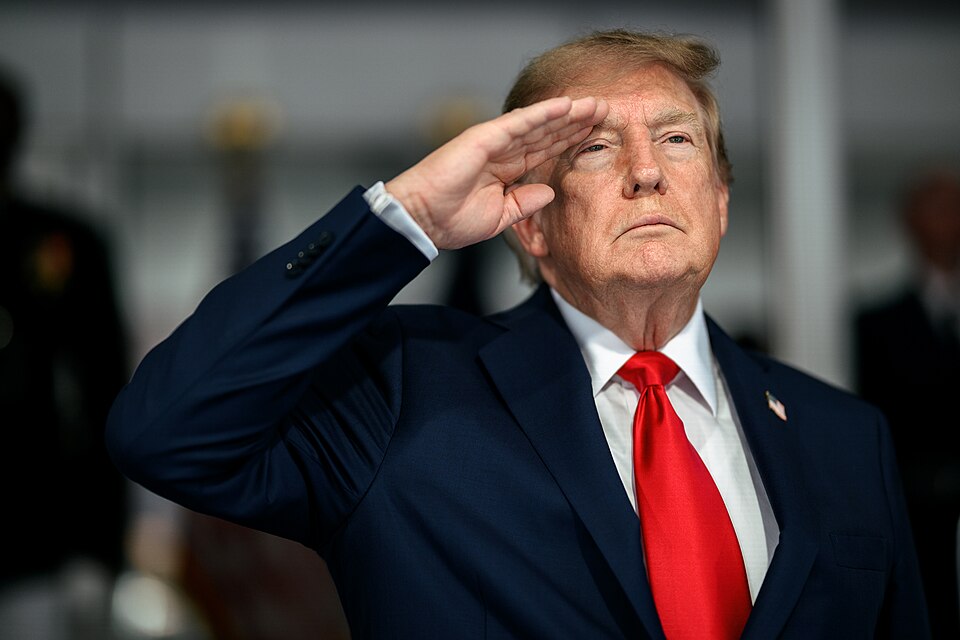
Here’s what President Trump is dealing with now.
President Donald Trump has been handed another major political warning as Republicans head toward the November midterm elections, with a new national poll showing his approval rating stuck at the lowest level measured by Reuters/Ipsos across his two presidencies.
The latest Reuters/Ipsos survey found that 33% of Americans approve of Trump’s performance as president.
More concerning for the White House, this is not an isolated result. Trump has now registered a 33% approval rating in three consecutive Reuters/Ipsos polls, suggesting his recent decline has developed into a sustained political challenge rather than a one-poll anomaly.
His disapproval rating stands at 63%, down slightly from a recent high.
The numbers arrive at a critical moment for Trump and the Republican Party. Americans continue to express concerns about the cost of living, while the ongoing conflict with Iran has added another unpredictable issue heading into the midterm elections.
And one issue in particular could determine whether Republicans can turn things around before November.
Cost of Living Becomes Trump’s Biggest Warning Sign
The most politically dangerous number in the survey may have little to do with Trump’s overall approval rating.
It involves Americans’ wallets.
According to Reuters/Ipsos, 71% of respondents disapprove of Trump’s handling of the cost of living. Only 22% approve.
That matters because affordability remains one of the most important issues facing American families.
From grocery bills and gasoline to housing, insurance, utilities and other household expenses, voters continue to feel pressure from everyday costs.
The poll found that 47% of respondents consider the cost of living the most important factor when deciding whom to support in November.
For Republicans, that makes the economy and household finances a potentially decisive political battleground.
Trump campaigned heavily on bringing prices down and improving Americans’ economic circumstances. If voters do not believe they are seeing enough progress before November, Republican candidates could ultimately pay the political price.
Republicans Face Another Midterm Warning
The survey delivered another piece of troubling news for the GOP: Democratic voters currently appear more enthusiastic about November.
Among registered Democrats surveyed, 46% said they were “very enthusiastic” about voting in the midterm elections.
Among Republicans, that figure was just 31%.
The 15-point enthusiasm gap could become important because midterm elections are often determined by which party does the better job of getting its supporters to actually cast ballots.
There is still time for those numbers to change.
Trump retains a deeply committed political base, and Republican enthusiasm could rise substantially as Election Day approaches. Campaign events, economic developments, the Iran conflict and battles over immigration, crime and government spending could all reshape the political environment.
But the current numbers offer Republicans a clear warning against complacency.
Independent Voters Could Decide the Election
Independent voters may present an even bigger challenge.
When independents were asked which party they would support if the congressional election were held now, 36% selected Democrats while 22% chose Republicans.
That leaves a substantial portion of independent voters who either remain undecided or prefer neither party.
For Republicans, those voters could represent both a major vulnerability and an opportunity.
Trump’s ability to reconnect with independents was an important part of his political comeback. Winning those voters again could prove essential if Republicans hope to protect their narrow congressional majorities.
The question is whether economic concerns and dissatisfaction with the Iran conflict will outweigh issues where conservative voters may be more receptive to Trump’s agenda, including immigration, border security, crime and government spending.
Trump Has Been Here Before
While the latest polling is undeniably difficult for the White House, Trump has spent much of his political career defying conventional expectations.
His political obituary has been written repeatedly since he first entered presidential politics.
He survived controversies that would likely have ended the careers of traditional politicians, lost the White House in 2020 and then completed an extraordinary political comeback four years later.
That history is one reason Republicans may be reluctant to treat today’s polling as a prediction of what will happen in November.
Polls measure public opinion at a particular moment. They do not determine election results.
But they can identify political weaknesses, and several recent surveys are pointing in the same direction.
Other Polls Also Show Trump Struggling
Reuters/Ipsos is not alone in finding Trump’s approval rating under pressure.
The Decision Desk HQ polling average placed Trump’s approval at 38.6% on Tuesday, down approximately 1.5 percentage points from the previous week.
A recent University of Massachusetts Amherst poll produced an even more difficult result for the president.
That survey of 1,000 respondents found 32% approved of Trump’s job performance, while 64% disapproved.
Among those surveyed, 54% said they “strongly” disapproved of the president’s performance.
Different polls use different methodologies, samples and voter models, so individual results should always be interpreted cautiously.
Still, when multiple surveys begin showing similar movement, campaigns pay attention.
Trump Rejects Negative Polling
Trump has made clear that he does not accept the narrative surrounding his declining poll numbers.
When The Hill recently asked the White House about the president’s ratings, an administration official pointed to a Truth Social post in which Trump characterized unfavorable polling as “Demoralization Operations.”
Trump argued that negative polls are being used to discourage Republican voters from participating in upcoming elections.
He also claimed that other polling shows him performing significantly better, although he did not identify specific surveys in that particular post.
Trump has challenged unfavorable polling throughout his political career, and his supporters have frequently argued that traditional surveys underestimate the strength of his coalition.
That debate is unlikely to disappear before November.
Iran War Adds Another Political Complication
Trump’s polling problems are unfolding as the United States remains involved in the conflict with Iran.
Support for the military campaign has weakened, adding another complication for a president who has traditionally emphasized avoiding prolonged American involvement in overseas conflicts.
The war has also affected energy markets, adding to concerns about gasoline prices and household expenses.
That creates a potentially dangerous political combination for the White House: foreign-policy uncertainty paired with economic anxiety at home.
For voters approaching retirement or already living on fixed incomes, increases in gasoline, groceries, utilities and other necessities can have an especially noticeable impact on household budgets.
Those are precisely the kinds of pocketbook concerns that can influence voters regardless of party loyalty.
The Midterms Are Still Far From Decided
None of this means Republicans are destined to lose in November.
Several months remain before voters cast their ballots, and American politics can change dramatically in a short period.
A decline in gasoline prices, improvements in the broader economy, progress toward ending the Iran conflict or renewed voter attention on immigration and public safety could alter the political landscape.
Republicans also have an opportunity to make the election about more than Trump’s approval rating.
Congressional candidates will campaign on local issues, taxes, government spending, border security, crime, energy policy and the records of their Democratic opponents.
But Republicans cannot ignore what the latest numbers are telling them.
The Bottom Line
Trump has survived difficult polling before, but the latest Reuters/Ipsos results present a serious political challenge.
His approval rating remains at 33%. Voters are deeply dissatisfied with his handling of the cost of living. Democrats currently hold an enthusiasm advantage, and independent voters in the survey lean toward Democratic congressional candidates.
For conservatives, the critical question is what happens next.
Can Trump convince Americans that his economic agenda is beginning to work? Can Republicans energize their voters before November? And can the president win back independents who may be frustrated with prices and the conflict overseas?
Those answers could ultimately determine control of Congress — and shape the final two years of Trump’s presidency.
The Reuters/Ipsos poll was conducted Aug. 28-31 among 1,167 U.S. adults nationwide. The survey has a margin of error of approximately three percentage points.