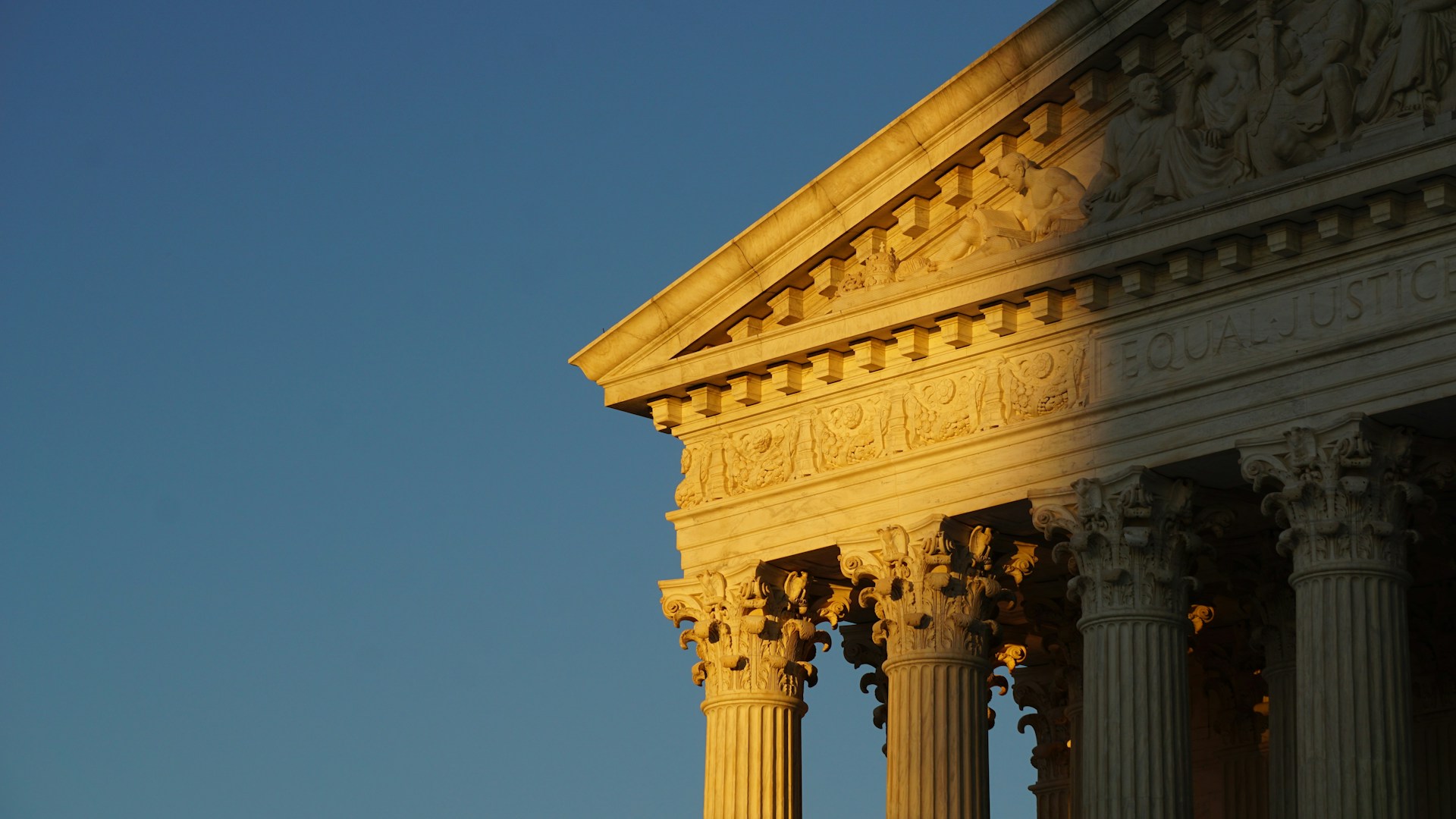
One state is asking for assistance.
Missouri is asking the U.S. Supreme Court to intervene in an escalating election battle that could determine which congressional map the state uses in the November midterms.
State officials filed an emergency request with the nation’s highest court after the Missouri Supreme Court blocked a newer congressional map that had already been used during the state’s primary election.
The last-minute legal fight puts Missouri election officials under intense time pressure as they prepare ballots and congressional races for November.
At the center of the dispute is a Republican-backed redistricting plan that could improve the GOP’s chances of winning an additional congressional seat.
Now, Missouri wants the U.S. Supreme Court to step in.
Missouri Takes Emergency Election Fight To Supreme Court
Missouri Attorney General Catherine Hanaway’s office filed an emergency application Friday asking the Supreme Court to halt the Missouri Supreme Court’s decision.
State officials warned that switching congressional maps after voters already participated in the primary could cause serious election-administration problems.
“A federal-election-administration disaster is unfolding in Missouri,” the state told the Supreme Court.
Missouri argues that election officials are being forced into the extraordinary position of potentially conducting the general election under congressional boundaries different from those used during the primary.
The state wants the Supreme Court to temporarily block the Missouri ruling and allow the newer districts to remain in place while the legal battle continues.
What Happened To Missouri’s Congressional Map?
Missouri lawmakers approved new congressional boundaries in 2025 as part of the nationwide redistricting battle ahead of the 2026 midterm elections.
The map significantly altered the Kansas City-area congressional district represented by Democratic Rep. Emanuel Cleaver.
Under the newer boundaries, Republicans could potentially gain another congressional seat in a state where the party already controls most of the delegation.
The map was used during Missouri’s August primary election.
But opponents sought to challenge the redistricting legislation through Missouri’s referendum process, gathering hundreds of thousands of petition signatures in an effort to put the issue before voters.
That disagreement eventually reached the Missouri Supreme Court.
Missouri Supreme Court Blocks New Map
The Missouri Supreme Court unanimously ruled that the redistricting legislation can be challenged through a statewide referendum.
Missouri Secretary of State Denny Hoskins had previously rejected the referendum effort.
The state Supreme Court disagreed with that decision.
According to the court, Missouri’s constitution gives voters broad referendum authority over legislation approved by the General Assembly, and congressional redistricting legislation is not specifically excluded from that process.
Because the referendum petition was determined to be valid and timely, the court concluded that the newer congressional map cannot take effect unless voters approve it.
That means Missouri would return to the congressional boundaries established following the 2020 census for the November general election unless the U.S. Supreme Court intervenes.
Primary And General Election Could Use Different Maps
That is where the dispute becomes particularly unusual.
Missouri already conducted its congressional primary using the newer districts.
The state says approximately 1.2 million people participated in that election.
If the Missouri Supreme Court decision remains in effect, congressional candidates who won primaries under one set of boundaries could face voters in November under another.
Missouri officials argue that the situation creates serious practical and constitutional concerns.
Election authorities may have to reassign voters to congressional districts, adjust ballot preparations and explain the changes to the public shortly before Election Day.
The state also argues that some voters who participated in a particular congressional primary could find themselves living in another district for the general election.
Missouri Warns Of Voter Disruption
In its emergency Supreme Court application, Missouri portrayed the situation as an urgent threat to orderly election administration.
“Only this Court can prevent Missouri from being forced to disenfranchise hundreds of thousands of voters,” the state argued in its filing.
The state also asked the justices to ensure Missouri can conduct what it described as a timely and lawful congressional election.
Missouri officials contend that the state should not be required to abandon congressional boundaries after already using them for the primary.
The state told the Supreme Court it was unaware of another instance in which congressional boundaries were changed between a completed primary and the corresponding general election because of a referendum petition.
Missouri Raises U.S. Constitution Argument
The dispute is about more than election logistics.
Missouri is also raising a major constitutional argument involving the Elections Clause of the U.S. Constitution.
The clause states that the “Times, Places and Manner” of congressional elections are prescribed in each state by its legislature, subject to Congress’s authority.
Missouri argues that the state Supreme Court improperly interfered with the legislature’s constitutional authority by preventing the newer congressional map from being used.
The Missouri Supreme Court, however, concluded that the state constitution’s referendum provisions apply to the redistricting legislation.
That sets up a conflict over the relationship between state constitutional procedures and the federal Constitution’s rules governing congressional elections.
Attorney General Blasts Missouri Court Decision
Hanaway’s office has strongly criticized the state court ruling.
The attorney general’s office called the decision “bizarre and profoundly anti-democratic” and argued that it would cause irreparable harm if allowed to remain in effect.
Those characterizations are Missouri’s arguments before the U.S. Supreme Court, not findings made by the federal justices.
The state maintains that a relatively small percentage of registered voters should not be able to suspend a congressional map before the full statewide electorate votes on the referendum.
Opponents of the map, meanwhile, successfully argued before Missouri’s highest court that the state constitution gives voters the legal right to challenge the legislation through the referendum process.
Brett Kavanaugh Gets Emergency Request
Missouri’s case has now reached the U.S. Supreme Court’s emergency docket, where the justices consider urgent requests that cannot wait for the normal months-long appeals process.
Justice Brett Kavanaugh handles emergency matters arising from the federal appeals circuit that includes Missouri.
Kavanaugh was appointed to the Supreme Court by President Donald Trump in 2018.
He has requested that opponents of the new congressional map respond to Missouri’s application by Monday.
The application could ultimately be referred to the full Supreme Court.
That means the nation’s highest court may soon determine whether Missouri can continue using the congressional districts that governed its primary or must return to the older boundaries for November.
Why Missouri’s Congressional Map Matters
The controversy has national implications because control of the U.S. House is at stake in the 2026 midterm elections.
Congressional redistricting has become a major political and legal battleground in several states.
Missouri’s newer map was designed in a way that could strengthen Republican prospects by dramatically changing Cleaver’s Kansas City-area district.
The previous congressional configuration was more favorable to Cleaver and left Republicans controlling six of the state’s eight U.S. House districts.
That means a dispute over a single district could have consequences beyond Missouri if control of the House is decided by a narrow margin.
Redistricting Battles Spread Across America
Missouri is not the only state where congressional boundaries have produced major legal battles.
Republican- and Democratic-led states have pursued redistricting efforts as both parties seek advantages in congressional elections.
Those fights have repeatedly reached state and federal courts, including the U.S. Supreme Court.
The justices have consequently found themselves deciding disputes involving state constitutional requirements, federal election law, racial-gerrymandering claims and the authority of legislatures to draw congressional districts.
Missouri’s case adds another question: What happens when a congressional map used during a primary is blocked before the general election?
Missouri Faces A Tight Election Deadline
Timing may now be one of the most important factors in the case.
Election officials cannot wait indefinitely to learn which congressional boundaries they should use.
Ballots must be finalized, voters must know which congressional district they live in and candidates need to know which voters they are campaigning to represent.
Missouri therefore wants the Supreme Court to act rapidly.
Opponents of the newer map will have an opportunity to explain why they believe the Missouri Supreme Court ruling should remain in place.
The U.S. Supreme Court will then determine whether emergency intervention is warranted.
What Happens Next?
The immediate focus is on the Supreme Court.
Opponents of Missouri’s newer congressional map have been ordered to respond to the emergency request, after which the justices could act quickly because election deadlines are approaching.
If the Supreme Court grants Missouri’s requested stay, the newer congressional boundaries could remain in effect while the case continues.
If the Court declines to intervene, Missouri would be expected to follow the state Supreme Court ruling and use the previous congressional boundaries for the November election.
Meanwhile, Missouri voters are expected to have the opportunity to weigh in on the disputed redistricting plan through the referendum process.
For voters, candidates and election administrators, the legal arguments ultimately lead to one immediate question:
Which congressional map will Missouri use in November?
With the election rapidly approaching, the answer may now come from the U.S. Supreme Court.