Here’s what happened.
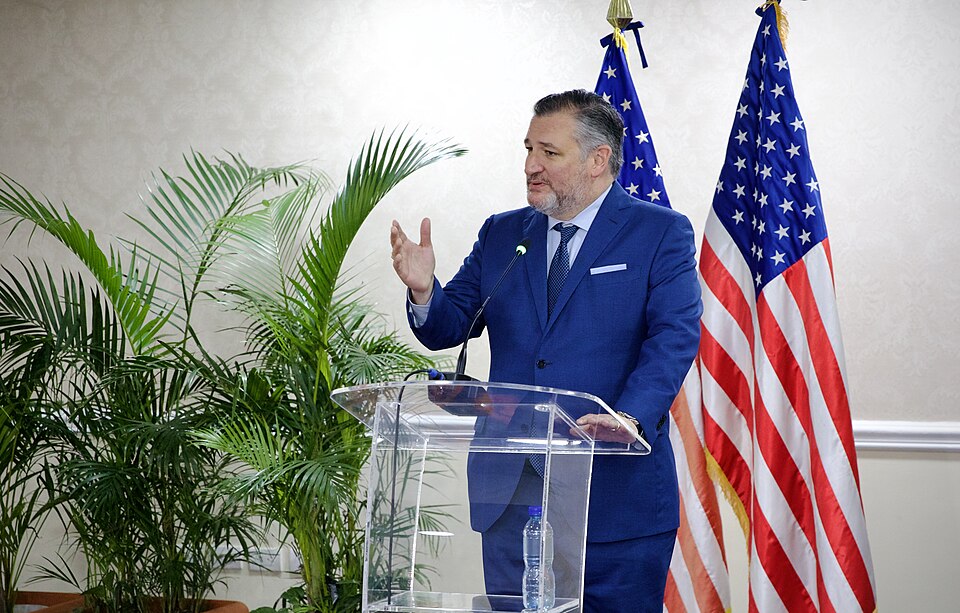
Republican Sen. Ted Cruz of Texas is working with Democratic Sen. Ron Wyden of Oregon on legislation that could significantly change how Americans challenge federal government pressure involving free speech.
The bipartisan proposal, known as the JAWBONE Act, is designed to give individuals new legal options when they believe a federal agency or government employee has improperly pressured a private company to restrict constitutionally protected expression.
The legislation reaches far beyond traditional television and radio. It could also apply to social media platforms, online services and artificial intelligence companies, putting the growing debate over government influence and the First Amendment back in the national spotlight.
What Is The JAWBONE Act?
JAWBONE stands for the Justice Against Weaponized Bureaucratic Overreach to Networked Expression Act.
The legislation would allow qualifying plaintiffs to sue when federal officials allegedly use government power to pressure private companies into censoring or restricting speech.
One of the biggest changes involves the legal standard Americans would face when bringing such a case.
Under existing circumstances, plaintiffs can face difficulty proving that government pressure directly caused a private company to remove or alter speech.
The JAWBONE Act seeks to broaden those protections by allowing damages in certain cases involving improper government coercion even if the censorship effort ultimately fails.
That provision could make it easier for Americans to challenge federal conduct before speech is actually removed.
Ted Cruz Says Government Pressure Is A Real Threat
Cruz has argued that government interference with online expression is not merely a theoretical concern.
The Texas Republican has repeatedly criticized actions taken during the Biden administration, particularly interactions between federal agencies and large technology companies concerning online content.
Cruz has pointed to disputes involving COVID-19 policies, vaccine mandates and election-related speech as examples of why stronger protections are necessary.
“Government interference in online speech is not fiction,” Cruz said when discussing the legislation.
He argues that Americans should have meaningful legal tools available when federal officials cross the line from government communication into unconstitutional coercion.
The Bill Would Also Apply To Republican Administrations
Although Cruz has emphasized controversies involving the Biden administration, the proposed law would not be limited to Democratic officials.
Its restrictions would apply to federal agencies and employees regardless of which political party controls the White House.
That provision has helped produce an unusual alliance between Cruz and Wyden, two senators who often stand on opposite sides of major political disputes.
Wyden has raised concerns of his own about government officials attempting to pressure private media companies.
The Oregon Democrat has specifically argued that Americans cannot always depend on large corporations to resist pressure from Washington.
Wyden Points To Pressure On Private Media Companies
Wyden has warned that a large share of American political and cultural speech now passes through privately owned companies.
Those companies include television networks, internet platforms, streaming services and social media businesses.
Because private companies control so many of the channels Americans use to communicate, Wyden argues that citizens need stronger protections when government officials attempt to influence what those companies allow.
His position is that constitutional safeguards should apply consistently, regardless of whether the pressure comes from a Republican or Democratic administration.
That makes the JAWBONE Act unusual in today’s deeply divided political environment.
New Rules Would Increase Government Transparency
The legislation would also establish new transparency requirements involving communications between federal agencies and private companies.
Under the proposal, agencies would be required to document certain contacts concerning speech and content moderation.
Some of that information would be summarized through a public reporting system, while Congress would receive broader access to relevant records.
Supporters argue that these disclosure requirements could help Americans better understand how often federal officials communicate with private companies about online or broadcast content.
The provisions could also make it easier for congressional investigators to determine whether government agencies are attempting to influence private speech policies.
Social Media And Artificial Intelligence Are Included
The legislation is especially significant because it does not focus only on traditional broadcasters.
Its provisions would also extend into rapidly growing areas of digital communication.
That includes major social media platforms and certain artificial intelligence providers.
As more Americans receive news, commentary and information through digital services, questions about who controls speech on those platforms have become increasingly important.
Artificial intelligence has added another layer to the debate as AI systems become more influential in search, communication and information distribution.
The JAWBONE Act attempts to establish legal protections that could apply across both older and newer forms of media.
Civil Liberties Groups Support The Proposal
The legislation has attracted backing from organizations representing different parts of the political spectrum.
Supporters have included the American Civil Liberties Union, the Foundation for Individual Rights and Expression, and the Knight First Amendment Institute at Columbia University.
Their support reflects a broader concern that government coercion involving private companies can raise constitutional questions regardless of which political party happens to be in power.
Civil-liberties advocates generally distinguish between lawful government persuasion and unconstitutional government coercion.
Federal officials remain free to criticize companies, promote public policy, enforce valid laws and provide information.
The legal dispute begins when government power is allegedly used to force private organizations to suppress protected expression.
Why Cruz And Wyden Working Together Is Significant
Cruz and Wyden rarely approach national political issues from the same ideological direction.
That makes their cooperation on free-speech legislation noteworthy.
Conservatives have spent years criticizing government interactions with major technology companies, particularly following controversies involving social media moderation.
At the same time, civil-liberties organizations and Democrats have raised concerns when Republican officials have been accused of pressuring broadcasters, technology companies or other private organizations.
The JAWBONE Act attempts to create a single standard that would apply to both situations.
Instead of focusing on one administration or political party, the legislation would establish rules governing future federal officials as well.
The Larger First Amendment Debate
The dispute touches on one of the most important questions surrounding modern communication: How much influence should the federal government have over decisions made by private media and technology companies?
Private companies generally have their own rights to decide what content appears on their platforms.
The government, however, faces constitutional limits that private companies do not.
That creates a complicated legal situation when government officials strongly encourage, pressure or threaten private businesses over speech.
Courts have spent years examining where legitimate government communication ends and unconstitutional coercion begins.
The JAWBONE Act represents an attempt by Congress to provide Americans with additional legal remedies when that boundary is allegedly crossed.
What Happens Next?
For the JAWBONE Act to become federal law, it would still need to complete the congressional process and receive presidential approval unless Congress were able to override a veto.
The legislation could face additional debate over exactly how government coercion should be defined and when monetary damages should be available.
Supporters say stronger protections are necessary to prevent federal officials from using private corporations as an indirect way to suppress speech.
Critics of proposals in this area can argue that overly broad restrictions could make legitimate communication between government agencies and technology companies more difficult.
Those questions will likely remain central as lawmakers debate the measure.
For now, one thing stands out: Cruz and Wyden have found common ground on an issue that cuts across traditional party lines.
Their partnership has turned the JAWBONE Act into another major chapter in Washington’s continuing battle over free speech, government power, social media and the First Amendment.