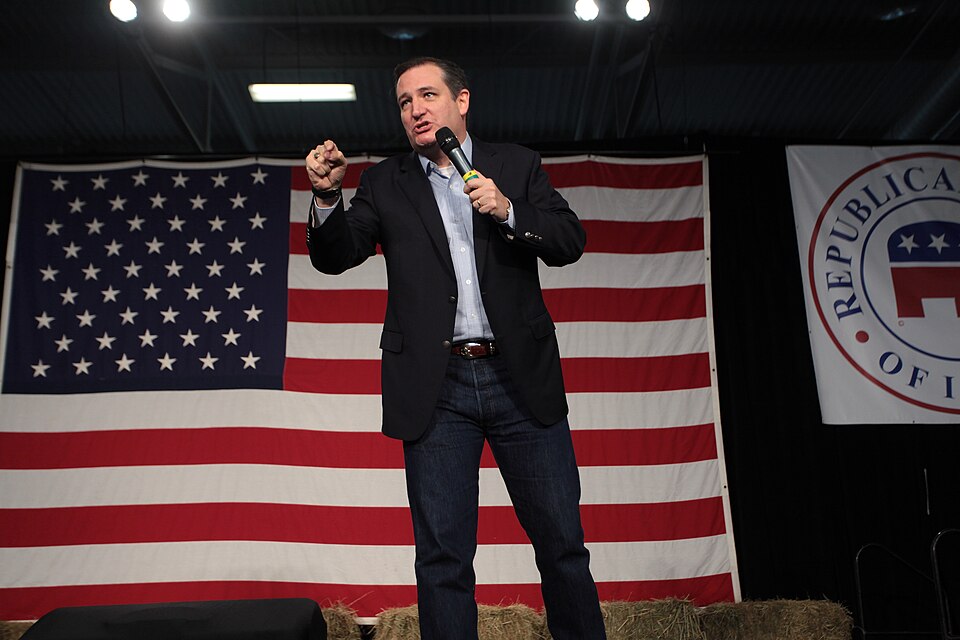
Cruz did not hold back.
Sen. Ted Cruz confronted former special counsel Jack Smith during a tense Senate Judiciary Committee hearing Tuesday, repeatedly challenging the former federal prosecutor over investigations involving President Donald Trump and Republican organizations.
The Texas Republican used his questioning time to accuse Smith of allowing politics to influence the Justice Department and argued that the investigations damaged public confidence in federal law enforcement.
Smith firmly rejected the suggestion that Republicans had been targeted because of their political affiliation.
The heated exchange quickly became one of the most notable moments of the hearing.
Cruz Launches Sharp Criticism of Jack Smith
Cruz opened his questioning with a sweeping attack on Smith’s record as special counsel.
The senator described Smith’s investigations as a serious abuse of Justice Department authority and accused the former prosecutor of pursuing Trump and other Republicans for political reasons.
Smith has denied those allegations and has maintained that his investigative decisions were based on evidence and federal law.
Near the end of his questioning, Cruz compared Smith’s conduct to controversies associated with the Nixon administration.
“Congratulations, because you have succeeded where Richard Nixon failed,” Cruz told Smith, accusing him of using federal law enforcement against political opponents.
Cruz also alleged that Smith had damaged the Justice Department’s reputation for political independence.
Smith listened as the senator delivered the criticism before the questioning moved to specific investigative actions.
Republican Subpoenas Become Major Focus
A significant portion of Cruz’s questioning centered on subpoenas connected to Smith’s investigations.
Cruz displayed a large visual aid behind him and cited figures indicating that investigators issued 197 subpoenas involving records connected to more than 430 Republican organizations and individuals.
The senator referenced Republican groups and conservative organizations as he questioned whether investigators had applied similar scrutiny to Democrats.
Cruz pressed Smith about entities including the Republican National Committee and Turning Point USA.
Smith responded that he could not recall every detail involving the individual subpoenas.
That answer prompted a sharp response from Cruz.
“You can sigh all you like; it’s a very simple question,” Cruz told him during the exchange.
The Texas senator argued that the number and scope of subpoenas deserved additional examination by Congress.
Cruz Asks Smith Direct Question About Republicans
The exchange reached another tense moment when Cruz asked Smith whether simply belonging to the Republican Party could be considered criminal conduct.
“In your view, is it a crime to be a Republican?” Cruz asked.
“Absolutely not, sir,” Smith responded.
Smith’s answer reflected his broader defense throughout the hearing: that investigators followed evidence rather than political affiliation when determining which individuals and organizations were relevant to the investigation.
Republicans on the committee remained skeptical of that explanation.
What Jack Smith Investigated
Smith was appointed special counsel in 2022 and eventually oversaw two federal criminal cases involving Trump.
One case focused on Trump’s handling of classified government documents after leaving the White House.
The second dealt with efforts surrounding the certification of the presidential election.
Both cases generated years of intense legal and political debate.
Trump and his supporters repeatedly described the prosecutions as politically motivated.
Smith and Justice Department officials rejected that characterization and maintained that charging decisions were based on evidence gathered during the investigations.
The cases against Trump were later abandoned following his return to the presidency, consistent with longstanding Justice Department policy concerning the prosecution of a sitting president.
Republicans Question Whether DOJ Crossed a Line
Tuesday’s hearing was about more than the personal confrontation between Cruz and Smith.
Republican senators used the proceedings to raise broader questions about how federal prosecutors use subpoenas and other investigative powers when elected officials, political organizations and advocacy groups become part of an investigation.
For Republicans, the central concern is whether the Justice Department treated conservative organizations differently because of their political associations.
Smith denied that politics determined investigative decisions.
Democrats on the committee argued that prosecutors had an obligation to investigate evidence connected to efforts surrounding the 2020 election, regardless of the political affiliation of individuals involved.
The disagreement underscored the continuing debate over how the Justice Department should handle politically sensitive investigations.
Smith Defends His Record
Smith repeatedly defended the work performed by his prosecution teams.
He maintained that investigators followed the facts and applicable law and denied operating as an extension of the Democratic Party or targeting Republicans because of their beliefs.
Cruz rejected that explanation.
The senator argued that the sheer number of Republican organizations and individuals whose records were sought raised legitimate concerns about prosecutorial overreach.
Those competing interpretations remained unresolved as the hearing continued.
Senate Hearing Highlights Larger DOJ Debate
The Cruz-Smith confrontation comes amid continued congressional scrutiny of the Justice Department and federal law enforcement agencies.
Republican lawmakers have increasingly focused on questions involving political neutrality, investigative authority and government accountability.
Supporters of Smith’s work contend that politically sensitive investigations cannot be avoided simply because prominent political figures are involved.
Critics argue that investigators must face especially close scrutiny when law-enforcement actions involve candidates, elected officials or political organizations.
Tuesday’s hearing put that disagreement on full display.
Cruz portrayed Smith’s investigations as evidence that the Justice Department had crossed an unacceptable political line.
Smith maintained that prosecutors were carrying out their responsibility to investigate potential violations of federal law.
With congressional committees continuing to examine records from the investigations, the dispute over Smith’s tenure — and the broader question of political neutrality at the Justice Department — is unlikely to disappear soon.