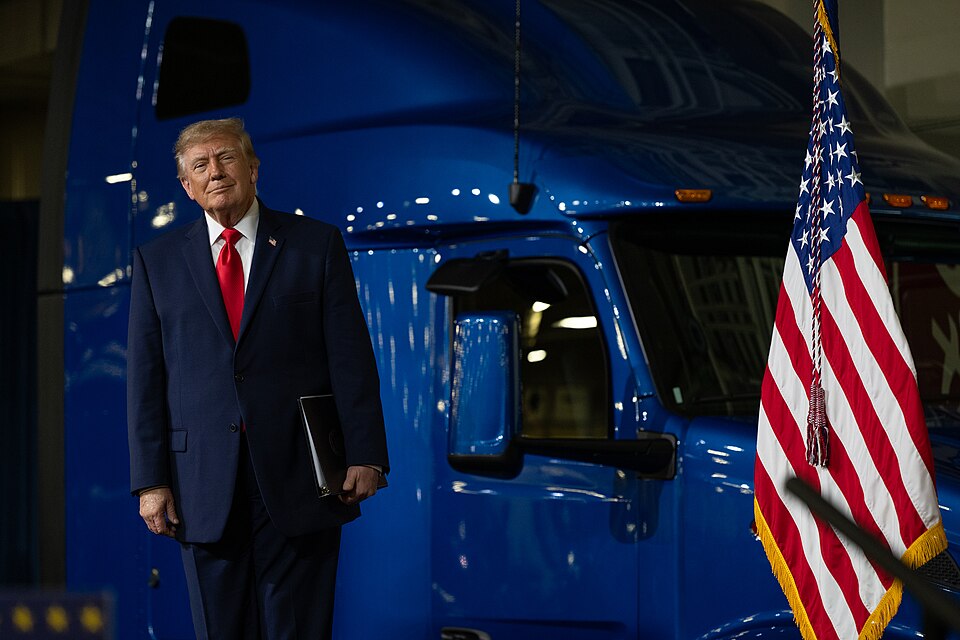
Trump has doubled down.
President Donald Trump is taking another major step in his ongoing battle with Washington’s federal bureaucracy, launching a formal investigation into a powerful government official whose position carries enormous influence over the American economy.
The latest confrontation centers on Federal Reserve Governor Lisa Cook, a Biden-appointed official who has faced allegations involving mortgage applications and questions about whether she should remain in her position.
Trump has established a special three-member committee to examine the allegations and determine whether there are legal grounds to remove Cook from the Federal Reserve Board.
The decision represents a significant escalation in a dispute that has already reached the U.S. Supreme Court.
With mortgage rates, inflation, and the cost of living continuing to concern millions of Americans, the confrontation is drawing renewed attention to accountability and leadership at one of Washington’s most powerful financial institutions.
Trump Launches New Investigation Into Biden Appointee
According to a presidential memorandum dated October 7, 2026, Trump authorized the creation of a special committee to investigate allegations that Cook made false statements on mortgage documents.
The accusations involve mortgage applications submitted in 2021, when Cook allegedly identified two separate properties as primary residences.
The distinction is important because lenders often provide more favorable borrowing terms to individuals purchasing a primary residence rather than an investment property or vacation home.
Federal officials have raised questions about whether the information submitted on Cook’s mortgage applications was accurate.
Cook has denied committing mortgage fraud, and she has not been criminally charged.
The Trump administration maintains that the allegations deserve serious examination, particularly because Cook serves on the board responsible for overseeing the nation’s monetary policy.
The newly established committee will review the evidence before recommending whether sufficient legal grounds exist to remove her.
White House Sets November 5 Hearing
The president’s memorandum directs the committee to hold a formal hearing at the White House on November 5, 2026.
The proceeding will take place behind closed doors and is scheduled to last no longer than four hours.
Cook has been directed to appear and respond to questions concerning the mortgage allegations.
She will also have an opportunity to present evidence, submit written statements, and provide arguments defending her conduct.
The committee includes three senior administration officials:
- Kevin Hassett, a top White House economic adviser.
- Andrea Lucas, chair of the Equal Employment Opportunity Commission.
- Keith Sonderling, acting director of the Office of Government Ethics.
Following the hearing, Cook may submit an additional written response by November 10.
The committee will then provide Trump with its findings and a recommendation concerning whether there is sufficient cause for her removal.
Importantly, the creation of the committee does not automatically remove Cook from office.
Any decision to dismiss her could face additional legal challenges.
Supreme Court Previously Blocked Trump’s Effort
The latest investigation follows a lengthy legal battle between Trump and Cook.
In August 2025, Trump attempted to fire the Federal Reserve governor after the mortgage allegations became public.
Cook challenged the dismissal, arguing that the president lacked sufficient justification to remove her from a position protected by federal law.
The case eventually reached the Supreme Court.
In June 2026, the justices ruled that Cook could remain in her position because the administration had not provided adequate notice and an opportunity to respond before attempting her removal.
However, the decision did not establish that a Federal Reserve governor could never be removed.
Federal law allows a president to remove a governor for cause, although the legal standard is intended to protect the central bank from improper political interference.
The administration’s new committee appears intended to establish a formal process for examining the accusations and determining whether they meet that standard.
The central question is whether the alleged mortgage irregularities constitute sufficient legal grounds for dismissal.
That issue could ultimately return to the federal courts.
Cook’s Lawyers Challenge The Investigation
Cook’s legal team has strongly disputed the allegations and questioned the administration’s motives.
Attorneys Abbe Lowell and Norm Eisen have maintained that their client did not engage in conduct that would justify her removal.
They have described the mortgage issue as an inadvertent error rather than deliberate fraud.
Her attorneys have also expressed concern about whether the White House investigation will be a fair examination of the facts.
Nevertheless, they say Cook welcomes an opportunity to present evidence and defend her reputation.
The distinction between an accidental mistake and intentional deception could become especially important as the investigation proceeds.
While the administration is examining serious allegations, no criminal conviction or judicial finding of mortgage fraud has been established against Cook.
Why Trump Is Challenging The Federal Reserve
The controversy goes beyond the allegations involving one government official.
Trump has repeatedly criticized the Federal Reserve over its interest-rate decisions, arguing that the central bank has not done enough to support economic growth and ease borrowing costs.
The president has publicly advocated lower interest rates, maintaining that American families and businesses are paying too much to borrow money.
The Federal Reserve, however, operates independently when making monetary policy decisions.
Its officials are responsible for balancing inflation risks, employment conditions, and economic stability.
Cook is one of seven members of the Federal Reserve Board of Governors.
She also participates in decisions affecting the nation’s monetary policy.
Her position therefore carries considerable influence over an institution whose actions affect homeowners, retirees, small businesses, and working families.
The administration’s effort to remove her has raised broader questions about the limits of presidential power over independent federal agencies.
What This Means For American Homeowners And Retirees
For millions of Americans, the Federal Reserve’s decisions are more than political headlines.
Interest rates influence everyday financial matters, including home purchases, retirement planning, automobile financing, and business expenses.
Higher borrowing costs can make purchasing a home more expensive and increase the financial pressure on families carrying debt.
Retirees and Americans approaching retirement may also feel the effects through savings yields, investment markets, and changes in household expenses.
Although the Federal Reserve does not directly determine every consumer interest rate, its policies play a major role in shaping financial conditions.
That is one reason the dispute between Trump and Cook has attracted attention beyond Washington.
The allegations concern Cook’s personal financial disclosures, but the legal battle could affect how future presidents interact with the central bank.
Supporters of the administration’s approach argue that government officials should be held accountable when credible questions arise about their conduct.
Opponents warn that removing a Federal Reserve governor without sufficient legal justification could weaken the institution’s independence and undermine confidence in monetary policy.
Both concerns will be central as the dispute advances.
Trump Pushes For Greater Accountability In Washington
Throughout his presidency, Trump has argued that powerful officials in Washington should face greater scrutiny and accountability.
His administration has repeatedly challenged established practices within federal agencies, emphasizing the president’s authority to oversee executive branch officials.
The latest investigation reflects that broader approach.
From the administration’s perspective, allegations concerning financial documents deserve examination regardless of an official’s political background or professional standing.
Cook’s defenders, however, contend that the Federal Reserve’s independence must be protected and that unproven accusations should not become grounds for political removal.
The upcoming hearing could help clarify the evidence underlying the mortgage allegations.
It could also determine whether the White House pursues another formal attempt to dismiss Cook.
The consequences could extend beyond this administration by influencing the legal protections available to future Federal Reserve officials.
What Happens Next In Trump’s Latest Washington Battle?
The next major development is expected on November 5, when the White House committee is scheduled to examine the allegations against Cook.
Following the hearing and her opportunity to submit a final written response, the panel will make its recommendation to the president.
If the committee determines that sufficient legal grounds exist, Trump could move forward with another attempt to remove her.
If Cook successfully challenges the accusations, she could remain in her position.
Either outcome could lead to further legal disputes.
For Trump, the investigation presents another opportunity to pursue his stated goal of greater accountability among powerful Washington officials.
For Cook, the proceedings represent a consequential challenge to her position and professional reputation.
And for Americans watching the economy, the controversy raises larger questions about government oversight, institutional independence, and who should have authority over the nation’s financial leadership.
As the November hearing approaches, Trump’s latest clash with a Biden-appointed Federal Reserve official could become another defining test of presidential authority in Washington.