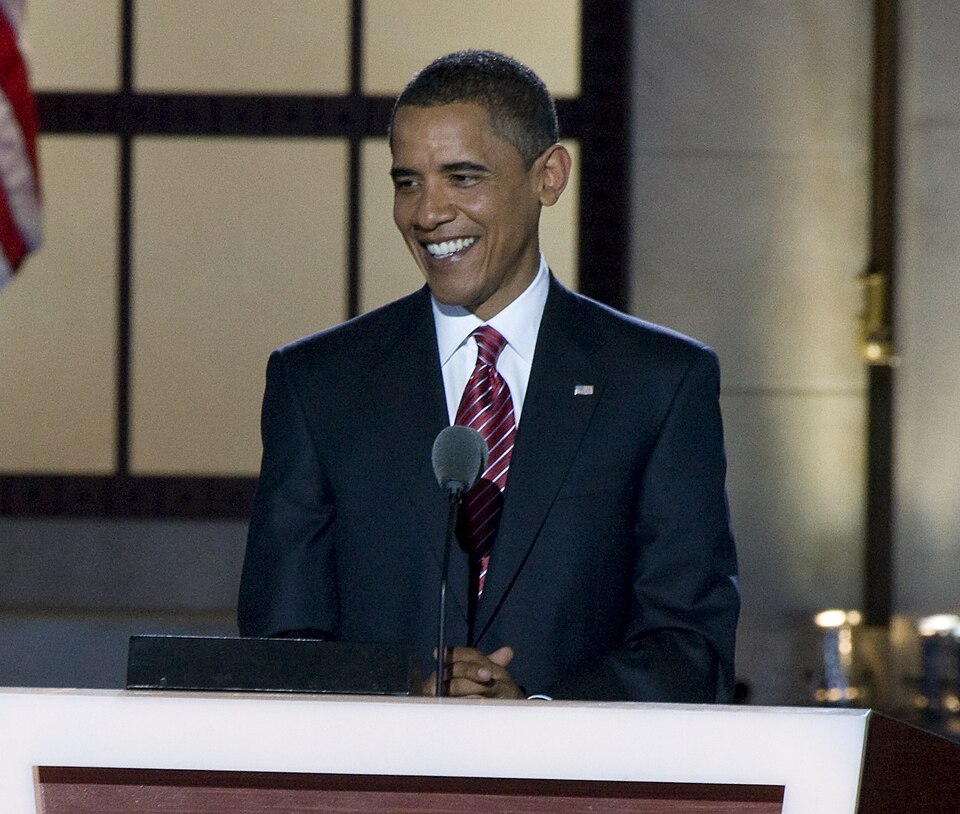
Neither leader is backing down.
President Donald Trump and former President Barack Obama are once again at the center of a major political showdown, exchanging sharp criticism during competing campaign rallies as the November 3 midterm elections rapidly approach.
With control of Congress hanging in the balance, the two presidents took their political rivalry to separate battleground states Wednesday evening, delivering competing messages about America’s future, the economy, and national security.
Trump appeared in Ohio to support Republican candidates, while Obama traveled to Georgia to rally Democrats. Their appearances highlighted the increasingly intense battle between the two parties during the final days of the 2026 midterm election campaign.
Trump Takes Direct Aim At Obama
During a rally in Chillicothe, Ohio, Trump delivered a lengthy speech supporting Republican Sen. Jon Husted and gubernatorial candidate Vivek Ramaswamy.
But the president also turned his attention toward Obama, criticizing his predecessor’s political record and questioning the effectiveness of his campaign appearances for Democratic candidates.
Trump pointed to Obama’s past involvement in presidential elections, including his support for Hillary Clinton in 2016 and Kamala Harris in 2024.
Both Democratic candidates ultimately lost to Trump, a point the president used to challenge Obama’s influence on the campaign trail.
Trump also defended his administration’s record, arguing that Republican leadership remains essential to addressing the country’s economic and national security challenges.
The president has made numerous campaign appearances in recent weeks, attempting to strengthen Republican support and encourage voter participation ahead of Election Day.
Obama Responds With Sharp Criticism Of Trump
At nearly the same time, Obama appeared at a Democratic rally in the Atlanta suburbs alongside Georgia Sen. Jon Ossoff and gubernatorial candidate Keisha Lance Bottoms.
The former president criticized Trump’s leadership, focusing heavily on economic conditions and the administration’s handling of the conflict with Iran.
Obama argued that rising prices and international instability have created additional challenges for American families.
He also questioned Trump’s priorities, suggesting the president has devoted too much attention to White House renovations rather than everyday economic concerns.
Obama’s remarks reflected a broader Democratic effort to make affordability and dissatisfaction with the administration central issues in the midterm elections.
The former president has become an increasingly prominent campaign figure as Democrats attempt to win additional seats in Congress.
Major Disagreement Erupts Over Iran
One of the most significant differences between Trump and Obama involved American foreign policy toward Iran.
Trump defended his decision to withdraw from the Iran nuclear agreement negotiated during Obama’s presidency.
The president has repeatedly argued that the agreement failed to provide sufficient protection against Iran’s nuclear ambitions and threatened America’s long-term security interests.
Obama offered a sharply different assessment.
He defended the agreement and criticized Trump’s approach to Iran, arguing that the current military conflict has contributed to higher energy prices and greater economic uncertainty.
The two positions demonstrate a longstanding disagreement over how the United States should handle threats involving Iran and its nuclear program.
For American voters, the consequences of those decisions extend beyond foreign policy debates.
Energy prices, military spending, national security, and international stability can all affect the financial outlook of households across the country.
White House Renovations Become A Political Flashpoint
The rivalry also took an unexpected turn when both presidents addressed renovations to the White House.
Trump defended improvements made during his administration, maintaining that portions of the historic property needed repairs and restoration.
He described the work as necessary to preserve the appearance and condition of one of America’s most important government buildings.
Obama took a different approach, making jokes about Trump’s decorating choices and criticizing the administration’s response to those comments.
The former president compared aspects of the renovations to extravagant commercial decor and suggested that the White House had become too focused on spectacle.
Trump rejected the criticism and defended the improvements.
Although the dispute involved the appearance of the presidential residence, it also reflected the personal and political tensions that have characterized the relationship between the two leaders for years.
Republicans Face High Stakes In Congressional Elections
While the exchanges between Trump and Obama attracted national attention, the larger political implications are substantial.
Republicans are working to maintain control of both chambers of Congress, while Democrats are hoping to gain enough seats to challenge the administration’s legislative priorities.
The outcome could determine whether Trump has continued congressional support for his agenda or faces increased opposition during the remainder of his presidential term.
Several issues could be affected by the results, including:
- Federal taxes and government spending
- Border security and immigration enforcement
- Energy production and fuel costs
- Healthcare and economic policy
- National defense and foreign policy
Ohio and Georgia have emerged as particularly important states in the final campaign push.
In Ohio, Republican Sen. Jon Husted is facing former Democratic Sen. Sherrod Brown, while Vivek Ramaswamy is competing against Democrat Amy Acton in the governor’s race.
In Georgia, Democratic Sen. Jon Ossoff is seeking reelection, while Keisha Lance Bottoms is competing for the governor’s office.
The results in these states could help shape the political landscape heading into 2027.
Cost Of Living Remains A Major Concern
Despite the heated exchanges between the two presidents, economic concerns remain central to the election.
Americans continue to face pressure from grocery bills, gasoline prices, housing costs, and other household expenses.
Republicans have emphasized their approach to taxes, economic growth, immigration, and domestic energy production.
Democrats have focused on affordability concerns, the administration’s economic decisions, and the financial consequences of the ongoing conflict with Iran.
Both parties are attempting to convince voters that their policies offer the better path forward.
For retirees, working families, and Americans living on fixed incomes, decisions involving inflation, taxes, and federal spending can have particularly significant financial consequences.
Those concerns could influence the choices voters make when they head to the polls.
Trump And Obama Enter Final Midterm Showdown
The latest confrontation between Trump and Obama illustrates how much influence both men continue to hold over American politics.
Trump is using his presidency and campaign appearances to support Republican candidates and defend his administration’s record.
Obama, meanwhile, is using his political standing to support Democratic candidates and challenge the direction of the country under Republican leadership.
Neither man is appearing on the ballot, but both are helping define the competing political messages voters are hearing before Election Day.
For Republicans, maintaining congressional control would provide an opportunity to advance Trump’s legislative priorities.
For Democrats, winning control of either chamber would create new opportunities to challenge the administration and influence federal policy.
With the November 3 midterm elections approaching, the political rivalry between Trump and Obama is once again dominating national attention. But the final decision belongs to American voters, whose choices will determine the balance of power in Washington and help shape the country’s direction for the next two years.