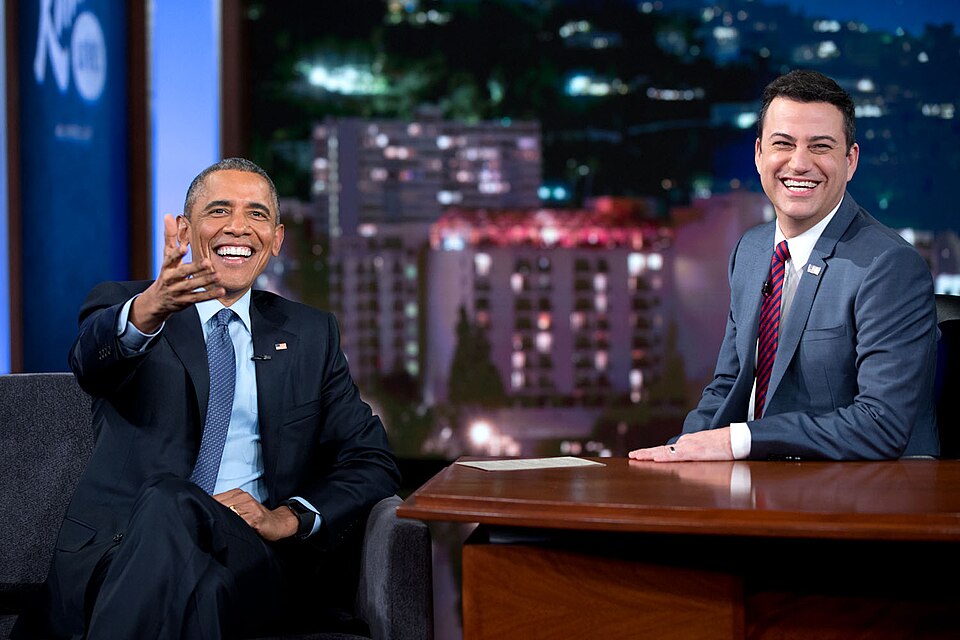
How is this fair?
A stunning new report is putting America’s late-night television industry under scrutiny after researchers uncovered a striking imbalance in political jokes targeting Republican and Democratic Senate candidates ahead of the 2026 midterm elections.
According to a new study from the conservative Media Research Center (MRC), 87% of jokes about U.S. Senate candidates on four major late-night television programs were directed at Republicans, leaving Democrats facing only a small fraction of the criticism.
The findings come just days before Americans head to the polls on November 3, when control of Congress will be on the line.
For viewers already concerned about political bias in the national media, the numbers raise a significant question: Are Americans watching political comedy, or are they being exposed to consistently one-sided political messaging?
New Study Exposes Major Disparity in Late-Night Television Coverage
The Media Research Center examined jokes about Senate candidates broadcast between September 8 and October 30, 2026.
The analysis focused on four popular late-night programs airing on major television networks:
- “Jimmy Kimmel Live!” on ABC
- “The Tonight Show Starring Jimmy Fallon” on NBC
- “Late Night with Seth Meyers” on NBC
- “The Daily Show” on Comedy Central
Researchers identified 52 jokes involving candidates running for the U.S. Senate.
Of those, 45 targeted Republican candidates, while only seven targeted Democrats.
That means Republicans received approximately six times as many jokes as their Democratic opponents during the period studied.
The findings, first reported by the New York Post, have renewed concerns about whether major entertainment programs give audiences a consistently negative impression of Republican candidates.
Although comedy programs are not required to provide equal treatment to political parties, the significant difference in how frequently candidates were targeted has drawn attention to the political messages reaching television viewers.
Several Republican Senate Candidates Face Repeated Criticism
The report identified three Republican candidates who received particularly frequent attention from late-night comedians.
Texas Attorney General Ken Paxton, who is competing against Democratic state Rep. James Talarico in a closely watched Senate contest, received 14 jokes.
Republican Sen. Susan Collins of Maine was the subject of nine jokes as she seeks reelection against Democratic challenger Troy Jackson.
Michigan Republican Mike Rogers received six jokes during his campaign against Democrat Abdul El-Sayed for an open Senate seat.
These races carry national significance because Republicans and Democrats are competing for control of the Senate.
Every competitive contest could affect which party has the power to advance legislation, confirm presidential nominees, and shape the direction of Washington over the next two years.
That makes the media environment surrounding Senate candidates particularly important as voters evaluate their choices.
For critics of late-night television, the concern is not simply that Republicans are being mocked. It is that Democratic candidates appear to be receiving substantially less criticism from the programs included in the study.
Donald Trump Has Been a Frequent Target of Late-Night Comedy
The latest findings follow earlier research examining how television comedians have treated President Donald Trump and conservative political figures.
According to a previous Media Research Center analysis, 92% of political jokes counted on major late-night programs in 2025 targeted conservatives or figures on the political right.
Trump accounted for a substantial share of that attention.
Researchers reported that the president was the subject of 7,045 jokes in 2025, compared with 5,980 in 2024.
Those figures illustrate how frequently Trump has appeared in late-night political entertainment.
For years, the president has had a contentious relationship with prominent television personalities, many of whom regularly criticize his policies, public statements, and leadership style.
The newest report suggests that the criticism documented by MRC extends beyond Trump to Republican candidates competing in important congressional races.
However, the Senate-focused study did not include jokes about the president or other politicians who were not running for Senate seats.
That distinction is important because the 87% figure specifically concerns the Senate candidates examined by researchers.
Media Research Center President Raises Questions About Political Fairness
MRC President David Bozell criticized the findings, arguing that late-night comedy has become increasingly predictable in its choice of political targets.
Bozell suggested that comedy works best when politicians from every party can become subjects of criticism.
His comments reflect a broader frustration among conservatives who believe some of the country’s most influential television personalities consistently favor Democratic politicians in their commentary.
The debate also raises questions about what audiences should expect from programs that combine entertainment with discussions of national politics.
Late-night hosts are not journalists delivering conventional news reports. Their programs are designed around humor, commentary, celebrity interviews, and entertainment.
Nevertheless, political jokes can reach millions of viewers through television broadcasts, streaming services, and social media clips.
When those jokes repeatedly criticize candidates from one political party, some viewers may question whether the entertainment is presenting an incomplete picture of the political landscape.
Representatives for the four programs examined in the study did not respond to requests for comment reported by the New York Post.
Could Political Comedy Affect the 2026 Midterm Elections?
The timing of the research is particularly notable.
Election Day is November 3, and Republicans are fighting to maintain their influence in Washington while Democrats attempt to regain control of Congress.
Voters in several states are considering competitive Senate races that could determine the balance of power in the federal government.
Against that backdrop, the portrayal of candidates across television and digital media has become an important subject of discussion.
Political comedy differs from traditional campaign advertising because audiences generally encounter it while seeking entertainment.
A joke about a candidate’s personality, statements, or record may become part of the broader public conversation, especially when clips circulate online.
Repeated negative portrayals could potentially influence perceptions, although determining whether that translates into changed votes requires separate research.
The MRC study documents an imbalance in the number of jokes. It does not establish that late-night hosts coordinated with Democratic campaigns or that their broadcasts changed election outcomes.
Even with that limitation, the figures provide additional material for Americans evaluating whether political entertainment treats competing candidates fairly.
Growing Debate Over Media Bias in America
The controversy comes amid a larger national conversation about public confidence in news organizations, television networks, and political commentary.
Americans increasingly have access to numerous sources of political information, including cable news, podcasts, independent publications, and social media platforms.
That variety gives viewers more opportunities to compare competing perspectives.
However, it also means that political commentary and entertainment can sometimes overlap in ways that make it difficult to separate factual reporting from opinion.
The MRC findings highlight one aspect of that challenge.
A viewer watching a late-night program may hear repeated criticism of one Republican candidate without encountering comparable jokes about that candidate’s Democratic opponent.
Whether that reflects the personal preferences of comedians, the news stories dominating a particular period, or broader editorial decisions cannot be determined from the joke totals alone.
Still, the imbalance raises questions about how political figures are presented to audiences.
Supporters of greater media accountability argue that transparency about these patterns can help Americans make more informed decisions about the content they consume.
Why the Findings Matter as Americans Prepare to Vote
For Americans following the 2026 elections, the most consequential questions remain centered on the policies and records of the candidates themselves.
Issues such as inflation, household expenses, retirement security, Social Security, Medicare, immigration, and national security continue to shape political debate.
The outcome of the Senate races could have lasting consequences for the federal government’s approach to many of those issues.
Political comedy may influence the national conversation, but it cannot substitute for evaluating candidates’ positions, records, and proposals.
That makes distinguishing entertainment from factual election coverage especially important.
The new MRC analysis offers a notable example of how uneven the attention given to competing political parties can be within a particular group of television programs.
The study’s central finding is straightforward: During the period examined, late-night comedians directed the overwhelming majority of their Senate candidate jokes at Republicans.
Whether audiences consider that acceptable political satire or evidence of an unfair entertainment environment will likely depend on their expectations of the programs.
With Election Day approaching, one thing is clear: The debate over political bias in American television is continuing at a moment when the stakes for both parties could hardly be higher.