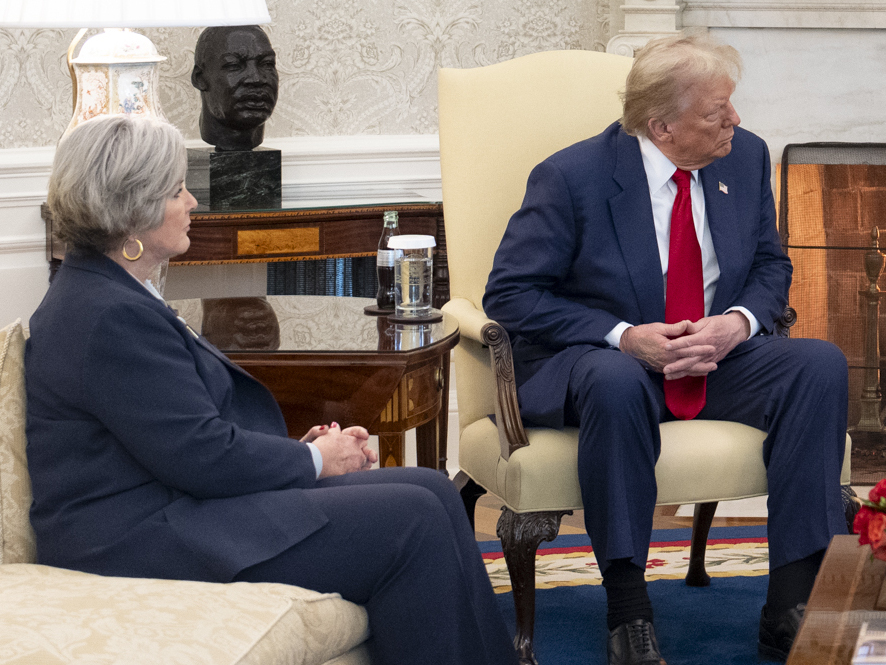
Americans should expect more changes.
President Donald Trump is signaling that a major shakeup inside his administration may be far from over, suggesting that additional high-ranking officials could soon find themselves leaving their positions following Republicans’ disappointing midterm election results.
The president made the revealing remarks during an interview with CBS News’ “60 Minutes,” acknowledging that he is considering changes to his leadership team after Democrats captured control of both chambers of Congress.
His comments came just hours before the White House announced that Chief of Staff Susie Wiles would be replaced by longtime Trump adviser Stephen Miller.
Now, with Republicans facing a dramatically different political landscape in Washington, attention is turning toward which administration officials could be next.
Trump Signals More White House Changes Are Coming
During the interview, CBS correspondent Ross Douthat asked Trump whether the Republican Party’s major election losses would lead him to dismiss members of his administration.
The president indicated that personnel changes were likely.
“I love my Cabinet. I think they’re good,” Trump said, before acknowledging that he would be making “maybe a few changes.”
However, Trump declined to identify which officials might be affected.
The comments quickly raised questions about the future of several senior administration members, particularly those who have faced criticism over the government’s handling of major policy issues.
Trump has long demonstrated a willingness to replace advisers and senior officials when he believes a different approach is necessary.
His latest remarks suggest that the president is once again evaluating the people responsible for carrying out his agenda.
The timing is especially significant because Republicans are preparing to surrender their congressional majorities following the 2026 midterm elections.
Susie Wiles Replaced In Major White House Shakeup
The first major leadership change came Friday when Trump announced that Susie Wiles would be leaving her position as White House chief of staff.
Wiles, who helped guide Trump’s successful 2024 presidential campaign, has been one of his most important political advisers.
She also made history as the first woman to serve as White House chief of staff.
Despite her departure from that position, Wiles is not leaving Trump’s political organization entirely.
According to the president, she will transition to a role within his political operation.
Trump praised Wiles for her service, expressing appreciation for her contributions to the administration.
The president simultaneously announced that Stephen Miller would assume the chief of staff position beginning Monday, November 9.
Miller has been one of Trump’s closest advisers for years and has played an influential role in developing the administration’s immigration and border security policies.
His promotion places a trusted presidential ally in charge of overseeing White House operations during a particularly challenging period.
The decision could also signal Trump’s intention to maintain a strong focus on his existing policy priorities despite the Republican Party’s election setbacks.
Pete Hegseth Faces Questions About His Future
Another major topic during Trump’s interview involved Defense Secretary Pete Hegseth.
Hegseth has faced growing criticism from lawmakers over his leadership of the Pentagon and decisions involving American military operations.
Some critics have demanded his resignation, while the prospect of impeachment proceedings under a Democratic-controlled House has added to the controversy.
However, Trump publicly expressed confidence in his defense secretary.
When asked directly whether Hegseth continued to have his support, the president responded affirmatively.
Trump then discussed what he characterized as major American military successes, including operations involving Venezuela.
Although the president acknowledged Hegseth’s participation in those efforts, he stopped short of giving the defense secretary sole credit for their outcome.
The exchange was particularly noteworthy because questions about Hegseth’s future have intensified following the Republican Party’s election losses.
For his part, Hegseth has rejected calls for his resignation and indicated that he intends to remain in his position.
Trump’s comments suggest that Hegseth retains the president’s confidence for now.
Nevertheless, the broader discussion about administration personnel makes clear that the White House is entering a period of significant uncertainty.
Republican Midterm Losses Put Pressure On Trump
The potential White House restructuring follows a difficult election for Republicans.
Democrats secured control of the House of Representatives and Senate in the November 2026 midterms, dealing a substantial setback to Trump’s legislative agenda.
The results will make it considerably more difficult for the president to advance major legislation without support from Democratic lawmakers.
The shift in congressional control also creates the possibility of additional oversight hearings, investigations, and confrontations between the White House and Capitol Hill.
For the administration, the political challenges extend beyond partisan disagreements.
Americans continue to face important questions involving the cost of living, national security, immigration enforcement, energy policy, and the federal government’s spending priorities.
These issues are likely to remain central to political debates as both parties prepare for the next phase of Trump’s presidency.
The president must now decide how to pursue his agenda while confronting a Congress controlled by the opposing party.
Changes among his senior advisers could become an important part of that effort.
Stephen Miller Takes On A More Powerful Role
The appointment of Stephen Miller is among the most consequential developments in the administration’s latest restructuring.
As a longtime Trump adviser, Miller has been closely associated with the president’s efforts to strengthen border security and enforce federal immigration laws.
He has also been involved in developing and implementing several of the administration’s major domestic policy initiatives.
As White House chief of staff, Miller will take on broader responsibilities involving the coordination of presidential priorities, senior staff management, and communication across the administration.
The position is widely considered one of the most influential jobs in Washington because of its proximity to the president and its role in managing White House operations.
Miller’s appointment could influence how the administration responds to opposition from congressional Democrats.
It also reflects Trump’s continued reliance on advisers who have demonstrated loyalty to his political agenda.
Whether Miller’s promotion represents the beginning of a more extensive restructuring remains to be seen.
What Other Cabinet Members Could Be Affected?
Trump has not announced any additional departures or identified specific Cabinet members who might lose their positions.
That leaves considerable uncertainty surrounding the administration’s next steps.
The president’s comments indicate that more changes are possible, but they do not establish how many officials might be affected or when additional announcements could occur.
It is also important to distinguish between changes inside the White House and dismissals involving Cabinet secretaries.
The White House chief of staff is a senior presidential adviser, while Cabinet secretaries oversee major federal departments and generally require Senate confirmation.
Replacing a Cabinet secretary can therefore involve a more complicated transition.
For now, Trump appears to be keeping his options open as he evaluates the administration’s performance following the midterm elections.
The full “60 Minutes” interview is scheduled to air Sunday, November 8, and may provide additional insight into the president’s plans.
Trump Faces Important Decisions Moving Forward
With Democrats preparing to take control of Congress, the coming weeks could prove especially important for the future of Trump’s administration.
The president will need to determine how to handle legislative opposition while maintaining support for his policy priorities.
He will also face decisions about which advisers are best positioned to help him navigate the new political environment.
The departure of Susie Wiles and the promotion of Stephen Miller demonstrate that significant changes are already underway.
Meanwhile, Trump’s public remarks suggest that additional personnel decisions may still be ahead.
The biggest unanswered question is whether the president intends to make a handful of targeted adjustments or pursue a more extensive overhaul of his leadership team.
For now, Trump has made one thing clear: He is willing to reconsider the makeup of his administration as Republicans confront the consequences of their midterm election defeats.
And with more than two years remaining in his presidency, the decisions he makes now could have a lasting impact on the direction of the White House.