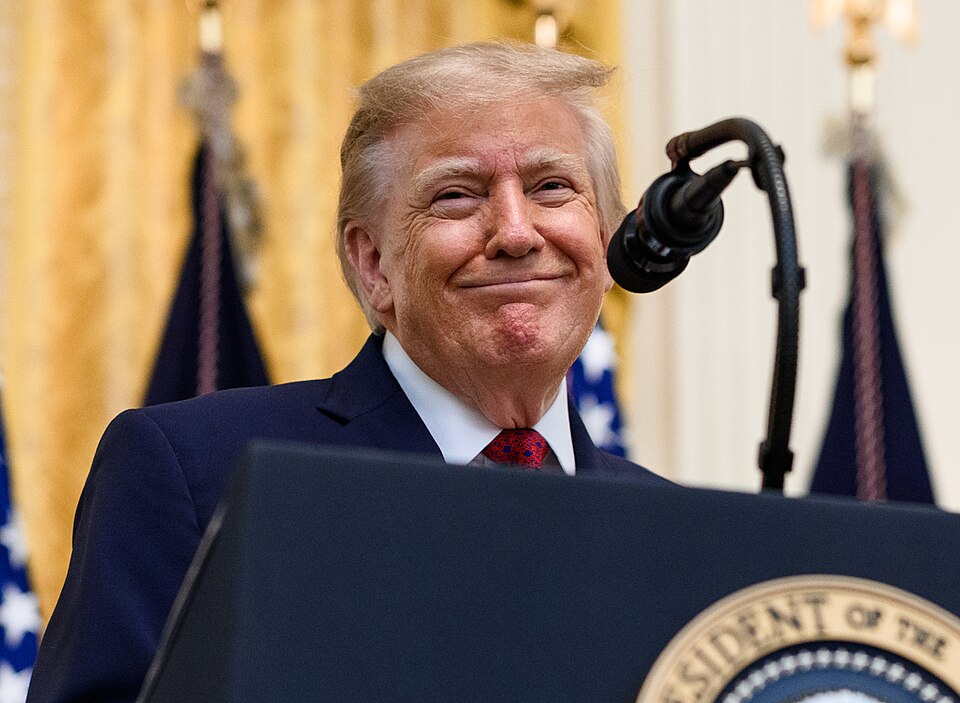
Trump stood firmly behind is beliefs.
President Donald Trump refused to back down during a tense 60 Minutes interview Sunday after being confronted with questions about his growing personal fortune, leading to a sharp exchange over his financial success and responsibilities as president.
The November 8 confrontation began when CBS News correspondent Ross Douthat questioned Trump about reports that his net worth had increased by approximately $3 billion since he returned to the White House.
Trump wasted little time challenging the premise of the question, pointing to stock market gains before explaining that he spends very little time overseeing his personal wealth.
The exchange quickly became one of the interview’s most contentious moments, raising familiar questions about Trump’s business empire, his financial success, and the scrutiny surrounding a sitting president’s private investments.
Trump Fires Back at CBS Interviewer
The disagreement began when Douthat cited a Forbes report estimating that Trump’s fortune had increased by roughly $3 billion during his second presidential term.
Rather than immediately explaining the increase, Trump suggested that rising financial markets had benefited other Americans as well.
Douthat pushed back, pointing out that his own wealth had certainly not increased by anything approaching $3 billion.
Trump responded with a pointed remark.
“Well, you should have had stock,” the president told him.
The comment illustrated Trump’s willingness to challenge the interviewer’s questioning rather than simply accept its premise.
As Douthat continued asking how the president’s fortune had grown so substantially, Trump attempted to take control of the conversation.
“Excuse me,” Trump said before explaining his financial arrangements.
The president insisted that his substantial wealth had been accumulated over many years and that managing it was not something he focused on while serving in the White House.
Trump Says He Doesn’t Focus on His Personal Fortune
Trump maintained that his responsibilities as president take precedence over monitoring changes in his net worth.
He explained that his son oversees his financial affairs and that he rarely discusses the details of those arrangements with him.
According to Trump, he has accumulated more money than he ever expected and does not closely follow the daily fluctuations in his fortune.
“I devote almost no time to my net worth,” Trump said during the exchange.
The president also emphasized that he does not accept a presidential salary, presenting that decision as another example of his approach to public service.
Trump’s remarks reinforced a central part of his political identity: his belief that decades of private-sector experience distinguish him from career politicians.
His supporters have often viewed that business background as an important qualification, particularly when evaluating his positions on economic growth, taxes, and government spending.
However, the president’s financial arrangements continue to face scrutiny because his family maintains significant business interests while he holds public office.
Trump’s Financial Success Sparks Questions
The reported $3 billion increase in Trump’s net worth has attracted attention because of the scale of the change and the timing of his return to Washington.
Forbes estimates reflect the changing value of investments, companies, real estate, and other assets. Those estimates can fluctuate substantially as market conditions change.
An increase in estimated net worth also does not necessarily mean an individual has received an equivalent amount of cash.
Trump’s financial holdings include multiple business interests, and questions about his family’s cryptocurrency ventures have become an increasingly prominent part of the discussion.
Critics argue that financial transparency is especially important when a president has extensive private business connections.
Trump, meanwhile, has repeatedly maintained that his personal finances are managed separately from his presidential responsibilities.
The debate highlights a longstanding challenge in American politics: determining how elected officials with substantial business holdings should handle potential conflicts of interest.
Trump Points to Stock Market Gains
The president’s response also reflected his broader emphasis on the performance of American financial markets.
Trump has frequently highlighted stock market gains when discussing the country’s economic direction.
For many Americans, particularly those approaching retirement, the performance of the stock market has a direct connection to their financial security.
Millions of households rely on retirement investments, including 401(k) plans and individual retirement accounts, to help fund their later years.
When markets perform well, those investments can increase in value, although gains vary considerably depending on the assets an individual owns.
Not everyone benefits equally from a rising market, and Americans with limited investments may see little immediate improvement in their financial circumstances.
Nevertheless, Trump has consistently identified investment performance as one measure of broader economic strength.
His comments during the interview placed that argument directly into the discussion about his personal wealth.
President Previously Faced Questions Over Cryptocurrency Earnings
Sunday’s exchange was not the first time Trump faced questions about his financial activities while serving in office.
During a July encounter with reporters at Joint Base Andrews, journalists questioned him about substantial earnings connected to his family’s cryptocurrency ventures.
One reporter cited approximately $1.4 billion associated with those activities in 2025 and asked what the financial gains meant for Americans experiencing economic difficulties.
Trump responded that financial professionals were responsible for managing his money.
When journalists suggested that the president was personally benefiting from his business interests, he again pointed to stock market performance.
The president referenced Americans with retirement accounts, arguing that investment gains were not limited to his own financial holdings.
His response demonstrated a recurring theme in his public statements: the distinction he draws between personal financial success and the broader economic performance of the country.
However, the president’s critics argue that rising markets alone do not resolve questions about potential conflicts of interest.
Questions About Presidential Finances Remain
The latest 60 Minutes interview highlighted the continuing debate over how much financial scrutiny should apply to presidents with extensive private business interests.
Federal financial disclosure requirements provide information about elected officials’ assets and income, but disclosures do not always answer every question about business valuations or the daily management of complicated financial holdings.
Trump has emphasized that his family handles his business affairs while he concentrates on running the country.
At the same time, critics continue to question whether business activities involving the president’s family could create conflicts with his official responsibilities.
Those concerns are separate from whether Trump’s investments have performed well.
For taxpayers, the central issue is whether government decisions are made in the public interest, regardless of the president’s personal financial position.
Trump Makes His Position Clear
Despite repeated questions from Douthat, Trump showed little willingness to reconsider his explanation.
He maintained that his accumulated wealth was not his primary concern and repeatedly emphasized that other people oversee his financial affairs.
The exchange offered another example of Trump’s direct and sometimes combative approach to interviews, particularly when journalists challenge his record or question his personal conduct.
The president’s response is unlikely to end scrutiny of his finances, especially as his family’s business activities continue attracting public attention.
But Sunday’s confrontation made his position unmistakable.
Trump intends to continue defending his business success while insisting that his presidential responsibilities remain his top priority.
And when confronted with pointed questions about his personal fortune, the president showed once again that he is prepared to push back.