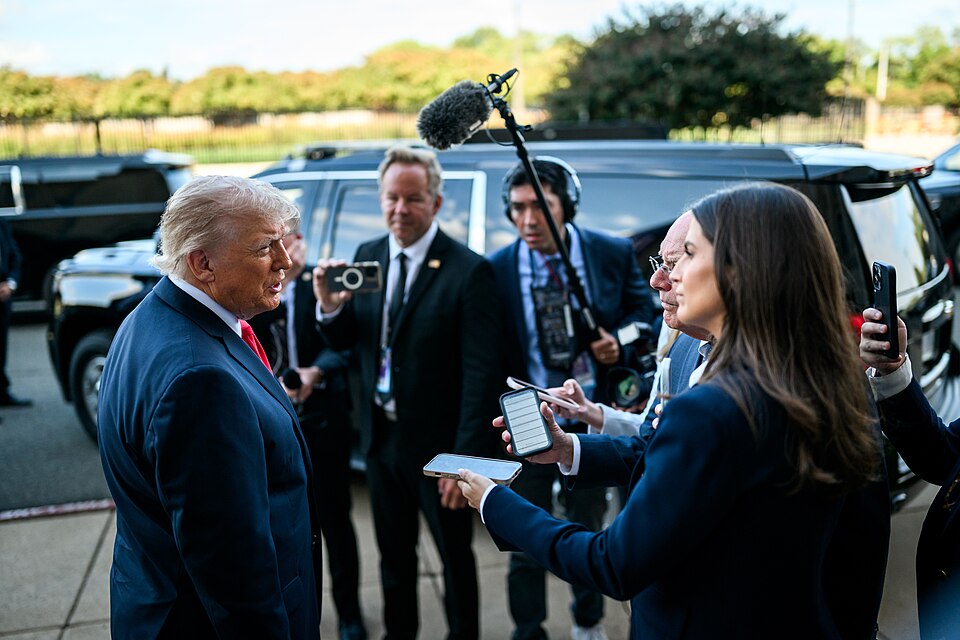
Trump Talks About His Own Immigration Policy
President Donald Trump is taking a closer look at one of the central issues of his presidency, acknowledging that his administration’s aggressive immigration enforcement efforts may have gone further than some Americans were willing to support.
During an interview with CBS News’ 60 Minutes that aired Sunday, Trump discussed his immigration policies, the Republican Party’s disappointing performance in the 2026 midterm elections, and the possibility of reaching an immigration agreement with Democrats.
The president defended his administration’s success in securing the southern border while recognizing that certain deportation decisions may have created political challenges for Republicans.
“I think it was too tough,” Trump acknowledged when discussing his administration’s approach to deportations.
Trump Defends Border Security Record
Immigration enforcement has remained a defining priority of Trump’s second term. After campaigning on stronger border security, tougher immigration laws, and the removal of individuals living in the United States illegally, the president made those promises a major focus of his administration.
During the interview, Trump maintained that his efforts to secure the border have been successful.
He gave himself an “A+” for his administration’s border security accomplishments and argued that Americans continue to support removing dangerous criminals from the country.
However, Trump also recognized that immigration enforcement has become more complicated when authorities target individuals who have lived in the United States for years, maintained steady employment, and contributed to their communities.
The president suggested that Americans may distinguish between deporting dangerous criminals and removing longtime residents whose primary immigration violation was entering the country illegally.
That distinction, he indicated, may have affected public opinion ahead of the midterm elections.
President Acknowledges Political Consequences
Republicans suffered significant setbacks in the November 3 midterm elections, losing control of both the House and Senate.
Trump acknowledged that his administration’s immigration crackdown may have contributed to those results.
While many voters supported stronger border security and the deportation of criminals, others expressed concerns about enforcement operations involving individuals with no additional criminal history.
Trump explained that some immigrants have spent years working in industries such as landscaping and hospitality, raising questions about how the government should approach their immigration status.
He also pointed out that some of these individuals pay taxes and have established longstanding connections to their communities.
The president did not suggest abandoning immigration enforcement. Instead, his remarks indicated that he may be considering whether the administration should place greater emphasis on removing dangerous individuals while examining alternatives for certain longtime residents.
Trump Opens Door to Immigration Agreement
One of the more notable developments from the interview was Trump’s willingness to consider working with congressional Democrats on immigration legislation.
With Democrats preparing to take control of Congress in January, the president suggested that an agreement could be possible.
Such an arrangement could potentially address the status of individuals who have lived in the United States for a decade or longer while maintaining stricter enforcement against violent criminals and drug traffickers.
Trump did not outline a detailed legislative proposal or establish specific requirements for individuals who might qualify.
Nevertheless, his comments indicated an openness to discussions about an issue that has divided Washington for decades.
Any agreement would likely face difficult negotiations over border security, enforcement priorities, legal immigration procedures, and the treatment of individuals currently living in the country without authorization.
Stephen Miller Takes on Major White House Role
Despite Trump’s willingness to discuss possible adjustments, his administration continues to include prominent supporters of strict immigration enforcement.
Following the midterm elections, Trump selected Stephen Miller to replace Susie Wiles as White House chief of staff.
Miller has been closely associated with the president’s immigration agenda and has advocated stronger enforcement measures throughout Trump’s political career.
The appointment suggests that border security and immigration enforcement will remain central administration priorities, even as the president considers whether certain policies should be adjusted.
Democratic leaders have questioned whether Trump’s comments represent a meaningful change in direction.
Senate Democratic Leader Chuck Schumer criticized the decision to elevate Miller, arguing that the personnel change appeared inconsistent with the president’s acknowledgment that enforcement measures may have been excessive.
The administration, meanwhile, has continued to defend its immigration operations as necessary to protect public safety and enforce federal law.
Immigration Remains a Major Issue for American Voters
The debate over immigration is unlikely to disappear as Washington prepares for a divided government.
For years, Americans have expressed concerns about illegal border crossings, the costs associated with immigration enforcement, and the responsibilities of the federal government to uphold existing laws.
At the same time, questions surrounding longtime undocumented residents, employment, and family stability have complicated efforts to reach a lasting legislative solution.
Recent voter surveys suggest that public opinion remains divided over how aggressively federal authorities should enforce immigration laws.
An Associated Press survey conducted during the midterm elections found that a majority of respondents believed the administration’s immigration enforcement actions had gone too far.
However, Republicans retained a narrow advantage over Democrats when voters were asked which party they trusted more to handle immigration.
Those findings illustrate the political challenge facing both parties as they consider their next steps.
What Comes Next for Trump’s Immigration Agenda?
Trump’s latest remarks raise questions about whether his administration could pursue a more targeted approach to immigration enforcement during the remainder of his presidency.
The president continues to emphasize border security and the removal of dangerous criminals, but he has now publicly acknowledged concerns about deporting certain individuals who have spent years living and working in the United States.
Whether those comments lead to a significant policy adjustment or a bipartisan agreement remains uncertain.
For Republicans, the challenge will be maintaining the party’s commitment to immigration enforcement while addressing voter concerns that emerged during the midterm elections.
For Democrats, Trump’s willingness to negotiate could create an opportunity to pursue legislation, although substantial disagreements remain.
Ultimately, the president’s interview highlighted a complicated reality: Securing the border and determining how to handle millions of people already living in the United States are separate challenges that may require different solutions.
Trump has made clear that immigration remains a priority. The question now is whether his latest comments signal a new strategy or simply a willingness to reconsider how existing policies are being carried out.