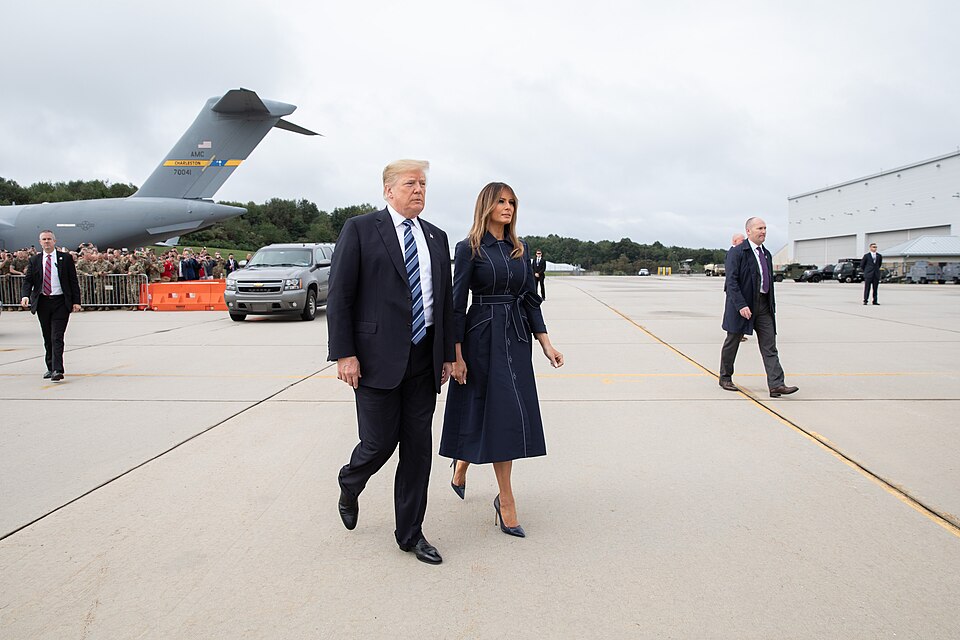
Here’s what President Trump had to say.
President Donald Trump has offered a possible explanation for the nationwide aviation emergency that left thousands of flights delayed or canceled across the United States, pointing to aging government equipment that has needed replacement for years.
The president’s comments came Friday, November 13, after a major communications failure forced the Federal Aviation Administration (FAA) to temporarily halt departing flights nationwide.
Speaking by telephone with Fox News White House correspondent Peter Doocy, Trump suggested that decades-old technology within America’s air traffic control infrastructure may have contributed to the massive disruption.
The president also addressed concerns about a possible cyberattack, indicating that investigators had not found evidence suggesting hackers or artificial intelligence were responsible.
Although the precise cause remained under investigation, Trump’s remarks brought renewed attention to the condition of America’s aviation infrastructure and the federal government’s efforts to modernize it.
Trump Points to Aging Air Traffic Control Equipment
During an appearance on Fox News’ The Ingraham Angle, Doocy revealed details of his conversation with the president.
According to Doocy, Trump believes the disruption may be connected to outdated equipment that the federal government has struggled to replace.
Some of that technology, the president reportedly explained, is approximately 55 years old.
Trump described the situation as involving “old broken stuff,” suggesting that equipment failures could have contributed to the nationwide aviation shutdown.
The president also indicated that his administration had discussed replacing aging systems with Congress, but necessary upgrades had not yet been completed.
His comments raise serious questions about the reliability of critical government infrastructure, particularly technology responsible for coordinating thousands of commercial flights every day.
However, the president’s explanation was preliminary, and federal investigators had not confirmed that aging equipment was the direct cause of the outage.
FAA Grounds Flights Across America
The disruption began Friday afternoon when telecommunications problems affected the nation’s air traffic control network.
The FAA issued a nationwide ground stop, preventing aircraft from departing airports while technicians worked to identify and address the failure.
The communications problems affected 22 regional air traffic control centers responsible for coordinating aircraft traveling across the country.
Flights already in the air were generally permitted to land, while international flights were handled individually.
The shutdown created immediate problems for airlines and passengers.
Thousands of flights were delayed or canceled, leaving travelers facing missed connections, disrupted vacations, and uncertainty about when normal operations would resume.
The FAA eventually lifted the nationwide ground stop Friday evening, although airlines continued working through the resulting disruptions.
Federal officials maintained that the decision to suspend departures was necessary to protect aviation safety while the communications system was experiencing problems.
White House Addresses Possible Cyberattack
As news of the aviation shutdown spread, speculation emerged about whether the disruption might have been caused by malicious interference.
Trump addressed those concerns during his conversation with Doocy.
According to the Fox News correspondent, the president said investigators had not uncovered indications of a cyberattack.
Trump also suggested that artificial intelligence was unlikely to be responsible for the failure.
Homeland Security Secretary Markwayne Mullin offered a similar assessment, explaining that officials had not identified evidence of a deliberate attack.
Nevertheless, the investigation continued as federal authorities worked to determine what caused such a widespread communications breakdown.
Separate reporting raised the possibility that a technical update to the FAA’s communications network may have triggered the outage.
That possibility had not been conclusively established, leaving investigators to examine the underlying technical failure.
Congress Faces Questions Over Aviation Infrastructure
The nationwide disruption has also brought renewed attention to Washington’s efforts to modernize America’s air traffic control system.
Much of the nation’s aviation infrastructure relies on technology developed decades ago, making equipment replacement a continuing priority for federal transportation officials.
Congress approved approximately $12.5 billion in 2025 to support modernization of the FAA’s aging communications infrastructure.
However, federal officials have argued that significantly more funding is necessary.
The FAA and White House requested another $30.1 billion to address remaining infrastructure problems and support additional improvements.
Those figures highlight the enormous cost of maintaining and upgrading the systems that millions of Americans depend on for safe air travel.
The latest shutdown could also bring increased scrutiny of how federal infrastructure funding is allocated and whether modernization projects are moving quickly enough.
For taxpayers, the issue goes beyond simply approving additional spending.
It also involves ensuring that government agencies use available resources effectively and complete essential improvements before aging equipment causes further disruptions.
Previous Nationwide Flight Shutdown Raised Similar Concerns
Friday’s emergency was not the first major FAA technology failure to disrupt air travel throughout the country.
In January 2023, a malfunction involving the agency’s pilot notification system forced officials to temporarily suspend domestic flight departures nationwide.
That incident caused widespread delays and cancellations while raising concerns about the reliability of important aviation technology.
The latest disruption has revived those concerns.
Although investigators have not determined whether the two incidents share an underlying cause, both demonstrate how failures within essential federal systems can quickly affect transportation across the United States.
For passengers, these problems can mean hours of uncertainty, unexpected expenses, and interrupted travel plans.
For transportation officials, they underscore the importance of keeping critical communications equipment dependable.
Trump Administration Faces Pressure to Modernize FAA Systems
The Trump administration has made aviation modernization a priority, with Transportation Secretary Sean Duffy supporting efforts to replace outdated technology and improve the reliability of air traffic control operations.
The latest shutdown could increase pressure on federal officials to accelerate those improvements.
At the same time, investigators must determine whether Friday’s problems resulted from aging hardware, a software or network update, or another technical malfunction.
That distinction will be important in deciding what repairs and additional safeguards are needed.
The administration must also address the challenge of upgrading complex aviation systems without creating new operational risks.
For Americans who regularly fly, dependable air transportation remains the overriding concern.
Passengers want confidence that federal officials are maintaining the equipment necessary to keep aircraft moving safely and efficiently.
Trump’s assessment has placed outdated government infrastructure at the center of the national conversation.
Whether investigators ultimately confirm his explanation remains to be seen.
For now, the nationwide shutdown serves as another reminder that maintaining America’s critical infrastructure is essential to public safety, economic stability, and reliable air travel.