Here’s what was said.
A nationwide aviation emergency has sparked fresh controversy in Washington after House Speaker Mike Johnson rejected the need for a separate investigation into a massive Federal Aviation Administration (FAA) shutdown that disrupted thousands of flights across the United States.
The Louisiana Republican, a leading ally of President Donald Trump, argued that the government’s priority should be modernizing America’s aging air traffic control system rather than launching another congressional investigation.
His comments come as federal officials scramble to determine what caused the widespread failure, raising serious questions about aviation safety, government oversight and the billions of taxpayer dollars needed to prevent another crisis.
Mike Johnson Rejects Calls For Another Investigation
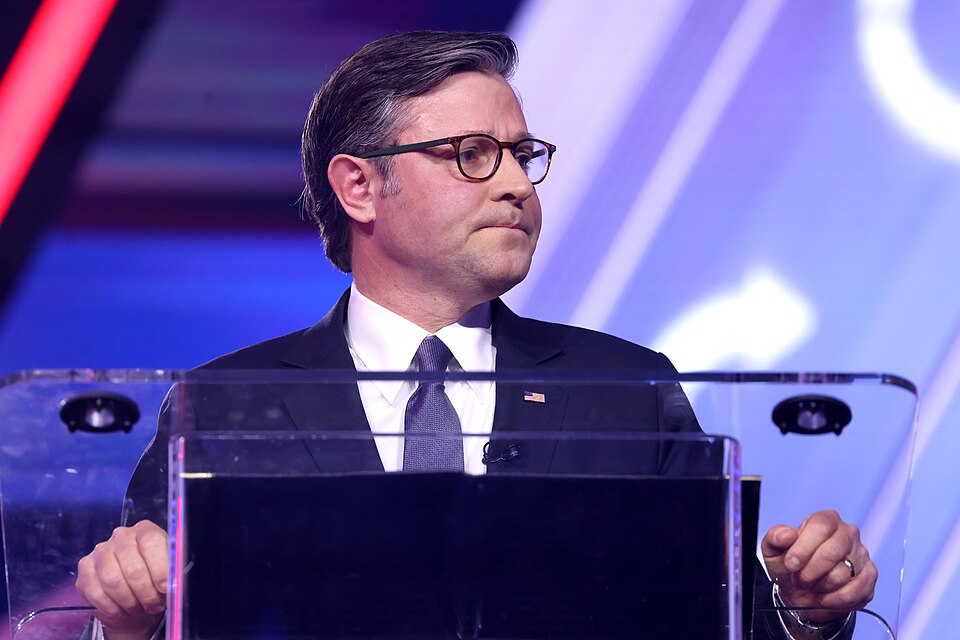
During a Saturday appearance on Fox News, Johnson addressed the nationwide FAA ground stop that brought American air travel to a halt on Friday, November 13.
Rather than supporting a separate investigation, the House speaker emphasized the urgent need to replace outdated aviation equipment.
“We don’t really need any investigation … we need further investment,” Johnson said.
Johnson explained that some of the technology supporting America’s air traffic control network dates back to the 1980s.
He argued that Congress must take responsibility for ensuring the nation’s aviation infrastructure receives the funding necessary to operate safely and efficiently.
The remarks quickly drew attention because the shutdown was one of the most serious disruptions to American air travel in decades.
However, Johnson’s position should not be confused with a decision to end all federal inquiries into the incident.
The FAA and Department of Transportation are continuing to investigate the technical failure that triggered the emergency.
Nationwide FAA Shutdown Disrupts Thousands Of Flights
The aviation crisis began Friday afternoon when the FAA ordered a nationwide ground stop at approximately 4 p.m. Eastern Time.
The extraordinary decision prevented departing aircraft from taking off as officials responded to major communication and radar system problems.
The shutdown lasted more than four hours before Transportation Secretary Sean Duffy announced that the nation’s airspace had reopened around 8:15 p.m.
Although flights were eventually permitted to resume, the disruption created widespread problems for airlines and passengers.
Thousands of flights were canceled or delayed, leaving travelers stranded at airports and forcing airlines to reorganize aircraft, flight crews and schedules.
By Saturday afternoon, more than 5,000 flights had reportedly been canceled, with thousands more experiencing delays.
Federal officials said air traffic controllers and pilots safely handled thousands of aircraft already in the air when the emergency began.
The incident demonstrated how quickly a technical malfunction can affect the entire national aviation network.
It also raised concerns about whether similar problems could occur during the upcoming Thanksgiving holiday travel season.
Trump Administration Reveals What May Have Caused The Failure
Transportation Secretary Sean Duffy provided additional details Saturday about the equipment problems believed to have caused the nationwide shutdown.
According to federal officials, the disruption appears to have originated during routine maintenance involving outdated telecommunications infrastructure.
Government contractor L3Harris was working to replace old copper communication lines with modern fiber-optic technology at an FAA facility.
During that process, a router reportedly began sending an unusually large number of connection requests throughout the network.
The resulting overload interfered with important aviation communication systems and some radar feeds.
Duffy explained that investigators were examining whether the malfunction resulted from faulty equipment or a mistake made during installation.
The precise cause had not yet been established.
FAA Administrator Bryan Bedford also said officials had found no evidence indicating that the shutdown resulted from a cyberattack or other malicious activity.
While that finding offered some reassurance, the incident exposed vulnerabilities in the technology used to manage America’s skies.
Duffy Demands Billions To Modernize Air Traffic Control
The nationwide shutdown has intensified the Trump administration’s push for major federal investment in aviation infrastructure.
Duffy has warned repeatedly that America’s air traffic control system relies on aging technology that should have been replaced years ago.
Some equipment remains in service long after newer alternatives have become standard across other industries.
The transportation secretary is seeking approximately $50 billion in additional funding to accelerate improvements to the nation’s aviation network.
The proposed investment would support modernization efforts involving communication equipment, air traffic control technology and other critical infrastructure.
Federal officials argue that continued dependence on outdated systems increases the risk of future disruptions.
However, the enormous price tag also raises legitimate questions about government spending.
Taxpayers have a clear interest in understanding how new funding would be distributed, which contractors would receive federal money and whether promised improvements would actually be delivered.
For lawmakers concerned about fiscal responsibility, the challenge is balancing aviation safety with meaningful financial oversight.
Federal Contractors Face Questions Over Aviation Failure
The role of private contractors has become another important issue following the shutdown.
L3Harris, which has worked with the FAA for more than two decades, was involved in the communications upgrade underway when the problem occurred.
Duffy said investigators were examining whether human error or a defective router contributed to the incident.
The company has said it is cooperating with the FAA’s investigation and remains committed to improving aviation communication infrastructure.
No final determination of contractor responsibility had been announced as of Saturday.
Nevertheless, the episode raises broader questions about how federal agencies supervise companies responsible for maintaining essential national infrastructure.
When a technical failure at one location can contribute to a nationwide shutdown, lawmakers and transportation officials must consider whether existing safeguards provide adequate protection.
Those concerns are especially important when the government is preparing to commit substantial additional funding to modernization projects.
What The Shutdown Means For American Travelers
For millions of Americans, the controversy is about more than disagreements between political leaders.
Reliable air transportation plays an important role in everyday life.
Families depend on commercial aviation to visit loved ones, attend important events and travel across the country.
Businesses rely on airlines to transport employees and support economic activity.
Retirees and older travelers may also face significant hardships when unexpected cancellations interfere with carefully planned trips.
The consequences become particularly serious when passengers must arrange additional hotel stays, replace canceled reservations or find alternative transportation.
Friday’s shutdown demonstrated that even a temporary interruption to critical government infrastructure can create substantial financial and personal difficulties.
With Thanksgiving approaching, travelers will be looking for reassurance that federal officials have addressed the immediate problem and are taking steps to prevent another nationwide disruption.
Congress Faces Tough Questions About Taxpayer Money
The dispute over a possible investigation highlights a broader debate about how Washington should respond to government failures.
Johnson believes additional investment is the most effective path toward strengthening aviation safety.
His position reflects concerns that outdated infrastructure, rather than a lack of political investigations, represents the fundamental problem.
However, others may argue that an independent congressional review could help establish accountability and ensure that future spending addresses the weaknesses exposed by the shutdown.
The two approaches are not necessarily mutually exclusive.
Congress can authorize infrastructure improvements while also examining how federal agencies manage contractors, maintain equipment and oversee public spending.
That distinction is important as lawmakers consider allocating billions of additional dollars to the FAA.
Americans deserve confidence that federal officials are not simply spending more money without addressing the management and technical problems that contributed to the crisis.
Aviation Safety Remains A Major Test For Washington
The Trump administration now faces growing pressure to demonstrate that it can modernize America’s aviation infrastructure while maintaining public safety and controlling government costs.
Duffy has made replacing outdated air traffic control technology a major priority.
Johnson has signaled that Republican leaders want Congress to move forward with additional funding rather than focus on a separate investigation.
Meanwhile, federal aviation officials are continuing their examination of the equipment failure that triggered the shutdown.
The coming decisions could have lasting consequences for airline reliability, federal infrastructure spending and public confidence in America’s transportation system.
The most important questions remain straightforward: What caused the failure, how can another shutdown be prevented, and how much will taxpayers ultimately have to spend?
For Americans frustrated by repeated government inefficiencies, those answers matter far more than another political argument in Washington.
The bottom line: House Speaker Mike Johnson believes investment, not another investigation, should be Washington’s immediate priority. But with billions of taxpayer dollars potentially on the line, ensuring that America’s air traffic control system is safe, reliable and properly managed will remain a major responsibility for the Trump administration and Congress.