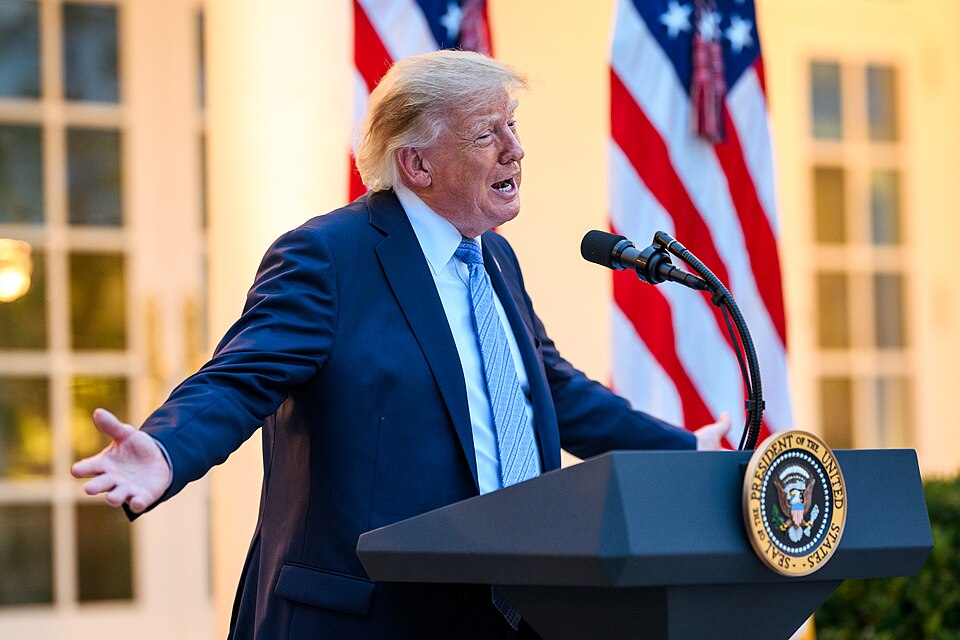
Trump is back!
President Donald Trump has finally broken his silence following a massive nationwide aviation shutdown that stranded travelers, disrupted thousands of flights, and raised serious questions about the reliability of America’s air traffic control system.
After nearly two days without publicly addressing the emergency, Trump returned Sunday morning with a sharp criticism of former President Joe Biden’s administration and an urgent demand for Congress to approve billions in additional aviation infrastructure funding.
The president defended the Federal Aviation Administration (FAA), arguing that his administration is prepared to modernize the nation’s outdated air traffic control network.
However, his delayed public response attracted attention as federal investigators continued searching for answers about the widespread disruption.
Trump Breaks Silence After Nationwide Flight Emergency
The controversy began Friday, November 13, when a major technical failure forced the FAA to order a nationwide ground stop.
Problems involving telecommunications and radar systems prompted aviation officials to suspend departures across the country as a precaution.
The disruption lasted more than four hours, creating widespread travel chaos and leaving passengers facing canceled flights, lengthy delays, and uncertainty about when normal operations would resume.
Although the White House maintained that Trump was receiving regular updates about the emergency, the president did not publicly address the situation until Sunday morning.
During that period, Trump remained active on social media, commenting on other political matters.
His silence regarding the aviation emergency prompted questions about when he would respond to one of the most significant disruptions to American air travel in recent years.
When Trump finally spoke, he made it clear that he believed the problems extended far beyond the events of Friday afternoon.
Trump Blasts Biden Over America’s Aviation Problems
In a statement published on Truth Social, Trump directly criticized the Biden administration’s handling of the nation’s aviation infrastructure.
“The Biden Administration was an FAA disaster,” Trump declared.
The president accused his predecessor’s administration of spending considerable taxpayer money without adequately improving the aging systems responsible for managing American air traffic.
Trump argued that previous federal spending decisions had failed to address longstanding weaknesses in the aviation network.
He also expressed confidence in his administration’s ability to deliver meaningful improvements.
“Our FAA is doing a great job, and is ready to go,” the president stated.
Trump’s remarks reflected his broader argument that Washington must prioritize modern infrastructure and ensure federal spending delivers measurable results.
However, investigators have not established that decisions made by the Biden administration directly caused Friday’s technical failure.
The immediate cause of the outage remains under examination.
Trump Demands Billions From Congress
The president also used his Sunday statements to demand swift congressional action on funding for America’s air traffic control system.
Trump warned that portions of the nation’s aviation infrastructure are approximately 50 years old, raising concerns about whether existing equipment can adequately support modern air travel.
He argued that the United States should pursue a comprehensive rebuilding effort rather than relying on smaller upgrades spread across several years.
Transportation Secretary Sean Duffy has requested approximately $50 billion in additional funding to modernize the system.
The proposed investment would support improvements to communications technology, aviation infrastructure, and other equipment essential to managing American airspace.
Trump insisted that his administration already has a plan and wants Congress to provide the resources necessary to complete the work.
The president’s position is that the nation cannot afford to continue relying on outdated technology while millions of Americans depend on safe and reliable transportation.
The funding request could become a major issue in Washington as lawmakers debate federal spending priorities and the future of the aviation system.
What Caused The Nationwide FAA Shutdown?
Federal officials have been investigating problems involving communications equipment and the nation’s aging air traffic control network.
The emergency developed Friday afternoon when instability affected systems used to communicate with aircraft and monitor flight operations.
As the problems spread, the FAA ordered aircraft departures halted nationwide to protect passengers and flight crews.
Transportation officials have indicated that overloaded legacy equipment may have played a significant role in the disruption.
The problems occurred during routine maintenance involving contractor L3Harris, which has been working on telecommunications infrastructure.
Investigators have been examining routers associated with the outage to determine precisely what went wrong.
Federal officials have also reported finding no evidence of a foreign cyberattack, although technical reviews have continued.
The shutdown demonstrated how weaknesses in equipment supporting critical aviation operations can create consequences throughout the entire country.
Thousands Of Americans Caught In Travel Nightmare
For airline passengers, the consequences of the FAA emergency were immediate.
Flights were canceled, airport terminals became crowded, and travelers faced significant uncertainty about their schedules.
According to aviation officials, more than 3,500 aircraft were safely managed during the nationwide ground stop.
Once the restriction was lifted, airlines faced the complicated task of restoring their schedules.
Even after the FAA reopened American airspace Friday evening, delays and cancellations continued throughout the weekend.
Aircraft and flight crews had been displaced from their normal routes, making it difficult for airlines to return immediately to regular operations.
The disruption also raised concerns about the potential consequences of another major aviation failure during one of the busiest travel periods of the year.
With Thanksgiving approaching, federal transportation officials have been working to restore confidence in the system.
For Americans traveling to visit children, grandchildren, and other family members, dependable air travel remains especially important during the holiday season.
America’s Aging Air Traffic Control System Under Scrutiny
The aviation emergency has renewed a longstanding debate over the condition of America’s air traffic control infrastructure.
For decades, federal officials and aviation experts have warned about the challenges associated with maintaining older communications equipment and replacing outdated technology.
Some parts of the system continue to depend on infrastructure developed long before modern digital networks became widely available.
Modernization projects can be particularly difficult because air traffic control services must remain operational while upgrades are installed and tested.
Any major replacement program must also account for cybersecurity, system reliability, employee training, and the safe integration of new technology.
The Trump administration argues that a comprehensive modernization effort would provide a more durable solution than repeatedly repairing aging equipment.
Congress has already approved $12.5 billion for aviation modernization under the administration.
However, Duffy maintains that additional money is necessary to complete the broader overhaul.
Democratic lawmakers have questioned the size of the new request and whether previously approved funds are being used effectively.
Those disagreements could complicate efforts to secure additional federal investment.
Trump Administration Promises Major Aviation Improvements
The administration has emphasized that passenger safety remained the top priority throughout the emergency.
Transportation officials credited air traffic controllers and pilots with following established procedures as the nationwide ground stop unfolded.
Despite the extensive disruption, the operation allowed aircraft already in the air to land safely.
Duffy has argued that modern technology could reduce the possibility of similar failures in the future.
The administration wants to replace outdated equipment, strengthen telecommunications infrastructure, and create a more dependable national aviation network.
Trump has presented the effort as an opportunity for the United States to develop one of the world’s most advanced air traffic control systems.
The president also wants lawmakers to avoid delaying the modernization program through prolonged disagreements over funding.
Still, substantial questions remain about the timeline, cost, and oversight of the proposed improvements.
Even with congressional approval, replacing critical aviation infrastructure would require careful planning and implementation.
Questions Remain About Trump’s Delayed Response
While Trump has now addressed the crisis publicly, questions surrounding the timing of his response remain.
The president did not issue public remarks about the shutdown during the initial emergency Friday or throughout Saturday.
The White House maintained that he was being kept informed as transportation officials worked to resolve the disruption.
Trump’s Sunday statements focused primarily on the condition of the aviation system, his criticism of Biden, and the need for congressional action.
He did not provide a detailed explanation for why he had waited to comment publicly.
The delay has become part of the political discussion surrounding the emergency, although there is no indication that Trump was missing or unavailable to administration officials.
The larger issue now facing Washington is whether the administration and Congress can agree on a strategy to address the infrastructure problems exposed by the shutdown.
What Happens Next For American Travelers?
Federal transportation officials are continuing to investigate the technical problems responsible for Friday’s nationwide ground stop.
The FAA and its contractors must determine what caused the equipment failure and what safeguards are necessary to prevent another widespread disruption.
Meanwhile, airlines are working to restore normal schedules following the weekend’s extensive cancellations and delays.
Congress will also face pressure to consider the administration’s proposed infrastructure funding.
For American taxpayers, the debate involves more than the amount of money Washington is willing to spend.
It also raises questions about accountability, government efficiency, and whether federal agencies are properly maintaining the essential systems Americans rely upon.
Trump has made clear that he wants a sweeping modernization effort and believes the nation’s aviation network requires urgent attention.
Whether Congress will provide the additional funding remains uncertain.
For millions of Americans who depend on reliable air travel, the most important question is whether Washington can prevent another nationwide shutdown before the next major travel emergency occurs.