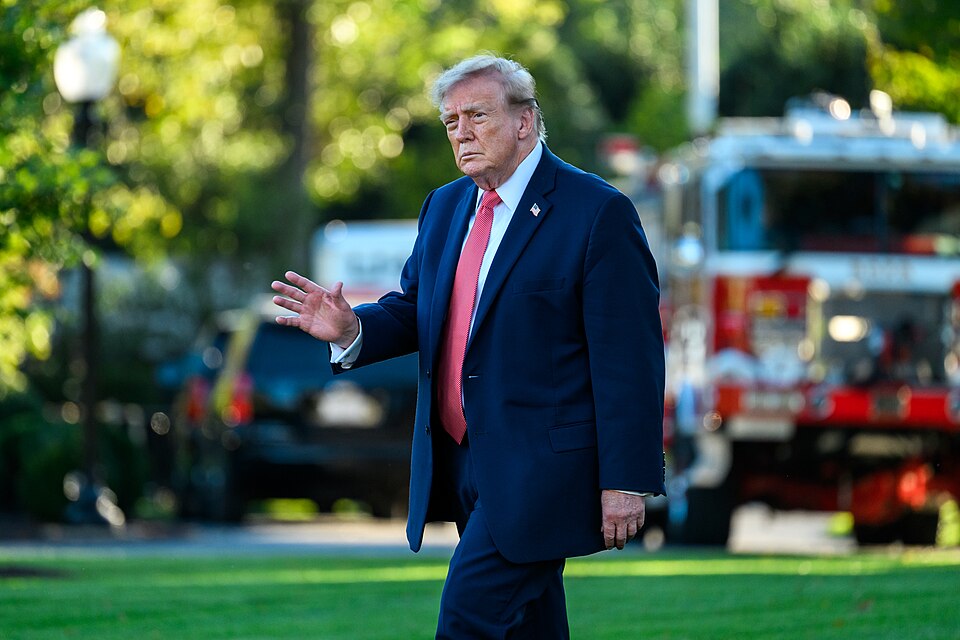
Trump made things crystal clear for panicked Americans.
President Donald Trump has delivered a firm message to Americans growing increasingly concerned about a series of major technology outages across the United States: Remain calm.
With disruptions affecting airlines, financial institutions, government agencies, and major technology companies, questions have emerged about the security of America’s critical infrastructure.
Some Americans have reportedly begun stockpiling food, drinking water, and emergency supplies amid fears that the outages could signal a much larger crisis.
But Trump is pushing back against those concerns, insisting that the incidents are unrelated and that Americans have no reason to expect a nationwide catastrophe.
“Tell them to relax. Everything’s good,” Trump said during an interview with Fox News.
The president’s reassurance comes as federal officials investigate the disruptions and work to address concerns about possible cybersecurity threats.
Trump Addresses Growing Fears Over Nationwide Outages
Speaking with Fox News senior White House correspondent Jacqui Heinrich during his visit to China, Trump was questioned about the unusual number of technological disruptions occurring across the country.
The outages have affected services that millions of Americans rely on for transportation, banking, communication, and daily business.
Among the organizations experiencing problems were Microsoft, Apple, major banks, the Federal Aviation Administration (FAA), and the National Security Agency (NSA).
The incidents have raised concerns about the reliability of America’s increasingly interconnected technological infrastructure.
For travelers, the disruptions have been particularly frustrating.
A major aviation communications failure recently resulted in a nationwide ground stop, leaving passengers facing delays and uncertainty about their travel plans.
Other outages have temporarily interrupted access to financial and digital services.
Despite the troubling timing of these events, Trump rejected suggestions that they were all connected.
The president characterized the disruptions as individual incidents rather than evidence of a coordinated attack.
Trump Says Technical Problems Are Being Misinterpreted
Trump suggested that some of the problems could be attributed to routine technological changes, including the installation or upgrading of equipment.
Modern communications networks depend on complicated systems that can experience unexpected failures when software, hardware, or infrastructure is modified.
Although such disruptions can create serious inconveniences, they do not necessarily indicate that hackers or foreign governments are responsible.
The president also expressed frustration with the attention surrounding the incidents, arguing that technological failures can quickly become major national stories when they affect prominent companies or government operations.
His remarks were intended to reassure Americans that the federal government remains aware of the situation.
Trump also indicated that he would inform the public if officials identified a more serious threat.
For the White House, the immediate challenge is balancing public reassurance with continued investigations into what caused the disruptions.
Marco Rubio Addresses Cyberattack Concerns
Secretary of State Marco Rubio has also sought to calm fears about the possibility of a coordinated cyberattack against the United States.
Speaking to reporters during the administration’s trip to Asia, Rubio said federal officials had found no evidence that the recent outages were part of a single hostile operation.
“We are not under systemic attack,” Rubio said.
The secretary of state emphasized that the incidents appeared to have separate technical explanations rather than a common source.
His comments provided additional reassurance as speculation continued circulating about whether American infrastructure had been deliberately targeted.
Federal officials have stressed the importance of distinguishing verified information from speculation.
Although government agencies must remain alert to possible cybersecurity threats, there is currently no publicly established evidence that these particular incidents constitute a coordinated nationwide attack.
That distinction is important for Americans trying to determine whether the disruptions represent ordinary technical failures or something more serious.
Concerns Grow Over America’s Critical Infrastructure
The outages have nevertheless renewed an important national discussion about the security and reliability of essential American services.
Banks, airports, communications systems, utilities, and government agencies depend heavily on digital technology.
When those systems fail, the consequences can spread quickly.
Even a temporary interruption can affect airline schedules, financial transactions, business operations, and public communications.
The recent aviation disruption has generated particular attention because of the importance of reliable communications between aircraft and air traffic controllers.
Transportation officials have examined the technical problems associated with the incident, while lawmakers have sought additional answers about how similar failures can be prevented.
The situation highlights a broader challenge facing the United States: Protecting critical infrastructure against equipment failures, software problems, and genuine cybersecurity threats.
While Trump has dismissed fears of an organized attack, ensuring that essential systems remain dependable continues to be a significant responsibility for federal agencies and private companies.
Should Americans Stockpile Emergency Supplies?
The recent events have also prompted questions about whether households should prepare for additional disruptions.
Basic emergency preparedness is generally considered sensible, regardless of whether an immediate threat exists.
Federal emergency guidance recommends keeping essential supplies available in case of severe weather, extended power outages, or other unexpected situations.
These supplies can include drinking water, nonperishable food, medications, flashlights, batteries, and backup methods of communication.
Households that depend on electrical medical equipment or digital services may also benefit from having an emergency plan.
However, ordinary preparedness is different from panic buying.
There is no verified indication that the recent technology failures require Americans to begin urgently stockpiling supplies.
Trump’s comments were aimed at discouraging unnecessary alarm while officials continue assessing the problems.
White House Maintains Confidence In National Security
The president also addressed the possibility of foreign involvement, emphasizing that countries considering attacks against American interests should understand the potential consequences.
Trump has repeatedly made national security and American strength central themes of his administration.
His latest remarks reflect that approach, combining reassurance for the American public with a warning that deliberate attacks against the United States would be taken seriously.
Still, the administration has not presented evidence establishing that the recent outages were caused by a foreign adversary.
Rubio’s statements reinforced the position that the incidents should be evaluated separately rather than automatically treated as evidence of a larger conspiracy.
For now, officials are continuing to examine the disruptions and their underlying causes.
What Happens Next?
The string of technology failures has left many Americans asking whether the nation’s most important systems are sufficiently protected against future disruptions.
While the White House maintains that the incidents are unrelated, questions about infrastructure reliability and emergency preparedness are unlikely to disappear.
Lawmakers and federal agencies may face continued pressure to determine what went wrong and whether additional safeguards are necessary.
For Americans concerned about their finances, travel plans, and access to essential services, the situation is a reminder of how dependent modern life has become on technology.
But Trump has made his position clear.
The president believes the public should avoid jumping to conclusions about the outages and trust officials to address any genuine threats that emerge.
For now, the administration’s message is straightforward: Stay informed, remain prepared, and don’t panic over unverified claims of a nationwide emergency.