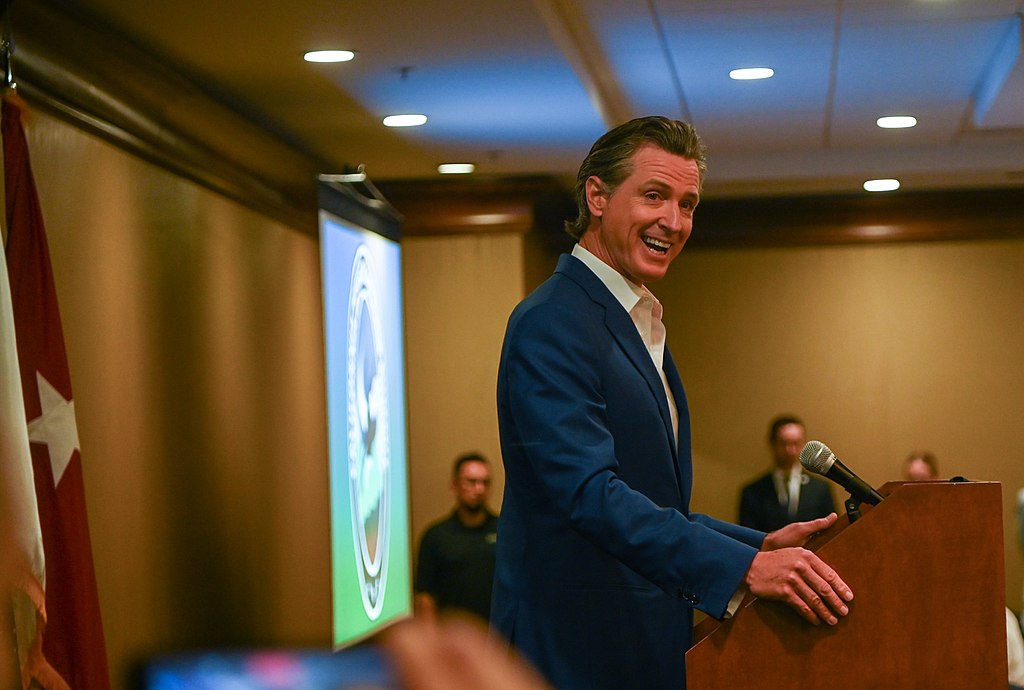
And this guy wants to be President?
California Governor Gavin Newsom often describes himself as a leader who follows the numbers. But when it comes to the state’s high-speed rail project, many taxpayers say the numbers simply don’t make sense.
After more than ten years and roughly $15 billion spent, newly obtained records from California’s High-Speed Rail Authority show limited tangible progress across several Central Valley counties.
Photos and documents reviewed by reporters reveal long stretches of concrete structures surrounded by open farmland — with no operational high-speed rail service anywhere in sight.
Billions Spent, Trains Still Years Away
According to official records, the 58 “completed structures” highlighted by Gov. Newsom during his State of the State address include:
- 33 grade separations
- 13 viaducts
- 5 underpasses
- 3 overpasses
- 2 bridges
- 2 undercrossings
- 1 highway realignment
Several of these projects were finished nearly a decade ago. One bridge, completed more than eight years ago, remains part of a system that still does not carry passengers.
Despite the spending, the High-Speed Rail Authority now says limited service between Merced and Bakersfield may not begin until 2032 or 2033, with total projected costs rising to $36.75 billion.
Central Valley Lawmakers Question the Results
During his most recent State of the State speech, Newsom described the rail project as a major economic investment, citing land purchases and infrastructure development.
However, even lawmakers from the Central Valley say it has become increasingly difficult to explain how billions in taxpayer funding have resulted primarily in unfinished structures rather than usable transportation.
Much of the work to date has focused on road adjustments and underpasses. While officials often point to the Wasco Viaduct as a signature achievement, critics argue it does little to justify the overall cost.
Republican Leaders Call Project Unsustainable
State Senator Tony Strickland, vice chair of the Senate Transportation Committee, has long warned the project would fall short of its promises.
He recently said the rail plan has drifted far from what voters originally approved and predicted it may ultimately be abandoned by a future administration.
Assemblymember David Tangipa of Fresno also expressed skepticism, noting that many of the rail stops lack surrounding public transportation infrastructure.
“This is connecting rural areas to rural areas,” Tangipa said, questioning how the project would generate long-term ridership.
Funding Concerns Continue to Grow
The project has already lost billions in disputed federal funding. Still, state officials insist enough funding exists to continue construction.
Gov. Newsom’s latest budget proposal includes extending California’s cap-and-invest program through 2045, a move that would generate at least $1 billion per year for the rail system.
Republican leaders argue that approach simply shifts costs to taxpayers and businesses while failing to solve the underlying problems.
Political Future of the Project Remains Unclear
Few declared candidates for governor have openly supported shutting the project down. One exception is Steve Hilton, who said during a recent debate that he would end the rail program if elected.
Strickland believes federal support is unlikely to materialize under current conditions.
“Without a major political shift,” he said, “this project may never be completed.”