This is petty. Republicans would never do this!
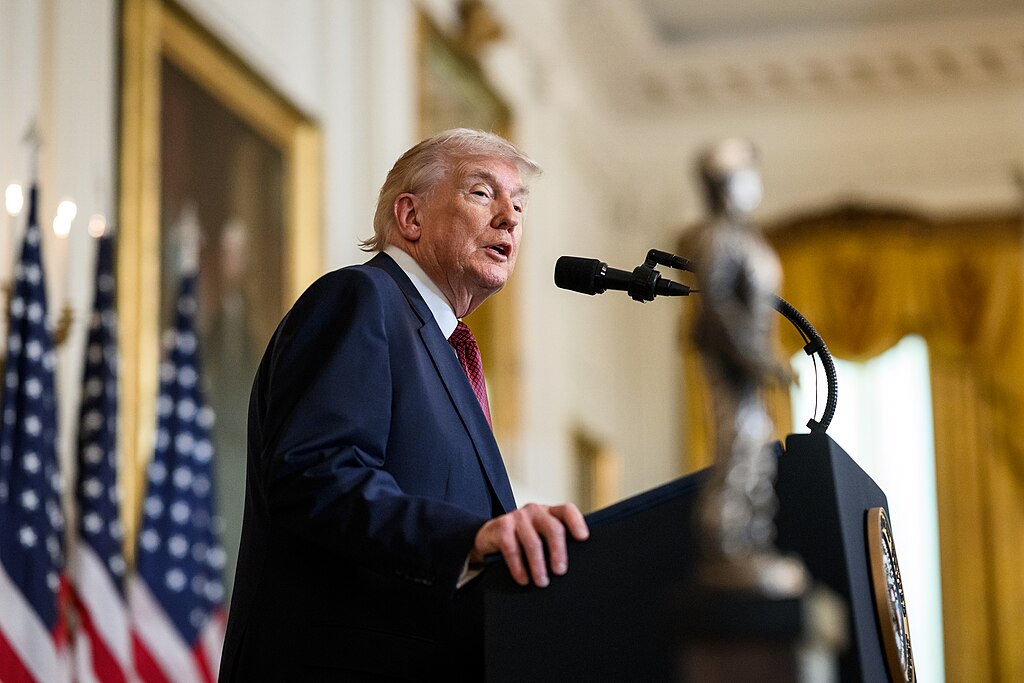
As President Donald Trump prepares to deliver his February 24 State of the Union address, a surprising question is dominating Washington:
Will leading Democrats even show up?
What was once a formal, patriotic tradition has now become a political standoff — with several top Democrats openly debating whether to boycott the president’s nationally televised speech.
For millions of Americans who still view the State of the Union as a constitutional duty — not a campaign rally — the growing talk of absence and protest is raising serious eyebrows.
Democrat Leaders Admit Attendance Is “A Tough Call”
Senate Democratic Whip Dick Durbin acknowledged this week that nearly every Democrat in his caucus is weighing whether to attend. Connecticut Senator Richard Blumenthal also confirmed he remains undecided.
That kind of hesitation is unusual for what has historically been one of the most symbolic nights in American politics.
The State of the Union is not just a speech. It is a constitutional obligation outlined in Article II, where the president reports to Congress and the American people about the condition of the nation.
Yet for some Democrats, attendance itself is now being framed as a political endorsement — something they are clearly uncomfortable with.
Protest, Walkouts, or Boycott?
California Representative Jared Huffman suggested he may attend — but only until he feels compelled to walk out.
That signals something bigger than disagreement. It suggests planning.
House Minority Leader Hakeem Jeffries reportedly told colleagues they have two options:
- Attend and show what he described as “silent defiance”
- Or skip the speech entirely
In other words, Democrats appear divided between staging visible resistance or removing themselves from the room altogether.
Internal Party Debate Reveals Strategic Struggle
Michigan Representative Shri Thanedar says he plans to attend but wants to signal opposition in some form.
Texas Representative Greg Casar admitted that last year’s protest strategies did not work as intended.
That admission matters.
It suggests Democrats are not only debating whether to attend — they are also debating how effective public protest tactics really are when Americans are watching from home.
Meanwhile, New Mexico Representative Teresa Leger Fernandez confirmed that Democrats plan to coordinate messaging around the speech to ensure their opposition to President Trump is clearly communicated.
A Tradition Under Pressure
The State of the Union was once considered a rare moment of unity — or at minimum, respectful disagreement.
But in recent years, partisan theatrics have taken center stage.
Few Americans have forgotten when then–House Speaker Nancy Pelosi tore up President Trump’s 2020 State of the Union speech in full view of the nation — a dramatic moment that symbolized how divided Washington had become.
Now, in 2026, the tension appears far from over.
Why This Matters to Voters Over 50
For many Americans over the age of 50, the State of the Union represents something bigger than party politics.
It represents:
- Respect for constitutional traditions
- Institutional stability
- Civic responsibility
- National unity — even in disagreement
The growing boycott discussion raises a broader question:
Should elected officials attend out of respect for the office — even if they oppose the president?
Or has Washington reached a point where even shared civic moments are now partisan battlegrounds?
The Bottom Line
As President Trump prepares to outline his agenda on February 24, the spotlight will not only be on his speech — but on who chooses to be in the chamber.
Will Democrats attend and protest?
Will some stage walkouts?
Or will absences dominate the headlines?
One thing is certain: The American people will notice.
And in an election cycle that continues to reshape Washington, symbolic decisions like this may resonate far beyond a single night.