Here’s what happened.
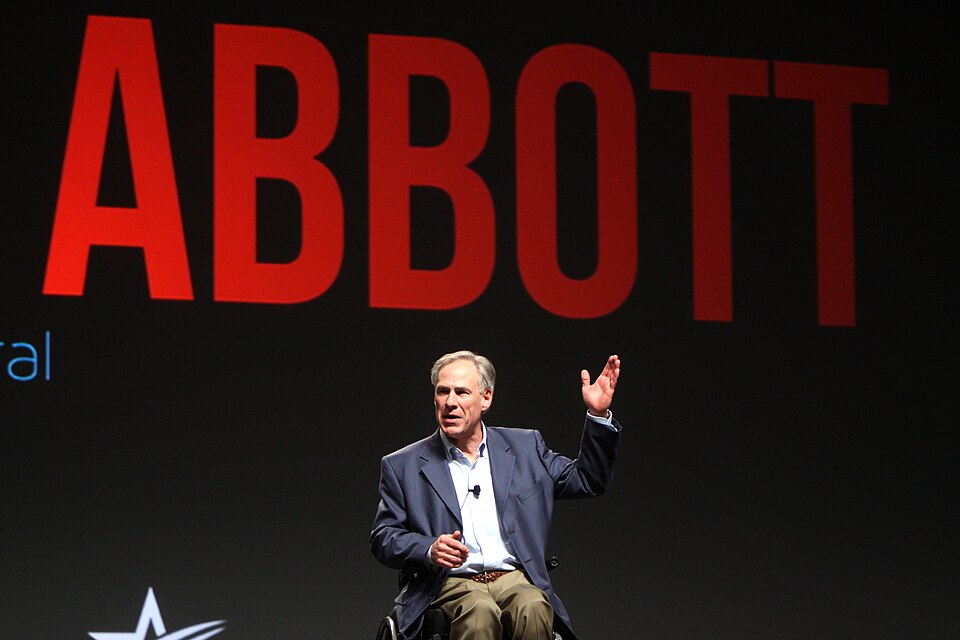
Texas Republican Governor Greg Abbott is facing growing criticism after declining to debate his Democratic challenger ahead of the November midterm elections, creating an unexpected controversy in one of the nation’s most closely watched governor’s races.
Abbott, who is seeking a fourth term, did not attend a debate-style event organized by Democratic state Representative Gina Hinojosa outside the Texas Governor’s Mansion on Thursday, October 15.
The Democratic challenger appeared beside an empty lectern, using the governor’s absence to question his willingness to defend his political record before voters.
However, Abbott had never agreed to participate in the event. Instead, he was more than 200 miles away in Tyler, Texas, attending a campaign roundtable with law enforcement officials.
The situation has intensified an already heated election contest, raising questions about campaign strategy, political accountability, and whether gubernatorial candidates should be expected to debate their opponents.
Republican Governor Declines Multiple Debate Invitations
Abbott’s decision represents a significant change from his previous election campaigns.
The Republican governor participated in debates during his successful campaigns against Wendy Davis in 2014, Lupe Valdez in 2018, and Beto O’Rourke in 2022.
This year, however, Abbott has declined invitations to debate Hinojosa, despite requests from several Texas media organizations.
Hinojosa accepted multiple invitations and repeatedly challenged Abbott to join her onstage.
When those efforts failed to produce a debate, the Democratic candidate announced plans to hold an event outside the Governor’s Mansion in Austin.
On October 15, Hinojosa followed through with that announcement.
Speaking beside an empty lectern, she criticized Abbott for declining to participate and argued that Texas voters deserved an opportunity to hear both candidates discuss their competing plans.
Her campaign portrayed the governor’s absence as an attempt to avoid difficult questions about his record.
Abbott’s campaign, meanwhile, has defended his decision to communicate with Texans through other public appearances and campaign events.
Abbott Explains His Decision to Skip the Debate
Although the controversy has attracted national attention, Abbott has offered a straightforward explanation for his decision.
During a campaign appearance in Tyler, the Republican governor argued that meeting directly with Texas residents provides a more productive way to understand their concerns.
Abbott has emphasized personal interactions with voters, including discussions about public safety, economic issues, and the challenges facing local communities.
His approach also allows him to highlight his accomplishments without participating in a televised confrontation with his opponent.
From a campaign perspective, the decision carries both potential benefits and risks.
Abbott enters the election with substantial name recognition, an established political organization, and more than a decade of experience leading Texas.
A televised debate could give his Democratic challenger an opportunity to gain additional statewide exposure.
At the same time, declining to participate provides opponents with an opening to question his willingness to face public scrutiny.
Whether the controversy changes voters’ opinions remains uncertain.
Democrat Holds Debate Outside Governor’s Mansion
Hinojosa’s unusual campaign event quickly became another flashpoint in the Texas governor’s race.
The Democratic nominee appeared outside the Governor’s Mansion in Austin, where she criticized Abbott’s policies and presented her own ideas for the state’s future.
Her remarks focused on several issues affecting Texas families, including property taxes, public education, and public safety.
Hinojosa has argued that Abbott’s administration has failed to adequately address important problems facing ordinary Texans.
She has also criticized the governor’s support for school choice initiatives and other education reforms.
However, Abbott and his Republican allies defend many of those policies as necessary steps toward improving educational opportunities, strengthening the economy, and protecting taxpayers.
The governor’s supporters can also point to his repeated statewide election victories as evidence that his approach has attracted substantial voter support.
For Hinojosa, the debate dispute presents an opportunity to increase her visibility as she attempts to unseat a longtime Republican incumbent.
For Abbott, the challenge is maintaining his campaign momentum while avoiding a prolonged controversy over his decision not to debate.
Property Taxes Become a Major Campaign Issue
Beyond the debate controversy, property taxes have emerged as an important issue in the Texas governor’s race.
For homeowners, retirees, and families living on fixed incomes, property taxes can represent a substantial portion of annual household expenses.
Abbott has promoted additional property tax reforms designed to reduce homeowners’ financial burdens and limit increases in local government spending.
His proposals have included stricter limits on property tax increases and changes to how public schools receive funding.
These issues are particularly significant in Texas, where homeowners do not pay a state individual income tax but often face substantial local property tax bills.
Hinojosa has also made affordability a major campaign priority.
The Democratic challenger argues that state leadership must do more to address rising household expenses and improve public services.
The competing proposals highlight an important question for voters: Which candidate offers the most effective approach to controlling government costs while maintaining essential services?
That issue could have consequences far beyond the election itself.
Education and School Choice Divide the Candidates
Education is another major point of disagreement between Abbott and Hinojosa.
Abbott has strongly supported school choice initiatives, including education savings accounts that provide eligible families with financial assistance for approved educational expenses.
Supporters argue that these programs give parents additional options and allow families to select educational environments that better meet their children’s needs.
Critics contend that directing public resources toward private educational alternatives could place additional pressure on traditional public schools.
Hinojosa has promised to pursue significant changes to Texas education policy if elected.
Her priorities include strengthening public schools, changing state oversight practices, and reconsidering education reforms implemented during Abbott’s administration.
However, many major changes would require cooperation from the Texas Legislature.
That means the election’s outcome could influence not only the governor’s office but also the direction of education policy across the state.
Border Security and Public Safety Remain Central Issues
Abbott has built much of his political reputation around border security, immigration enforcement, and law enforcement support.
His administration has pursued an aggressive approach to border security, including Operation Lone Star and additional state-level enforcement measures.
These policies have made Abbott a nationally recognized Republican figure and a prominent voice in debates over federal immigration policy.
Public safety has also played a significant role in his reelection campaign.
The governor has emphasized his administration’s efforts to support law enforcement agencies and strengthen security throughout Texas.
Hinojosa has challenged aspects of Abbott’s public safety record while advocating different approaches to crime prevention and gun policy.
The candidates’ disagreements extend to education, taxes, and the state’s long-term economic priorities.
Although the debate controversy has received considerable attention, these policy differences will likely play a major role in how voters evaluate the election.
Texas Governor’s Race Draws Increasing Attention
Texas has remained a Republican stronghold in statewide elections for decades.
Abbott won his previous three gubernatorial elections, establishing himself as one of the state’s most influential political leaders.
However, the 2026 race has attracted additional attention as some recent surveys have suggested a more competitive contest.
Polling results can vary significantly depending on the organization conducting the survey, its methodology, and the voters included.
A close survey does not necessarily mean that a challenger will win, particularly when an incumbent has considerable fundraising and organizational advantages.
Nevertheless, competitive polling can influence campaign spending, media coverage, and voter enthusiasm.
Abbott has continued investing heavily in Republican electoral efforts across Texas, while Hinojosa is attempting to capitalize on concerns about affordability, education, and the direction of state government.
Both candidates face the challenge of persuading undecided voters while encouraging their existing supporters to participate.
Are Political Debates Still Necessary?
Abbott’s decision has reignited a broader discussion about the importance of political debates.
For decades, televised debates have provided voters with opportunities to compare candidates’ positions, hear their responses to difficult questions, and evaluate their leadership styles.
Supporters of debates argue that public officials seeking reelection should be prepared to defend their records before a statewide audience.
Others believe traditional debates often produce political theater rather than meaningful policy discussions.
Candidates can communicate with the public through interviews, town halls, public appearances, and direct meetings with constituents.
Those alternatives may provide valuable information, although they do not necessarily offer the same side-by-side comparison as a formal debate.
The disagreement is particularly relevant when an incumbent enjoys a substantial advantage in name recognition.
Ultimately, voters must decide how much importance to place on a candidate’s willingness to participate in a debate.
What Happens Next in the Texas Election?
With Election Day approaching on November 3, both campaigns are entering a critical period.
Abbott is seeking another four years in office, hoping his record on economic development, public safety, border security, and conservative policy priorities will secure another victory.
Hinojosa is attempting to convince Texans that new leadership would deliver better results on education, affordability, and government accountability.
The debate controversy has given her campaign another opportunity to challenge the incumbent governor.
But Abbott continues to focus on his policy agenda and direct engagement with voters, maintaining that these activities offer a productive way to communicate with the public.
The final outcome will depend on voters’ assessments of the candidates, their policy proposals, and the direction they believe Texas should take.
For now, one thing is clear: The absence of a traditional gubernatorial debate has become a political issue of its own.
As Texans prepare to cast their ballots, the controversy leaves an important question unanswered.
Should an incumbent governor be expected to debate a challenger before Election Day, or is a candidate’s governing record enough for voters to make an informed decision?