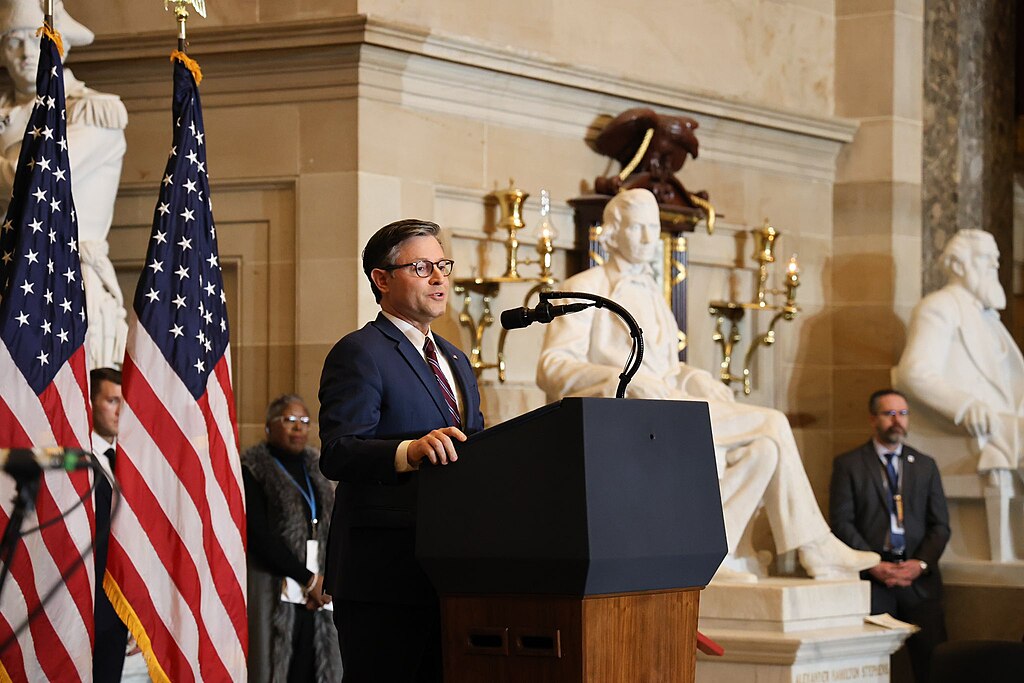
Here’s what is going on inside Congress.
Tensions inside the House Republican Conference are boiling over, raising fresh questions about party unity as lawmakers look ahead to 2026 — and some conservatives are now openly challenging Speaker Mike Johnson’s leadership.
Rep. Kevin Kiley (R-Calif.) became the latest Republican to signal frustration with House leadership, suggesting that the GOP needs a new strategy in the coming year if it hopes to stay aligned with voter priorities.
Appearing Wednesday on NewsNation’s “The Hill,” Kiley said he wants to see the House reclaim control of its agenda instead of being pushed around by procedural maneuvers and internal gridlock.
“I hope the Speaker takes a different approach in the new year,” Kiley said, arguing that the House should put itself “back in the driver’s seat” on issues that matter most to everyday Americans.
Growing GOP Frustration Inside the House
Kiley pointed to the rising number of discharge petitions — a rarely used procedural tool — as a warning sign that dissatisfaction is spreading among rank-and-file Republicans. Those petitions are typically a last resort when lawmakers feel leadership is blocking debate or votes.
His remarks echo criticism coming from across the Republican spectrum. Moderates such as Rep. Mike Lawler (R-N.Y.) and conservatives including Rep. Marjorie Taylor Greene (R-Ga.) have both raised concerns as negotiations continue over expiring Affordable Care Act (ACA) subsidies.
Johnson Faces Pressure From All Sides
Speaker Johnson has faced growing internal tensions in recent weeks, including disputes tied to the Epstein Files Transparency Act. That legislation cleared Congress with near-unanimous bipartisan backing and was turning into law by President Trump last month, underscoring that broad agreement is still achievable when leadership opens the door to cooperation.
The current dispute centers on healthcare subsidies scheduled to expire on December 31. Johnson declined to allow an amendment vote to extend the subsidies as part of a GOP-backed healthcare package.
That decision prompted Rep. Lawler, along with Reps. Brian Fitzpatrick, Rob Bresnahan, and Ryan Mackenzie of Pennsylvania, to sign a discharge petition aimed at forcing a Democratic proposal to the floor that would extend the subsidies for three years.
Despite the growing pushback, Johnson pushed back publicly on Wednesday, stating that he has “not lost control of the House,” even as the petition reached the required number of signatures.
No Vote Until January
With the House set to adjourn Friday, House rules require petition supporters to wait seven legislative days before bringing the proposal forward. As a result, no vote will take place until January at the earliest.
Kiley said he remains undecided on the three-year extension, noting his preference for reforms and pointing out that the Senate rejected a similar proposal earlier this month.
However, the California Republican made clear that his broader frustration goes beyond the policy itself.
Leadership Gridlock Draws Fire
Kiley criticized leadership in both parties — including Speaker Johnson and House Minority Leader Hakeem Jeffries (D-N.Y.) — accusing them of taking hardened positions instead of advancing compromise proposals with demonstrated bipartisan support.
According to Kiley, those middle-ground solutions could realistically pass the House, clear the Senate, and become law — if leadership allowed the process to work.
As Republicans work to advance President Trump’s broader agenda and maintain control of the House, the latest dispute highlights a familiar Washington problem: internal power struggles that risk overshadowing the priorities of voters back home.