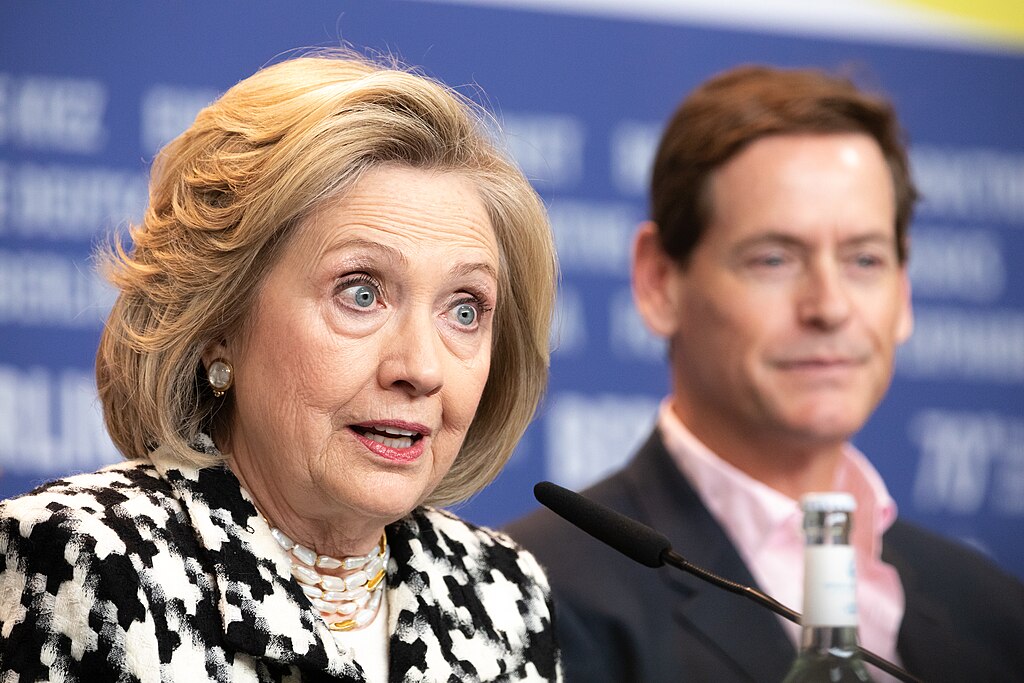
Hillary was projecting a lot of anger.
A tense and highly revealing moment unfolded at the Munich Security Conference in Germany when former Secretary of State Hillary Clinton clashed with Czech Deputy Prime Minister Petr Macinka over President Donald Trump’s leadership and America’s direction.
The exchange quickly became one of the most talked-about moments of the international gathering, highlighting the deep divide between globalist perspectives and the growing populist movement that reshaped American politics under President Trump.
Heated Exchange Over Trump’s Policies
During a panel discussion focused on the future of the West and U.S.–European relations, Clinton sharply criticized President Trump’s approach to foreign policy and transatlantic alliances.
Macinka pushed back, arguing that Trump’s political success was not accidental — but a response to frustration among everyday citizens who felt ignored by political elites.
At one point, Macinka observed that Clinton clearly does not like President Trump.
Clinton agreed.
She stated that she opposes not only Trump personally but also what she believes his policies are doing to the United States and the global order.
Macinka countered by saying Trump’s leadership represents a reaction to policies that had moved “too far away from regular people.” He referenced cultural and political trends in recent years, including progressive social ideologies and cancel culture.
The discussion grew tense as Clinton interrupted to challenge his claims. When Macinka cited concerns about “woke” ideology and gender debates, Clinton implied his position could be viewed as opposing women’s rights.
Macinka responded by suggesting her reaction showed discomfort with criticism of progressive policies.
WATCH:
Panelist in Munich mocks Hillary Clinton after she rages about Donald Trump:
"I think you really don't like him."
*Hillary rages again* pic.twitter.com/TshsaMI0Wg
— Western Lensman (@WesternLensman) February 14, 2026
Immigration Debate Takes Center Stage
The panel also addressed immigration policy — a key issue that remains central to President Trump’s agenda.
In a notable moment, Clinton acknowledged that immigration in the United States had “gone too far” and admitted it had been disruptive and destabilizing in some areas.
She stated that immigration reform must balance humane treatment with secure borders.
That comment stands in contrast to her 2016 presidential campaign, when she opposed large-scale border wall expansion and supported executive actions under former President Barack Obama that deferred deportations for certain illegal immigrants.
At the time, Clinton also favored reducing immigration raids, arguing they caused unnecessary fear in communities.
For many voters — particularly Americans over 50 who have witnessed decades of shifting immigration policy — the contrast between past positions and current remarks is significant.
A Broader Divide in the West
The Munich exchange underscored a larger ideological divide.
Supporters of President Trump argue that his policies prioritize:
- Strong border security
- National sovereignty
- Law enforcement support
- Cultural stability
- America First foreign policy
Critics, including Clinton, warn that Trump’s approach risks straining alliances and altering the traditional global order.
But for millions of Americans, particularly older voters who value stability and national identity, Trump’s policies represent a corrective shift after years of rapid social and political change.
Why This Moment Matters
The exchange between Clinton and Macinka highlights that the debate over Trump’s legacy is far from over.
Issues such as immigration reform, border security, transatlantic relations, and cultural policy remain central to America’s future — especially under President Trump’s leadership.
And as this Munich panel demonstrated, those debates are no longer confined to Washington. They are shaping conversations across Europe and around the world.
One thing is clear: the ideological battle between globalism and populism continues — and it shows no signs of slowing down.