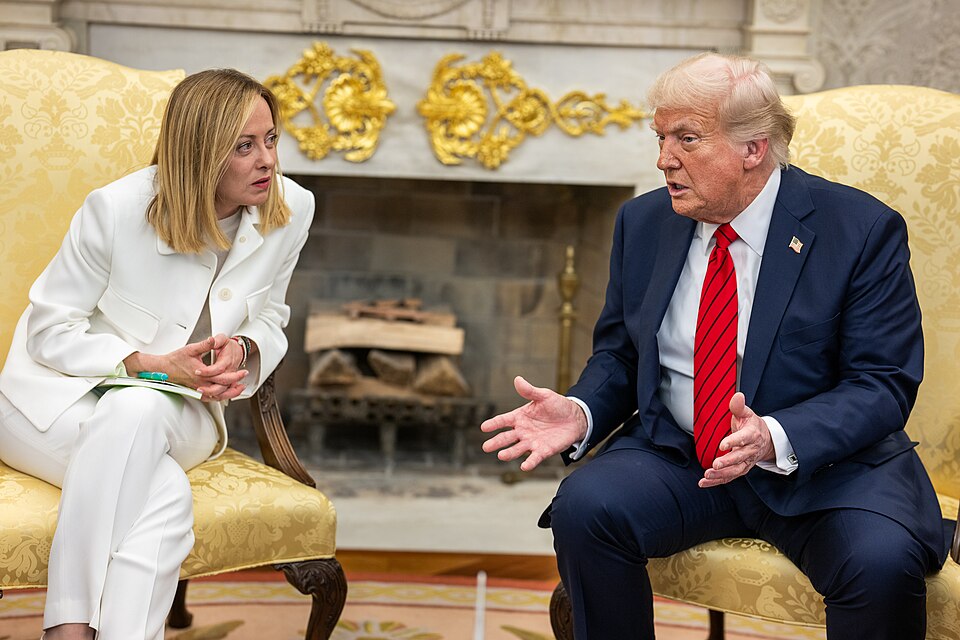
Looks like some parts of Europe are finally starting to listen to Trump.
Italy is taking extraordinary steps to tighten border security after a massive surge of illegal migrants entered Spain’s North African enclave of Ceuta, sparking renewed concerns across Europe about immigration, public safety, and the future of the European Union’s open-border system.
The Italian government announced Friday that it will temporarily reinstate border checks for travelers arriving from Spain by air and sea throughout the month of August. Officials say the move is designed to protect national security while preventing the migration crisis from spreading into Italy.
The decision temporarily limits Spain’s access under the Schengen Agreement, Europe’s passport-free travel system that allows people to move freely between most EU nations.
Italy Moves to Strengthen Border Security
Italian Interior Minister Matteo Piantedosi confirmed that the enhanced border controls will remain in effect during August while authorities closely monitor developments in Spain.
Prime Minister Giorgia Meloni, who has consistently campaigned on stronger immigration enforcement, called the move an “extraordinary measure” necessary to defend Italy’s borders and protect its citizens.
Meloni emphasized that officials will work to minimize disruptions for summer tourism while maintaining strict security measures.
She also pledged Italy’s support for broader European efforts aimed at helping Spain restore full control of the European Union’s external borders.
According to Meloni, defending national borders is essential to protecting public safety, reducing illegal immigration, and dismantling the criminal organizations that profit from human trafficking.
Migrant Surge Triggers European Response
Italy’s decision follows a dramatic increase in migrant crossings into Ceuta after a ruling by Spain’s Supreme Court limited authorities’ ability to immediately return migrants intercepted while attempting to reach the Spanish enclaves of Ceuta and Melilla from Morocco.
The court’s decision prompted a wave of crossings that quickly drew attention from governments across Europe.
Spanish officials later reported that more than 48,000 migrants had voluntarily returned to Morocco by Friday evening, though European leaders continue to monitor the situation closely.
European Leaders Call for Action
European Commission President Ursula von der Leyen described the situation in Ceuta as “unacceptable” and announced that two European commissioners have been assigned to coordinate the EU’s response.
Von der Leyen said Europe’s immigration laws must be enforced consistently, calling for illegal border crossings to stop, human smuggling networks to be dismantled, and migrants who do not qualify to remain under EU law to be returned quickly.
Magnus Brunner, the European commissioner coordinating the EU’s response, said Spanish Foreign Minister José Manuel Albares told him that almost all of the migrants who crossed into Ceuta have since returned to Morocco.
Brunner added that none of the migrants had reached mainland Europe and said European governments remain in close coordination as the situation develops.
Albares also insisted that the security of the Schengen Area remains intact despite concerns raised by several European governments.
Spain Pushes Back Against Italy’s Decision
Spanish Prime Minister Pedro Sánchez criticized Italy’s temporary border controls, arguing that European nations should remain united rather than taking separate actions in response to the migration crisis.
His remarks highlighted growing divisions within the European Union over immigration policy, as several governments continue to debate how best to balance open borders with national security.
Immigration Debate Intensifies Across Europe
The latest developments are expected to fuel an already heated debate over illegal immigration throughout Europe.
Supporters of stronger border enforcement argue that countries must act quickly to maintain secure borders, disrupt human trafficking operations, and preserve public confidence in immigration systems.
Critics, meanwhile, warn that temporary restrictions on free movement could place additional strain on European unity.
As migration pressures continue to test governments across the continent, Italy’s decision is likely to become another major flashpoint in the broader debate over border security, immigration policy, and the future of Europe’s Schengen system.