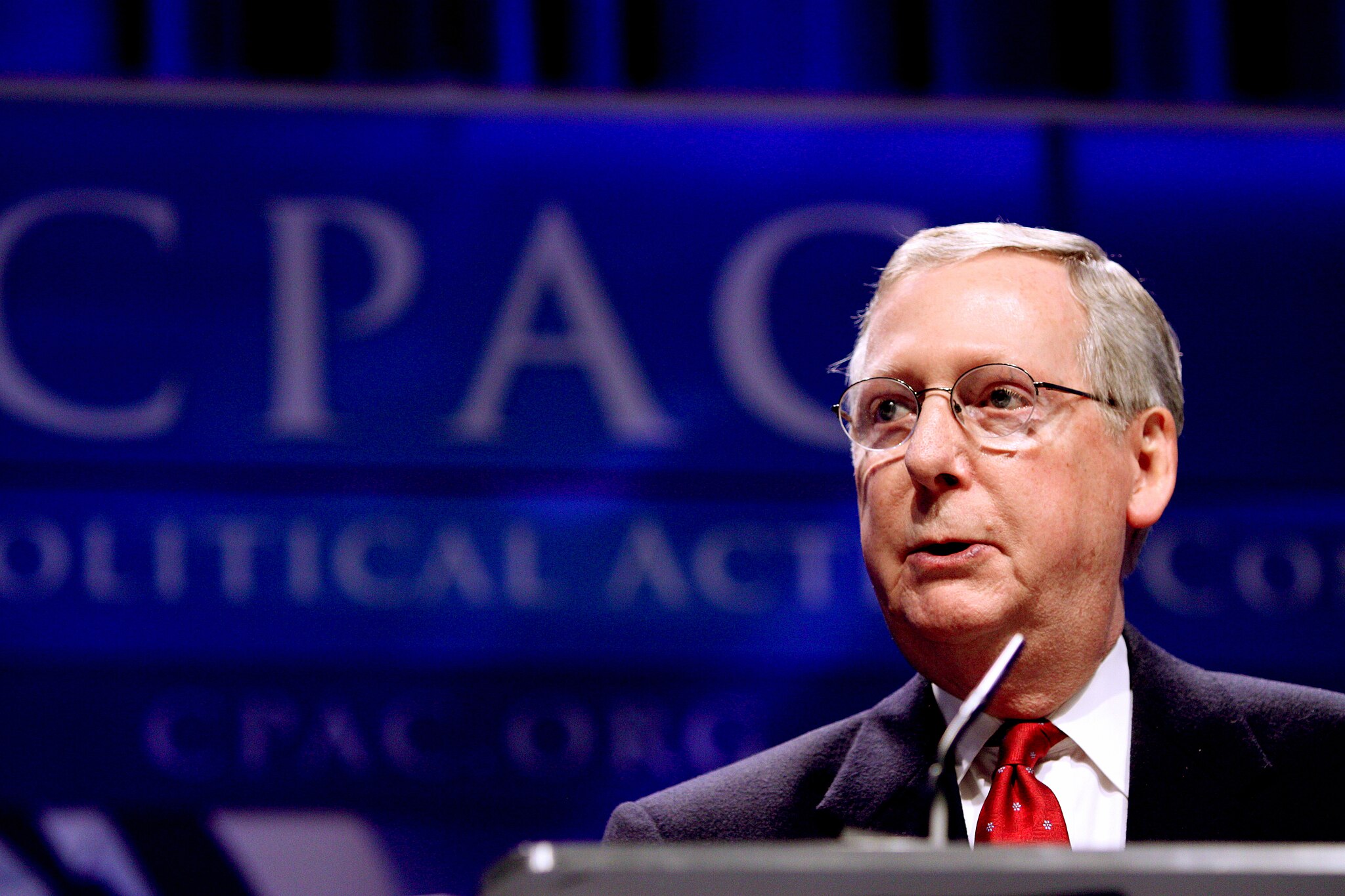
McConnell needs to just stop.
Senate Republican Leader Mitch McConnell is now trying to force President-elect Donald Trump to reject isolationist pressures within the GOP and instead focus on strengthening America’s military and global leadership. In a recent essay published in Foreign Affairs, McConnell, who is preparing to step down as Senate leader, warned that withdrawing from global affairs would leave the door open for adversaries to take advantage.
McConnell emphasized that the U.S. must rebuild its military power, describing the need for American “hard power” as urgent. He warned that abandoning global responsibilities, whether driven by left-wing ideologies or rising isolationism within the right, would allow the U.S.’s enemies to fill the vacuum. “The time to restore American hard power is now,” McConnell stated, stressing that military readiness should be the top priority, not political ideologies that call for disengagement from international affairs.
McConnell has consistently opposed the rising isolationist faction in his party. He spearheaded efforts to secure military aid to Ukraine in the face of growing GOP opposition, even when many in his own party, including Trump’s allies, sought to cut U.S. support. In his Foreign Affairs article, McConnell directly urged Trump to remain committed to a robust foreign policy and military strength, especially in confronting Russian aggression and ensuring the security of NATO allies.
While McConnell acknowledged that Trump had made progress in confronting Russia during his first term, including sending lethal aid to Ukraine, he cautioned that Trump’s inconsistent rhetoric—particularly his past praise for Russian President Vladimir Putin—undermined these efforts. McConnell pointed out that Trump’s previous actions, such as withholding $400 million in security aid to Ukraine in 2019, raised doubts about America’s commitment to confronting Russian threats.
Looking ahead, McConnell urged Trump to commit to a substantial increase in defense spending, invest in advanced military technologies, and strengthen NATO. He warned that a Russian victory in Ukraine would not only damage European security but also embolden other U.S. adversaries like China, Iran, and North Korea. “The United States cannot afford to retreat,” McConnell wrote. “If we do, our enemies will be more than happy to fill the void.”
McConnell’s call for a strong and proactive foreign policy comes at a critical time as the GOP faces internal divisions over military engagement and global leadership. While Trump has been a vocal critic of “forever wars” and suggested a reduction in U.S. military commitments abroad, McConnell’s vision stresses that America’s leadership in global security must remain a cornerstone of national policy.
As McConnell prepares to transition to his new role in the Senate, he is determined to leave a legacy of ensuring that the U.S. remains the world’s preeminent military and economic power. While the Republican Party may debate the future of foreign policy, McConnell’s message is clear: a strong, engaged America is essential for both national security and global stability.