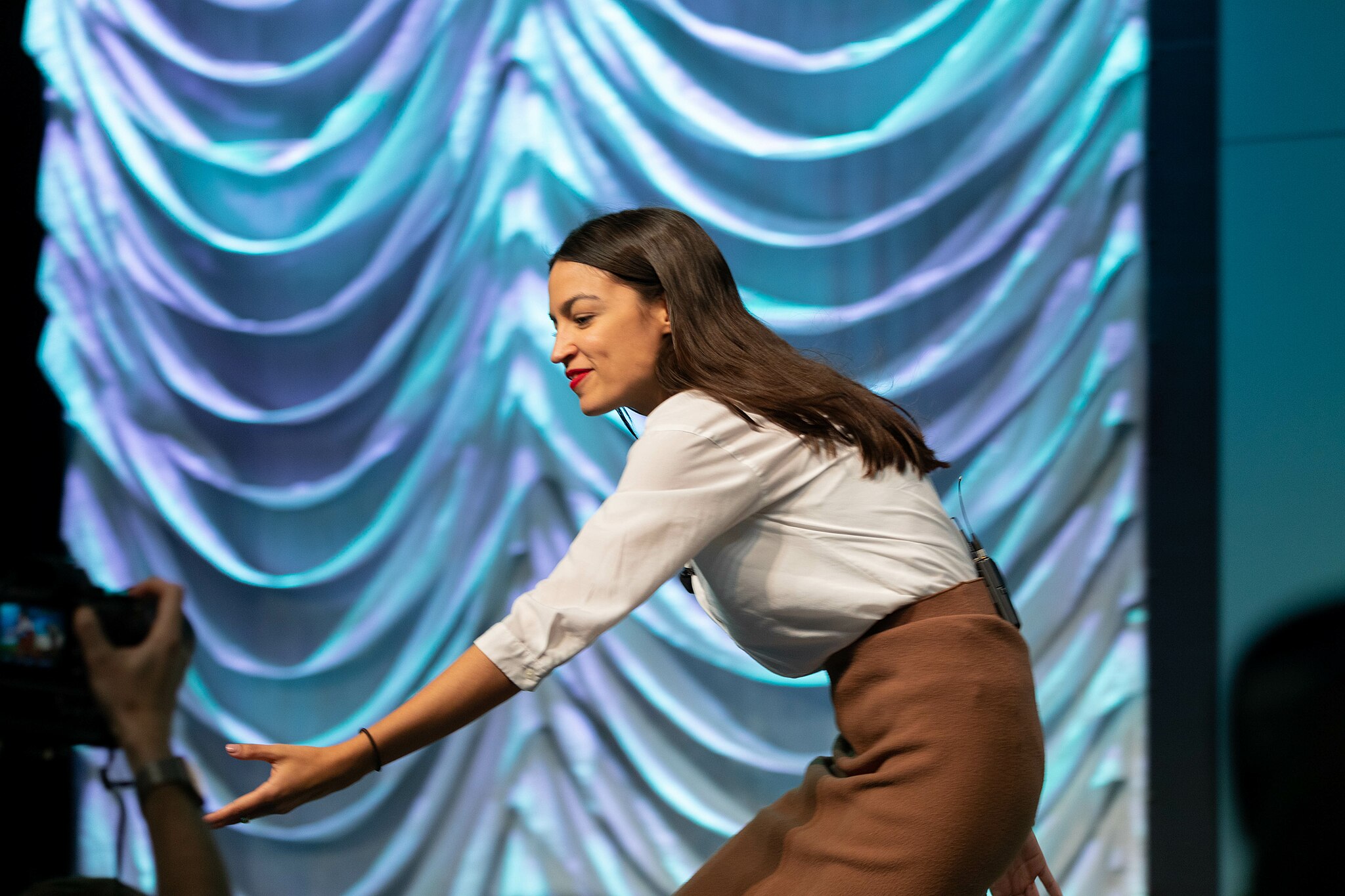
AOC thinks she did something here.
Rep. Alexandria Ocasio-Cortez (D-N.Y.) recently criticized President Trump, suggesting that the reversal of the Office of Management and Budget’s (OMB) funding freeze marked his “first major loss” of his second term. She argued that while Democrats may not hold a majority in Congress, they still possess the power to push back against Trump’s policies. Ocasio-Cortez framed the reversal as part of a broader fight against what she called the Trump administration’s attempts to cut funding for essential services, including veterans’ benefits, healthcare, and education.
The OMB’s decision to lift the freeze on federal funding came after significant pressure from Republican lawmakers, who had received numerous complaints from their constituents about the loss of federal grants. Acting OMB Director Matthew Vaeth signed the memo to reverse the freeze, allowing federal financial assistance to continue flowing.
White House Press Secretary Karoline Leavitt responded to the reversal, emphasizing that it was not a full rollback of Trump’s policies on federal funding. She explained that the change was necessary to clear up confusion caused by a court injunction but reassured the public that the president’s executive orders regarding federal funding were still in full effect and would continue to be enforced.
Ocasio-Cortez’s remarks reflect her ongoing combative stance toward Trump. Unlike other Democrats, such as Sen. John Fetterman (D-Pa.), who has shown a willingness to engage with the president, Ocasio-Cortez maintains a more adversarial approach. She sees public confrontation as crucial to drawing attention to the party’s opposition to Trump’s agenda.
For Republicans, this episode serves as a reminder of the importance of defending fiscal policies and maintaining control over federal spending, especially in the face of progressive pressure. While Ocasio-Cortez may view the reversal as a small victory, conservatives continue to focus on pushing back against policies they believe represent overreach and unnecessary government spending.