This was shocking to see.
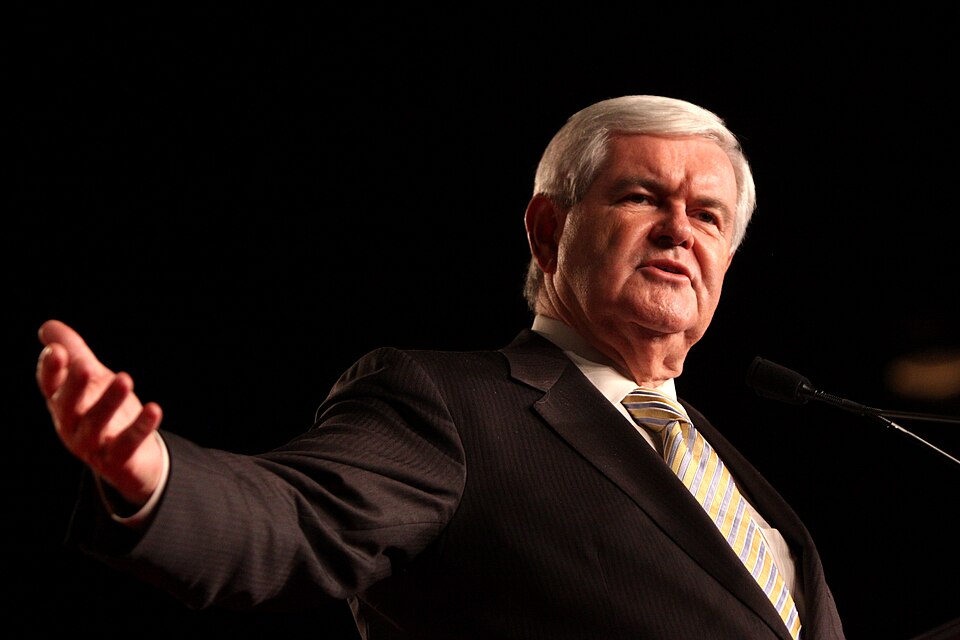
Former Republican House Speaker Newt Gingrich is demanding answers from Congress after President Donald Trump helped secure the reinstatement of Nvidia CEO Jensen Huang, a decision that has sparked renewed concerns about American national security.
Gingrich, who has been a prominent supporter of Trump throughout his political career, believes federal lawmakers need to take a closer look at the circumstances surrounding Huang’s return to the technology giant.
The disagreement comes as Washington faces mounting pressure to protect America’s technological advantage over China while maintaining the strength of the U.S. economy.
Gingrich Demands Answers From Congress
In a Monday social media statement, Gingrich expressed serious reservations about Huang returning to lead Nvidia amid allegations involving a woman suspected of having ties to Chinese intelligence.
The former House speaker also questioned whether advanced American computer chips had reached China in violation of federal export restrictions.
Gingrich described the situation as “profoundly wrong” and called for Congress to examine potential national security vulnerabilities and shortcomings within the federal government.
While Gingrich stopped short of directly accusing Trump of misconduct, his remarks placed him at odds with the president’s position on Huang’s reinstatement.
His comments have added another dimension to a controversy that continues to attract attention from lawmakers on both sides of the political aisle.
Trump Defends His Decision
President Trump has taken a substantially different position, expressing confidence in Huang’s ability to lead Nvidia and emphasizing the company’s importance to American economic and technological leadership.
During a Monday interview with CNBC, Trump acknowledged his involvement in persuading Nvidia’s board to bring Huang back.
The president also suggested that Huang should not automatically be held responsible if technology legally sold to another business was subsequently transferred to China without authorization.
Trump maintained that he did not believe Huang’s return presented a threat to American national security.
Following his reinstatement, Huang expressed appreciation for the opportunity to resume his leadership responsibilities and continue Nvidia’s work in artificial intelligence.
Questions surrounding the controversy, however, remain unresolved.
America’s National Security Takes Center Stage
At the heart of the disagreement is a much larger issue involving America’s economic independence, national defense and growing technological competition with China.
Advanced semiconductor chips are essential to many industries, including manufacturing, cybersecurity, telecommunications and artificial intelligence.
They also play an increasingly important role in modern military and intelligence operations.
The federal government has established export restrictions intended to prevent certain advanced technologies from falling into the hands of foreign entities that could use them against American interests.
The Justice Department is investigating potential export violations involving Megaspeed, a Singapore-based company connected to the woman at the center of the controversy.
The existence of that investigation does not establish that Huang personally violated federal law.
Determining whether existing safeguards were followed could become an important part of congressional oversight.
Why Nvidia Matters to the American Economy
Beyond the political controversy, Nvidia occupies an important position in the American economy.
The company’s technology supports businesses across numerous industries, and its performance can influence financial markets, investment portfolios and retirement accounts.
For Americans with retirement savings invested in major stock market index funds, developments involving companies such as Nvidia can have broader financial implications.
Washington must therefore consider both the economic consequences of its decisions and the importance of protecting sensitive American technology.
Maintaining a competitive business environment without compromising national security remains one of the most significant challenges facing federal policymakers.
Will Congress Launch a Broader Investigation?
Gingrich’s remarks come at a particularly important moment in Washington.
Following the November midterm elections, Democrats are preparing to assume control of both chambers of Congress, giving them greater authority to conduct investigations and hold congressional hearings.
Lawmakers have already indicated that Huang’s reinstatement will not eliminate their questions about Nvidia or the Trump administration’s involvement in the decision.
A broader congressional inquiry could examine the enforcement of federal export restrictions, the handling of intelligence concerns and the circumstances that led to Huang’s return.
It could also provide additional information about whether changes are necessary to strengthen protections for sensitive American technology.
Trump and Gingrich Remain Divided
Trump has made his confidence in Huang clear, while Gingrich believes the situation deserves considerably more congressional scrutiny.
Their disagreement illustrates how questions involving national security, economic growth and government accountability can produce different approaches even among longtime political allies.
As competition between the United States and China intensifies, Washington will continue facing difficult decisions about how to protect American innovation without undermining the businesses responsible for developing it.
Whether congressional investigations ultimately validate Gingrich’s concerns or reinforce Trump’s position remains to be seen.
For now, important questions remain unanswered.