The jig is up.
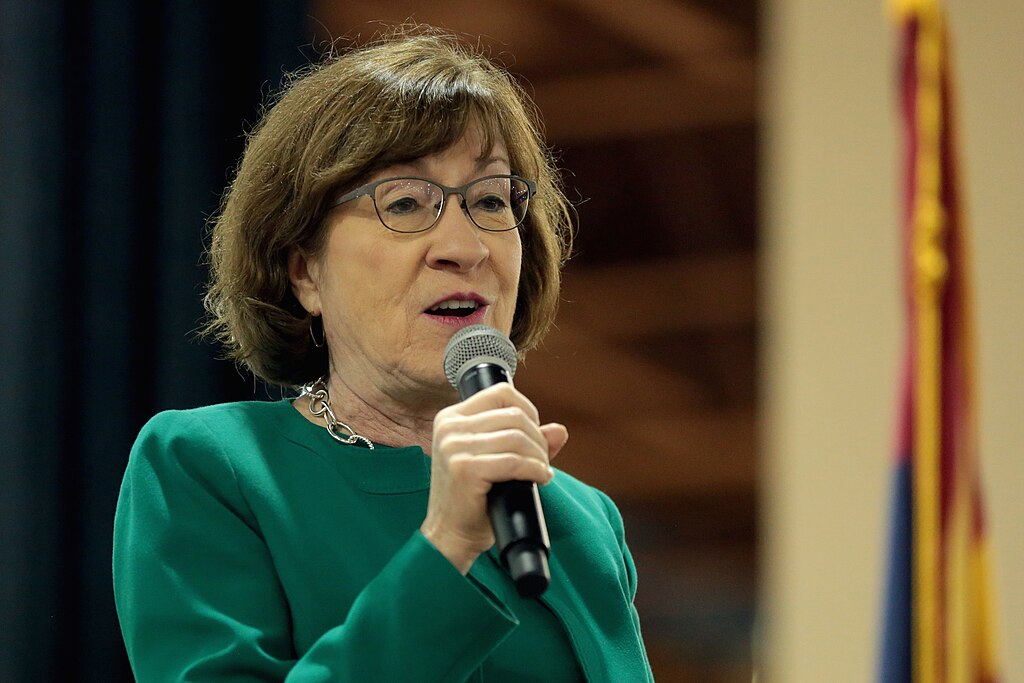
Sen. Susan Collins of Maine is officially running for reelection — but after clashing with President Donald Trump, many conservative voters are asking a serious question:
Did this RINO miscalculate?
With control of the U.S. Senate hanging in the balance, Collins’ 2026 race could determine whether Republicans keep their majority — and whether President Trump has strong allies backing his America First agenda.
Collins Launches Campaign Amid Trump Fallout
Collins announced her reelection bid with a lighthearted social media video, joking about “running” while unboxing athletic shoes. But behind the humor lies a brutal political reality.
The Maine Republican has had a rocky relationship with President Trump in recent months. After voting to limit U.S. military authority in Venezuela, Collins reportedly received sharp criticism from the president in a private call. Trump later publicly blasted her, saying she should “never be elected to office again.”
For conservative voters who strongly support Trump’s leadership, that moment raised eyebrows.
At a time when the country faces border chaos, global instability, and mounting debt, grassroots Republicans are increasingly wary of lawmakers seen as unreliable on core issues.
Budget Battles and Shutdown Drama
Collins serves as chair of the powerful Senate Appropriations Committee — a position that gives her major influence over federal spending.
Over the past year, Washington endured one of the longest government shutdown standoffs in modern history. Collins played a central role in negotiating and advancing 11 of the 12 annual funding bills.
While some Republicans praised her for moving legislation forward, fiscal conservatives continue to question whether Washington’s spending habits are truly being restrained.
For voters over 50 concerned about inflation, Social Security stability, Medicare funding, and runaway federal deficits, these budget fights matter deeply.
Immigration and ICE Controversy
Another flashpoint came when Immigration and Customs Enforcement (ICE) scaled back enhanced enforcement activity in Maine after discussions between Collins and Homeland Security Secretary Kristi Noem.
Immigration enforcement remains one of the most important issues for conservative voters nationwide — particularly under President Trump’s renewed focus on border security and law and order.
Any perception that a Republican senator is softening enforcement could become campaign fuel.
Democrats Pour Millions Into Maine
National Democrats see opportunity.
The Senate Majority PAC, aligned with Senate Minority Leader Chuck Schumer, has already reserved $24 million in television advertising in Maine — and that’s just the beginning.
Outside spending is expected to skyrocket, making this one of the most expensive Senate races of 2026.
Collins may face Democratic Governor Janet Mills or progressive activist Graham Platner. Both candidates would likely attempt to nationalize the race and tie Collins directly to Trump — even as some conservative voters question her loyalty to the president.
GOP Groups Rally Behind Collins
Despite tensions, Republican leadership is not abandoning Collins.
The Senate Leadership Fund has committed $37 million to defend her seat. Allied conservative groups are already running advertisements promoting her record.
Party leaders argue Collins has repeatedly proven she can win in a traditionally blue state. In 2020, she defied polling expectations and secured another term.
But 2026 could be different.
The Trump Factor Could Decide Everything
President Donald Trump remains the dominant force in Republican politics. His endorsement — or opposition — could shape turnout, enthusiasm, and fundraising.
For conservative voters aged 50 and older, the stakes are clear:
- Supreme Court confirmations
- Border security
- Federal spending discipline
- Protection of Social Security and Medicare
- America First foreign policy
Collins now faces a difficult balancing act: persuade Trump-aligned voters she’s still a reliable Republican while defending her bipartisan brand in Maine.
Democrats want to make this race a referendum on President Trump. Conservative voters may instead make it a referendum on loyalty.
One thing is certain — this is no ordinary Senate race.
It’s a battle that could determine the future direction of the Republican Party — and whether wavering lawmakers learn the hard way what happens when they cross President Trump.