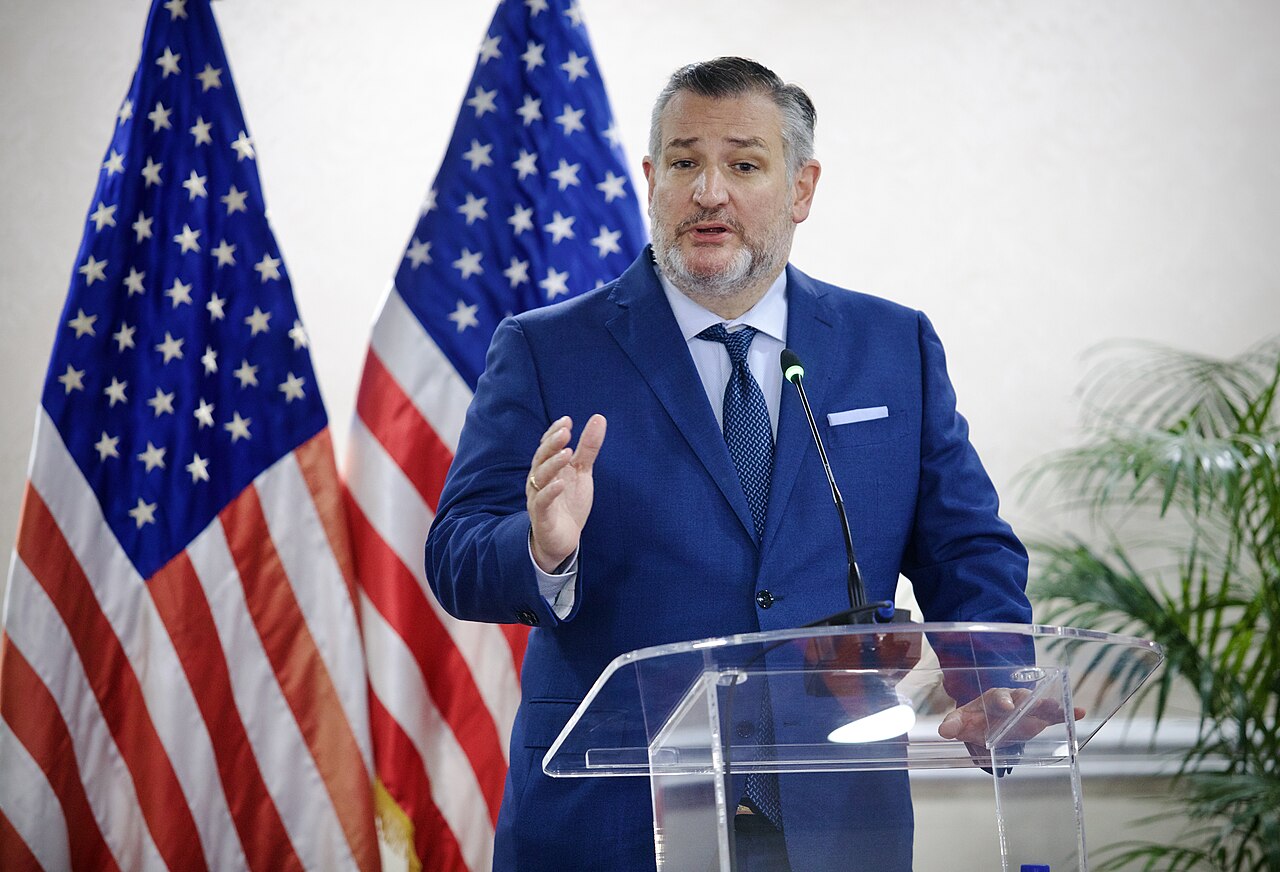
Here’s what Ted Cruz is thinking.
As airport delays spiral out of control and Washington gridlock drags on, a powerful Republican senator is stepping forward with a bold new plan—one that could change how immigration enforcement is funded under President Donald Trump.
Sen. Ted Cruz (R-Texas), a leading conservative voice in the Senate, is proposing a strategic move to separate funding for Immigration and Customs Enforcement (ICE) and Customs and Border Protection (CBP) from the rest of the Department of Homeland Security (DHS).
The goal? Restore order, strengthen border security, and ease growing travel disruptions—fast.
A Breaking Point in Washington
After weeks of stalled negotiations, many Republicans are losing confidence that Democrats will agree to fully fund Homeland Security—especially when it comes to immigration enforcement.
Cruz didn’t hold back.
He warned that if Democrats continue blocking funding, Republicans may need to move forward on their own using the budget reconciliation process—a tool that allows passage with a simple majority vote.
That means ICE and CBP could be funded without needing Democrat support.
For many conservatives, this represents a turning point.
Why This Matters Right Now
This proposal isn’t just about politics—it’s about what millions of Americans are experiencing right now.
Across the country, airports are facing:
- Long security lines stretching 2–4 hours
- Understaffed TSA checkpoints
- Delayed and missed flights
- Frustrated travelers, especially families and seniors
At major airports in Texas, wait times have surged past three hours, with some passengers missing flights entirely.
For older Americans and retirees—many traveling to see family or take long-planned trips—these disruptions hit especially hard.
What’s Causing the Airport Crisis?
According to lawmakers, the issue stems from ongoing funding disputes impacting federal workers:
- TSA agents have missed multiple paychecks
- Hundreds have reportedly left their positions
- Many are calling out sick due to financial strain
The result? A system under pressure at the worst possible time.
Cruz and other Republicans argue this situation is avoidable—and fixable.
A National Security Concern
Beyond travel headaches, there’s a deeper concern: security.
Cruz emphasized that immigration enforcement and counterterror efforts are too important to be caught in political battles.
He pointed to recent global threats and stressed the importance of maintaining strong, fully operational agencies tasked with protecting Americans.
For many voters—especially older Americans who prioritize safety—this message resonates strongly.
Republican Support Is Growing
Cruz isn’t alone.
Several GOP senators are signaling openness to the idea of splitting DHS funding:
- Sen. Thom Tillis (R-N.C.) said he’s willing to consider any solution that breaks the deadlock
- Sen. John Kennedy (R-La.) suggested funding the rest of DHS immediately while addressing ICE separately
This growing support suggests the proposal is gaining serious traction within Republican ranks.
What About Democrats?
Democrats previously pushed a different approach—attempting to fund agencies like TSA and FEMA separately while tying ICE funding to broader immigration reforms.
Republicans rejected that plan, arguing it weakened border enforcement.
Now, with airport conditions worsening and public pressure rising, the debate is shifting.
What Happens Next
Senate leaders say discussions are ongoing, and behind closed doors, negotiations may be inching forward.
Still, time is running short.
With travel demand rising and frustrations building nationwide, lawmakers are under increasing pressure to act.
The Bottom Line
Sen. Ted Cruz’s proposal to “split” ICE funding could become a major turning point in the fight over border security and government funding.
For millions of Americans dealing with travel delays—and for those concerned about national security—the outcome of this debate could have real, immediate impact.
One thing is certain: Washington can’t afford to wait much longer.