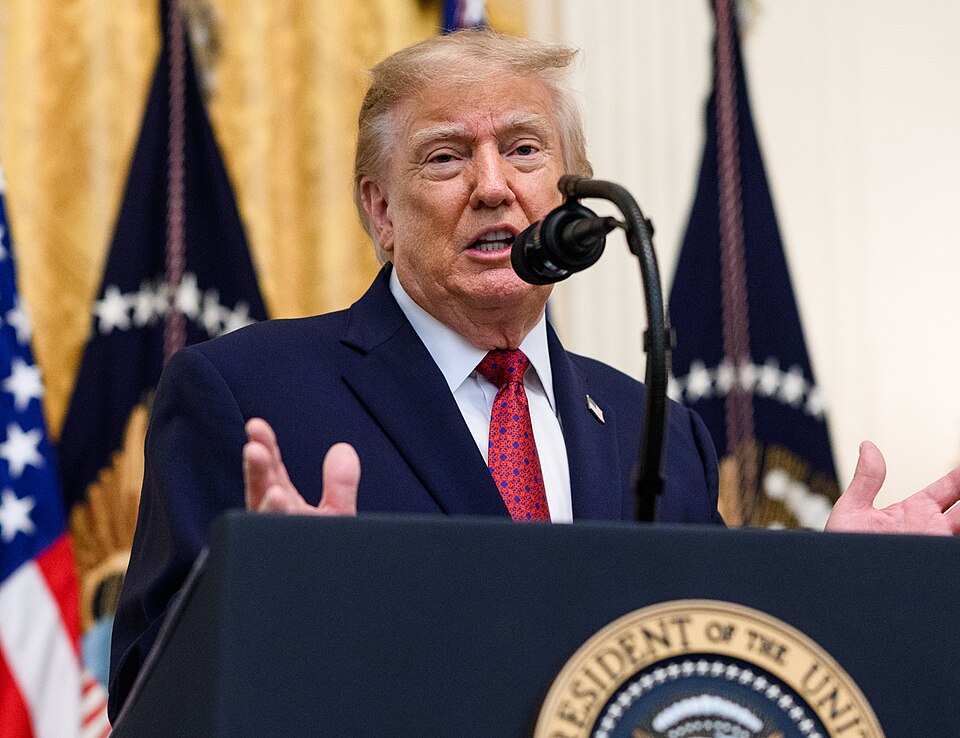
Here’s what Trump did.
President Donald Trump made an unexpected move following the Republican Party’s devastating defeat in the 2026 midterm elections, choosing to highlight major White House construction projects as Democrats celebrated taking control of Congress.
With Republicans facing a difficult political reality after losing both the House and Senate, Trump appeared determined to shift attention toward his administration’s accomplishments.
During a public appearance Wednesday, November 4, the president spent much of his time discussing a new White House ballroom, an upgraded helicopter landing area, and other improvements across Washington, D.C.
However, the conversation eventually turned to the election results, with Trump acknowledging that one of his administration’s biggest foreign policy decisions may have contributed to Republican losses.
His response offered an early indication of how the White House intends to approach the remaining two years of his presidency.
Trump Focuses On White House Construction After Republican Losses
Rather than opening his appearance with an extended discussion of the election results, Trump concentrated on construction projects that he believes will leave a lasting legacy in the nation’s capital.
The president devoted considerable attention to the White House ballroom, describing the building’s design and architectural details.
He highlighted its marble features, Corinthian columns, and other elements intended to create an impressive space for future presidential events.
Trump also promoted improvements to the White House helicopter landing area, which he has previously described as a necessary upgrade.
During the appearance, the president signed the final steel beam for the ballroom before watching workers lift it into position.
The ceremony marked another milestone in a project that has become one of his administration’s most prominent construction initiatives.
Trump’s enthusiasm for the development was consistent with his decades-long interest in real estate, architecture, and large-scale construction.
Still, the timing attracted attention because the appearance came immediately after Republicans suffered significant electoral setbacks.
Democrats Deliver Major Blow To Republican Control Of Congress
The November 3 midterm elections produced a dramatic shift in Washington’s political balance.
Democrats won control of both the House of Representatives and the Senate, bringing an end to Republican control of the legislative branch.
The outcome creates substantial challenges for Trump’s remaining legislative agenda.
For the first two years of his second term, the president benefited from Republican majorities that generally supported his administration’s priorities.
That political advantage will disappear when the newly elected Congress takes office in January.
Democratic lawmakers will gain greater authority over congressional committees, legislative negotiations, and investigations involving the executive branch.
Republicans, meanwhile, will face difficult questions about what contributed to the losses and how the party can rebuild support before the 2028 presidential election.
The results also place additional pressure on the administration to address economic concerns that played an important role in voters’ decisions.
Trump Admits Iran Conflict May Have Hurt Republicans
One of the most notable moments following the election came when Trump acknowledged that the conflict with Iran may have contributed to the Republican Party’s poor performance.
The military confrontation has affected global energy markets, contributing to higher fuel prices and increased financial pressure on American households.
Those economic consequences have become a major political concern.
Rising gasoline prices can affect far more than the cost of filling a vehicle. Higher transportation and energy expenses can also increase costs throughout the economy.
For households operating on carefully managed budgets, those increases can make everyday expenses more difficult to control.
Trump recognized that the conflict likely played a role in the election results, but he defended his administration’s actions.
The president maintained that preventing Iran from developing nuclear weapons remained a critical national security objective.
He also indicated that he would make the same decision again, despite the political consequences.
His remarks demonstrated that he remains committed to defending the administration’s national security policies even after a significant electoral defeat.
Trump’s White House Projects Draw Renewed Attention
Beyond the ballroom and helicopter landing area, Trump discussed additional plans for improving Washington, D.C.
Among the ideas receiving attention were a statue garden and recreational development projects near prominent national landmarks.
The president has repeatedly expressed interest in improving federal properties and public spaces.
His administration has also pursued changes to the White House grounds and other highly visible locations.
Supporters of these efforts argue that maintaining and improving historic government properties can provide long-term benefits.
Critics, however, have questioned the administration’s priorities, particularly when Americans are expressing concerns about household expenses and economic uncertainty.
The contrast became particularly noticeable following the midterm elections.
While voters had just delivered a major political setback to Republicans, Trump remained enthusiastic about construction milestones and architectural improvements.
Whether these projects ultimately become an important part of his presidential legacy remains to be seen.
Trump Responds To Questions About His Administration
Trump also addressed speculation about possible changes within his administration following the election losses.
The president rejected suggestions that Defense Secretary Pete Hegseth was about to lose his position.
He also discussed the possibility of Hegseth pursuing a future political role, including a potential appointment to the Senate.
Meanwhile, questions surrounding the Republican Party’s future leadership continued to emerge.
Vice President JD Vance remains a prominent figure in discussions about the 2028 presidential election, although Trump suggested that Vance’s eventual plans were not certain.
These discussions come as Republicans begin evaluating the future of the party after losing their congressional majorities.
For the White House, maintaining stability within the administration could become increasingly important as political opposition intensifies.
Trump’s comments suggested that he is not preparing to make sweeping personnel changes simply because Republicans experienced an unfavorable election night.
Democrats Prepare To Challenge Trump’s Agenda
The incoming Democratic majorities will have significant opportunities to influence the direction of federal policy.
Congressional leaders are expected to focus on issues including government spending, the economy, foreign policy, and oversight of the executive branch.
Senate Democratic leader Chuck Schumer has signaled strong opposition to major elements of Trump’s political agenda.
That could make negotiations especially difficult on issues where the two parties remain deeply divided.
Nevertheless, Trump has expressed a willingness to work with Democratic lawmakers when agreements are possible.
The president will also retain the constitutional authority to veto legislation passed by Congress.
As a result, Democrats will not have unlimited power to implement their priorities without considering the White House’s position.
The divided government could lead to prolonged negotiations over federal spending, immigration, healthcare, and other major policy questions.
It may also create opportunities for bipartisan agreements on issues where Republicans and Democrats share common interests.
What Happens Next For Trump And Republicans?
The Republican Party now faces a crucial period of political reassessment.
The midterm results suggest that economic concerns, including rising living expenses and energy prices, influenced voters across the country.
Republican leaders will need to determine how to address those concerns while maintaining support for the administration’s broader policies.
Trump, meanwhile, faces the challenge of governing alongside a Congress controlled by Democrats.
Although his legislative options will become more limited, he will retain considerable executive authority and the ability to influence national political debates.
The president’s immediate response to the election defeat suggests that he intends to continue emphasizing his administration’s work rather than allowing the results to dominate every public appearance.
His decision to promote White House construction projects also reflects his longstanding interest in leaving a permanent mark on the nation’s capital.
But the next two years will likely be defined by larger questions involving economic conditions, national security, congressional oversight, and the political direction of the country.
The Bottom Line
Trump’s first public appearance after the Republican midterm defeat was notable for what he chose to emphasize.
Instead of making the election results the centerpiece of his remarks, the president focused heavily on White House improvements, including the new ballroom and helicopter landing area.
He later acknowledged that the Iran conflict and its economic consequences may have contributed to Republican losses, while defending his administration’s decisions.
With Democrats preparing to take control of Congress, Trump’s ability to advance his agenda will face a major test.
The president appears determined to press forward, but the results of the 2026 midterms have fundamentally changed the political landscape in Washington.