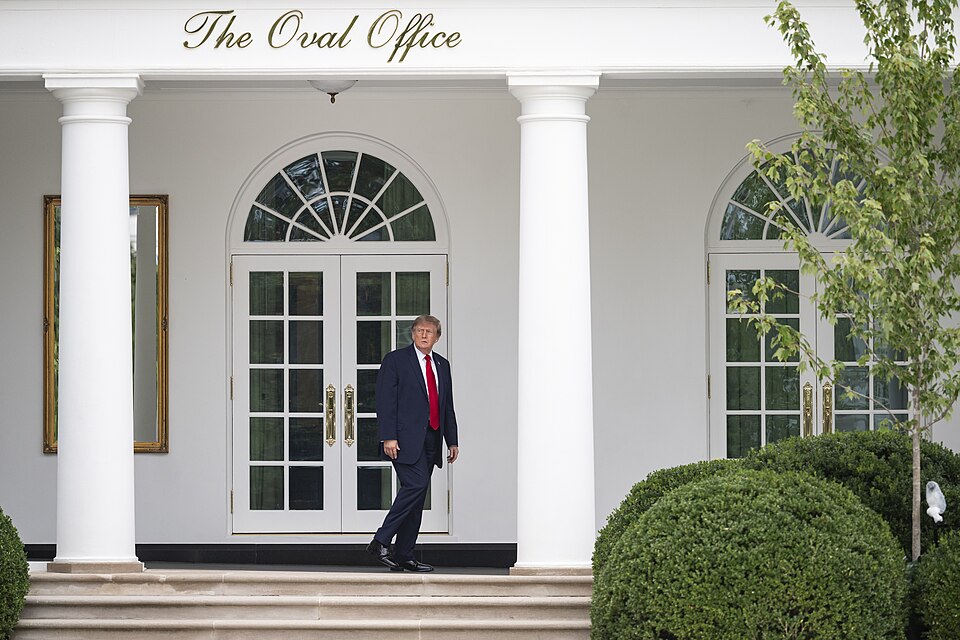
Here’s what Trump faces now.
President Donald Trump is facing a potentially historic political setback as a prominent election forecaster warns that Republicans could lose control of both chambers of Congress in the upcoming November midterm elections.
The scenario would be especially significant because a simultaneous change in control of the House and Senate has occurred only twice in the past 70 years.
With Election Day scheduled for November 3, the latest predictions are raising questions about whether Republicans can maintain their congressional majorities and protect Trump’s legislative agenda.
Political analyst Nate Silver, founder of FiveThirtyEight, has issued a forecast suggesting Democrats are in a stronger position than many observers previously believed.
His recently reported projections gave Democrats a 94% chance of winning the House of Representatives and a 75% chance of capturing the Senate.
If Democrats succeed in taking both chambers, the outcome could dramatically change the political landscape in Washington during the final two years of Trump’s presidency.
Nate Silver Warns of Historic Midterm Election Outcome
Silver’s forecast has attracted attention because of the possibility that both chambers of Congress could change party control in the same election.
Such an outcome is relatively rare in modern American politics.
Although the president’s party frequently loses congressional seats during midterm elections, losing both the House and Senate simultaneously is a much less common development.
Silver believes Democrats have a credible opportunity to accomplish that in November.
His analysis suggests Democratic candidates are performing well in several competitive races, including contests in states that Republicans have traditionally viewed as favorable territory.
The forecaster has also challenged the more cautious outlook offered by some other political analysts, arguing that Democrats’ position is stronger than simply counting individual Senate contests as toss-ups might suggest.
However, election forecasts represent probabilities, not guaranteed outcomes. Polling errors, changing voter preferences, and turnout differences can still produce unexpected results.
Silver Bulletin also announced on October 21 that it had excluded polls from Wedgewood Polls after the firm acknowledged fabricating much of its polling data. That development underscores why forecasts should be evaluated using the latest available information.
Republicans Face Critical Battle for Senate Control
The Senate could become the most consequential battleground in the upcoming elections.
Republicans entered the midterm campaign with a 53-47 Senate majority, meaning Democrats need a net gain of four seats to secure control.
Several races could play an important role in determining whether that happens.
Among the states attracting national attention are Ohio, Texas, Alaska, Maine, and North Carolina.
These contests are especially important because Democrats must win seats in territory where Republicans have demonstrated considerable electoral strength.
While polling has placed several Democratic candidates in competitive positions, Republican candidates still have opportunities to overcome narrow deficits.
In closely contested Senate races, even modest shifts in voter turnout could determine the winner.
For Trump, the outcome carries consequences extending beyond ordinary partisan competition.
A Republican-controlled Senate would make it easier for the administration to secure confirmation of federal judges and senior government officials.
A Democratic majority, by contrast, could block or delay some of those appointments.
Supreme Court Appointments Could Be at Stake
One of the most consequential issues involving Senate control is the future of the federal judiciary.
The Senate has constitutional responsibility for confirming presidential nominees to federal courts, including the Supreme Court.
If Republicans maintain their majority, Trump would have a more favorable path to confirming judicial nominees during the remainder of his term.
If Democrats regain control, the confirmation process could become considerably more difficult.
That distinction could become especially important if a Supreme Court vacancy occurs before Trump leaves office.
Supreme Court justices serve lifetime appointments, meaning the decisions made during one presidency can influence federal law for decades.
For voters concerned about constitutional interpretation, judicial independence, and the future direction of the Supreme Court, the Senate election results could have lasting implications.
Republicans Have Reasons to Question the Predictions
Despite Silver’s forecast, Republicans still have several potential advantages heading into Election Day.
One is the substantial financial support available to GOP candidates and Republican-aligned organizations.
Republicans have entered the final weeks of the campaign with a significant spending advantage, giving candidates additional resources for advertising, voter outreach, and turnout operations.
Another factor is the possibility of polling errors.
In previous elections, some surveys have underestimated Republican support, particularly among voters who are difficult for pollsters to reach.
That history does not guarantee another polling surprise, but it offers a reminder that projected outcomes can differ from actual election results.
Republicans also face a Senate map that requires Democrats to win multiple difficult races.
Even if the Democratic Party succeeds in capturing the House, that would not automatically guarantee victory in the Senate.
Ultimately, the elections will be determined by individual state and congressional district contests rather than national polling averages alone.
What Happens if Democrats Take Control of Congress?
A Democratic victory in both chambers would create substantial challenges for Trump’s administration.
Republicans could find it much harder to advance legislation dealing with taxes, immigration, federal spending, and other major policy priorities.
Democrats would also gain greater authority to investigate the administration through congressional committees.
A Democratic House could launch additional oversight proceedings, request administration documents, and hold hearings involving senior government officials.
Control of the Senate would provide Democrats with additional influence over presidential appointments and major legislative negotiations.
However, winning Congress would not give Democrats unrestricted authority to enact their preferred policies.
Trump would retain the presidential veto, and Senate procedural rules could still limit the passage of certain legislation.
The result could be an extended period of divided government, with both parties forced to negotiate over spending bills and other important federal decisions.
Economy and Cost of Living Remain Major Election Issues
While election forecasts have drawn considerable attention, voters are also focused on issues that affect their daily lives.
The cost of groceries, gasoline, housing, healthcare, and other household expenses continues to shape political discussions nationwide.
Both parties are attempting to convince voters that their policies offer the better path toward economic stability.
Republicans are emphasizing their legislative priorities and economic proposals, while Democrats are highlighting affordability concerns and criticizing the administration’s record.
Immigration enforcement, federal government spending, and national security are also important issues in the campaign.
For many Americans, these practical concerns may ultimately carry more weight than political predictions.
The challenge for Republicans is convincing enough voters that continued GOP control of Congress would produce better results.
Democrats, meanwhile, must demonstrate that public dissatisfaction will translate into sufficient support at the ballot box.
November Election Could Define Trump’s Final Two Years
With the 2026 midterm elections approaching, the stakes are unusually high for both political parties.
Silver’s forecast points toward the possibility of an exceptionally rare transfer of congressional power.
But Republicans still have opportunities to defend their majorities, and the results remain uncertain until voters cast their ballots.
The outcome will help determine whether Trump can continue advancing his agenda through a Republican-controlled Congress or must negotiate with Democratic majorities.
For the president, the difference could influence everything from federal spending and immigration legislation to judicial confirmations and congressional investigations.
With both chambers of Congress potentially in play, November 3 could become one of the most consequential election days of Trump’s second presidency.
Whether the historic scenario becomes reality will ultimately depend on voters, not political forecasts.