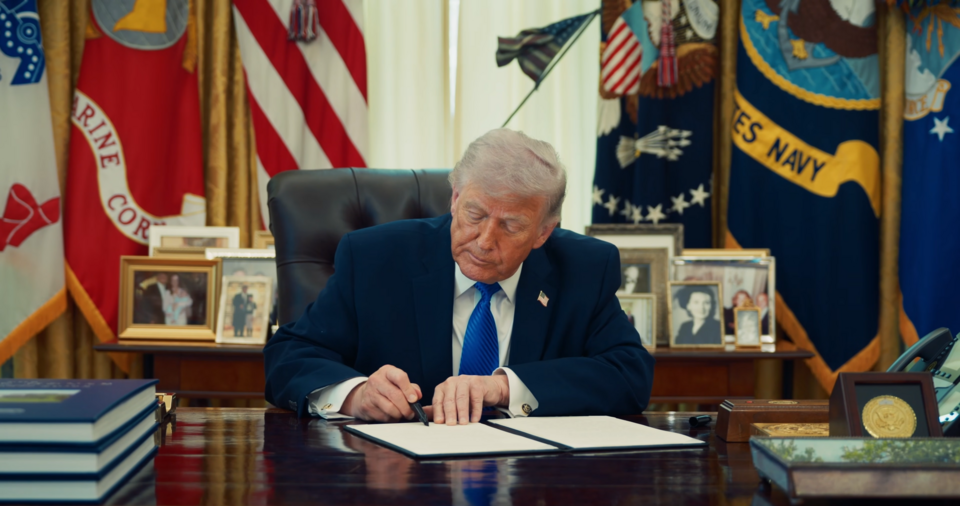
Trump said some surprising statements.
President Donald Trump is defending a prominent American technology executive following explosive revelations involving an extramarital affair, a suspected Chinese intelligence operative, and growing concerns about national security.
The controversy surrounds Nvidia CEO Jensen Huang, one of the most influential figures in America’s technology industry. Huang has acknowledged being unfaithful to his wife as his company investigates reports that he may have been targeted by a foreign intelligence operation.
Despite the allegations, Trump has expressed confidence in Huang, praising his contributions to American technology and suggesting that the executive deserves an opportunity to explain the circumstances.
The president’s remarks come as the scandal raises new questions about China’s intelligence activities and the security of American technology companies.
Trump Defends Nvidia CEO Following Affair Revelation
Speaking to reporters Sunday, Trump made clear that he was not ready to abandon Huang over the controversy.
The president described the Nvidia chief executive as an honorable individual who has contributed significantly to America’s technological leadership.
“I think he’s an honorable guy,” Trump said.
Trump also praised Huang’s accomplishments, saying he had done an outstanding job for the United States.
When asked whether Huang should continue leading Nvidia, the president indicated that he believed the executive should remain in his position.
Trump’s comments were particularly noteworthy because Huang has developed a close relationship with the administration while playing a central role in the growth of America’s artificial intelligence industry.
However, the president acknowledged that he did not have all the facts surrounding the allegations.
Cheating Scandal Sparks Chinese Espionage Concerns
The controversy began attracting widespread attention following reports that Huang had a personal relationship with a Chinese businesswoman suspected by American intelligence officials of gathering information for Beijing.
The woman, identified in news reports as Alice Huang, has worked as an executive at Megaspeed, a technology company that purchases advanced computer chips.
According to reporting about the matter, American intelligence officials suspect that she may have participated in an intelligence-gathering operation involving Nvidia.
Those allegations have not been established as fact in a public legal proceeding.
Huang subsequently acknowledged that he had been unfaithful to his wife and issued an apology to his family, colleagues, and company shareholders.
He accepted responsibility for his personal conduct while pledging to cooperate with an independent investigation.
The admission confirmed the personal misconduct, but it did not establish that Huang knowingly shared sensitive information with Chinese intelligence.
That distinction remains central to the ongoing controversy.
Trump Reveals Conversation With Huang
On Monday, Trump disclosed that he had personally spoken with Huang about the allegations.
During remarks at the White House, the president explained that he directly questioned the executive about whether he knew the woman was allegedly connected to Chinese intelligence.
According to Trump, Huang denied having any knowledge of such a connection.
The president said he believed Huang’s explanation.
Trump also confirmed that the FBI was examining the matter, although the full scope of the federal investigation has not been publicly established.
The president suggested that Huang could ultimately emerge from the controversy without serious professional consequences.
His response highlights the difference between an admitted personal mistake and the unresolved question of whether a foreign intelligence operation compromised American interests.
Nvidia Opens Independent Investigation
Nvidia’s board of directors has launched an independent investigation into whether Huang was targeted by a foreign intelligence effort.
The company plays an important role in the global technology industry, particularly through its production of advanced computer chips used to develop artificial intelligence systems.
Those chips are essential to modern computing and have become increasingly significant in the competition between the United States and China.
Nvidia’s board has stated that it currently has no reason to believe company secrets or American national security were compromised.
Nevertheless, directors are examining the circumstances surrounding the allegations.
Huang has pledged his full cooperation and remains the company’s chief executive.
The investigation could help determine whether the controversy was limited to a personal relationship or involved a broader effort to obtain sensitive business information.
China’s Technology Ambitions Face Renewed Scrutiny
The scandal comes at a time when Washington is paying close attention to China’s efforts to advance its semiconductor and artificial intelligence industries.
Advanced computer chips are increasingly important to American economic competitiveness, scientific research, and national defense.
Federal officials have imposed restrictions on certain semiconductor exports to China over concerns that advanced American technology could strengthen Chinese military capabilities.
Nvidia has been at the center of those policy discussions.
Huang has advocated for American technology companies to maintain access to international markets, including China.
Supporters of expanded trade believe American companies benefit from competing globally. Advocates of tighter restrictions argue that protecting sensitive technology must remain a national security priority.
The controversy has intensified scrutiny of those competing interests.
However, there is no publicly established evidence that Huang’s positions on semiconductor exports were influenced by the alleged intelligence operation.
Chinese officials have also rejected the espionage accusations.
Trump’s Relationship With Nvidia Remains Important
Huang has become a familiar figure in Washington as Nvidia’s business has expanded alongside the rapid development of artificial intelligence.
The executive has participated in discussions involving American technology leadership, semiconductor manufacturing, and international trade.
Trump has repeatedly emphasized the importance of keeping the United States competitive in emerging industries.
His administration has also sought to strengthen America’s position against China in strategically important sectors.
That makes the allegations surrounding Huang particularly sensitive.
The president must balance his support for an influential American business leader with the broader responsibility of protecting national security.
For Nvidia, the controversy presents challenges involving corporate leadership, shareholder confidence, and the security of its operations.
For federal investigators, the central question remains whether any sensitive information was obtained or improperly disclosed.
Serious Questions Remain Unanswered
Although Huang has admitted to the affair, investigators have not publicly established that he knowingly assisted a foreign intelligence service.
Nvidia’s independent inquiry remains underway, and the company has expressed confidence in its chief executive.
Trump, meanwhile, continues to defend Huang’s professional record and has indicated that he believes the executive’s account of events.
The situation illustrates how personal conduct can become a matter of national concern when it involves individuals responsible for strategically important American industries.
It also reinforces the importance of protecting sensitive technology as competition between Washington and Beijing continues.
For now, Trump’s position is clear: He believes Huang deserves the opportunity to explain himself and does not consider the allegations sufficient reason to abandon his support.
Whether the investigation produces additional findings remains to be seen.
The outcome could have implications not only for Nvidia’s leadership but also for the broader discussion about foreign intelligence threats, corporate accountability, and America’s technological future.