They are cracking down.
The Trump administration’s Department of Justice took decisive action this weekend, putting fresh pressure on Minnesota’s Democratic leadership and escalating a growing standoff over law enforcement, immigration policy, and election integrity.
Attorney General Pam Bondi sent a sharply worded letter to Minnesota Governor Tim Walz, calling on state officials to restore what she described as “the rule of law” amid mounting public safety and accountability concerns.
In the letter, Bondi urged Minnesota leaders to cooperate fully with federal immigration authorities, abandon sanctuary-style policies, and provide transparency regarding state-administered welfare programs. Her request comes as Minnesota faces intense scrutiny over one of the largest public assistance fraud scandals in U.S. history.
Bondi also asked the state to allow federal review of its voter registration rolls to ensure compliance with federal election law, framing the request as a standard safeguard rather than a political maneuver.
“These are practical, commonsense steps,” Bondi wrote, adding that cooperation would help stabilize the state and protect taxpayers.
The DOJ’s intervention followed a deadly law enforcement incident in Minneapolis involving federal officers, the latest episode in a series of high-profile enforcement confrontations that have kept Minnesota in the national spotlight. Local officials confirmed that a 37-year-old man, identified as Alex Jeffrey Pretti, died following the encounter.
Minnesota has remained under sustained pressure since early January, when another fatal incident involving an Immigration and Customs Enforcement officer intensified debate over federal enforcement and state resistance. The situation has fueled broader concerns about public safety, accountability, and the consequences of defying federal law.
Democratic leaders quickly pushed back. Ken Martin, head of the Democratic National Committee, accused the Trump administration of overreach and claimed the DOJ’s actions were politically motivated. He said national Democrats are prepared to challenge the administration’s efforts in court.
President Donald Trump, however, placed the blame squarely on Minnesota’s leadership. In a series of statements, Trump tied the unrest to what he called years of unchecked fraud, weak border enforcement, and refusal to cooperate with federal authorities.
According to the president, billions of taxpayer dollars were lost due to mismanagement and corruption, while state officials focused on rhetoric instead of recovery and reform.
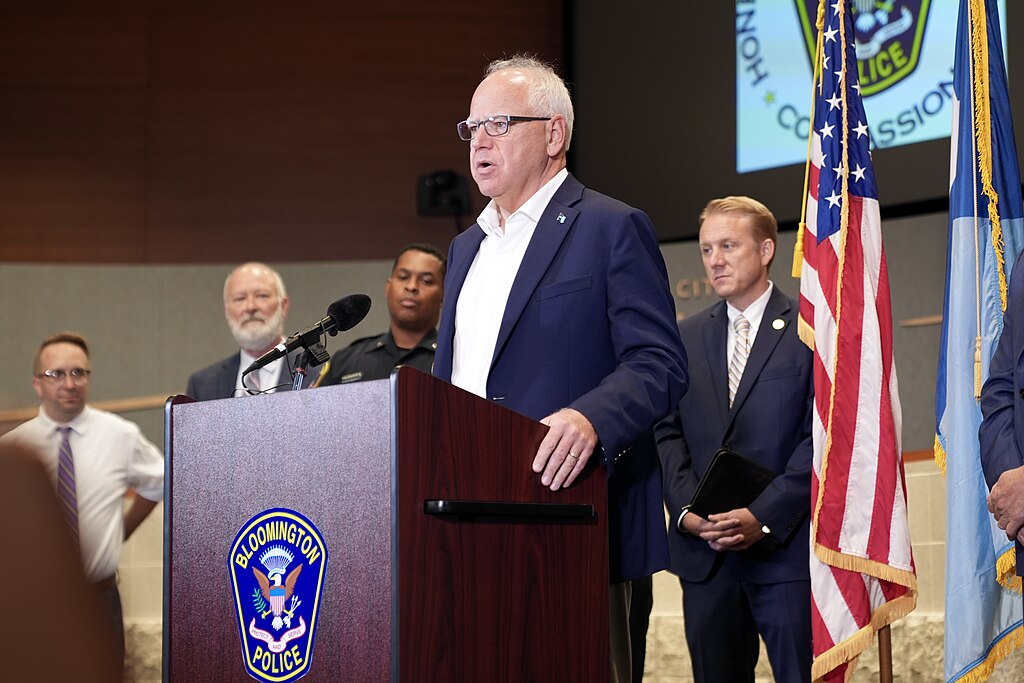
Governor Walz responded by demanding that federal enforcement operations be scaled back, arguing they have worsened tensions. At a weekend press conference, he accused the administration of creating instability—claims the White House sharply disputes.
The confrontation now sets up a broader political and legal battle between the Trump Justice Department and Democratic leadership in Minnesota. At stake are fundamental questions of law enforcement authority, election oversight, immigration enforcement, and fiscal responsibility—issues that resonate deeply with voters concerned about safety, transparency, and the proper role of government.