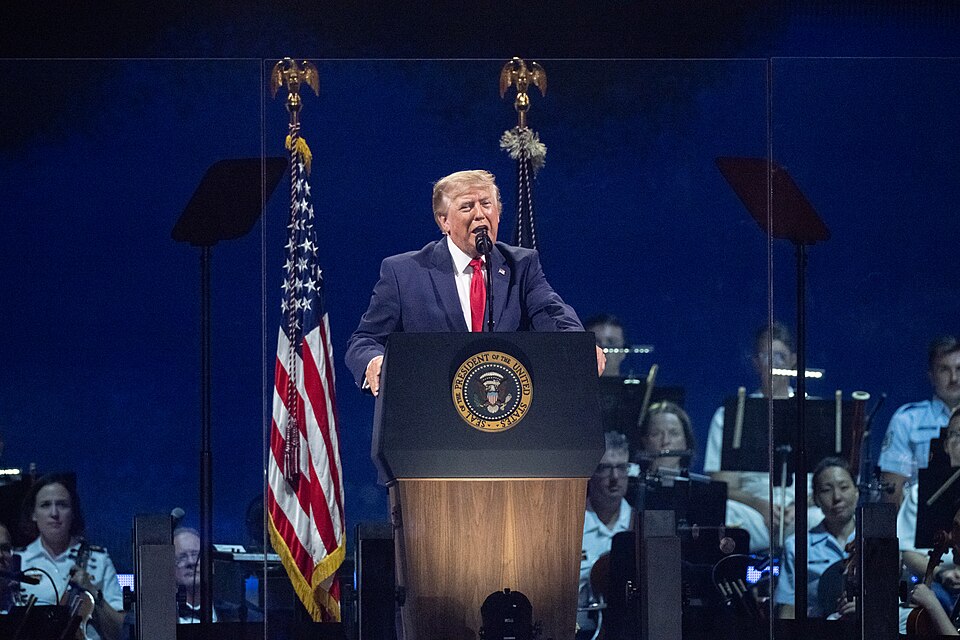
Here’s what Trump wants.
Millions of Americans receiving food stamp benefits could soon face new eligibility requirements after the Trump administration restored a policy allowing states to deny Supplemental Nutrition Assistance Program (SNAP) benefits to certain parents who refuse to pay court-ordered child support. The change reverses Biden-era guidance and gives states greater flexibility to link public assistance with child support enforcement. Supporters say the move promotes personal responsibility, protects taxpayer dollars and encourages parents to meet their legal obligations before relying on government aid.
The policy does not automatically remove benefits nationwide. Instead, it gives each state the option to adopt stricter eligibility standards for certain noncustodial parents who fail to cooperate with child support requirements.
Why Trump Changed the SNAP Rule
The U.S. Department of Agriculture recently withdrew guidance issued during the Biden administration that discouraged states from considering child support cooperation when determining SNAP eligibility.
The Trump administration argues the previous policy reduced an important enforcement tool that could help ensure parents financially support their children before receiving taxpayer-funded assistance.
Alex Adams, assistant secretary for family support at the Department of Health and Human Services’ Administration for Children and Families, said the policy is intended to distinguish between parents who genuinely cannot afford to make child support payments and those who simply choose not to meet their obligations.
According to Adams, the goal is not to punish families facing legitimate financial hardship. Instead, the administration wants parents who are capable of paying child support to establish a plan and comply with their legal responsibilities.
Administration officials say strengthening child support enforcement benefits both children and taxpayers by encouraging greater financial responsibility.
How the New Food Stamp Rule Works
The policy change restores authority that states previously had during President Donald Trump’s first administration.
States that choose to participate may deny SNAP benefits to certain noncustodial parents who refuse to cooperate with child support enforcement efforts. Parents who are unable to pay because of genuine financial hardship are treated differently from those found to be unwilling to cooperate.
Importantly, participation is voluntary for states.
Each state government will decide whether to adopt the restored eligibility option, meaning the rule could be enforced differently across the country.
During the Biden administration, relatively few states used this authority after federal guidance discouraged the practice. USDA reports showed Arkansas, Kentucky and Mississippi were among the states utilizing some form of child support-related SNAP restrictions.
The Trump administration hopes additional states will now consider adopting similar policies.
Millions of Families Could Be Affected
SNAP remains one of the nation’s largest federal assistance programs, providing food assistance to approximately 42 million Americans.
Federal figures indicate that roughly 3.8 million SNAP recipients are parents with formal child support orders, including both custodial and noncustodial parents.
That does not mean every one of those individuals is at risk of losing benefits.
Only certain noncustodial parents who are required to pay child support, refuse to cooperate with enforcement efforts and live in states that adopt the policy could potentially become ineligible.
Still, administration officials say the size of the program highlights why stronger enforcement could have significant financial and social implications.
Average SNAP benefits currently total about $190 per recipient each month, representing billions of taxpayer dollars distributed annually through the federal food assistance program.
Child Support Enforcement Takes Center Stage
Federal statistics show that child support delinquency remains a widespread issue.
According to government data, roughly one-quarter of noncustodial parents fail to make required child support payments, while another significant percentage pay only part of what they owe.
Supporters of the new policy argue taxpayers should not be expected to subsidize parents who are capable of supporting their children but refuse to do so.
Administration officials also point to the broader purpose of the child support program, which serves more than 12 million children each year and is designed to help families reduce poverty while decreasing reliance on public assistance.
The Trump administration believes stronger enforcement can improve payment compliance while helping more children receive the financial support they are legally entitled to receive.
A Return to Trump’s First-Term Policy
The restored guidance closely mirrors a policy first adopted in 2019.
Under that framework, state child support agencies determine whether a parent has made a good-faith effort to cooperate with child support enforcement.
Officials distinguish between someone who cannot comply because of financial hardship and someone who refuses to cooperate despite having the ability to do so.
Parents determined to be unwilling to cooperate may become ineligible for SNAP benefits if their state chooses to implement the policy.
Supporters say the approach creates accountability while preserving assistance for Americans facing genuine financial difficulties.
Passport Revocations Add More Pressure
The administration has also expanded child support enforcement through other federal programs.
According to the Department of Health and Human Services, more than 10,000 passports have been revoked since President Trump returned to office in January 2025 for certain parents with significant child support arrears.
Officials say the initiative has already encouraged some delinquent parents to bring their accounts current.
According to Adams, approximately $2.2 million has been collected from noncustodial parents who made payments after facing possible passport revocation.
The administration views these enforcement measures as additional tools to encourage compliance with existing child support laws.
What Happens Next?
The USDA’s decision does not create a nationwide food stamp ban for parents behind on child support.
Instead, it restores state flexibility, allowing governors and state lawmakers to decide whether to incorporate child support cooperation into SNAP eligibility requirements.
As more states evaluate the policy, implementation could vary significantly across the country.
Supporters believe the change strengthens accountability, protects taxpayer dollars and reinforces the principle that parents should financially support their own children before depending on public assistance.
Critics, meanwhile, are expected to argue that the policy could make it harder for some struggling families to access food assistance.
The debate is likely to continue as states decide whether to adopt the restored rule and as lawmakers continue discussing broader reforms to the nation’s food assistance programs.
One thing is clear: the Trump administration has made child support enforcement and government accountability central priorities in its approach to SNAP, setting the stage for an ongoing national debate over how federal food assistance should be administered.