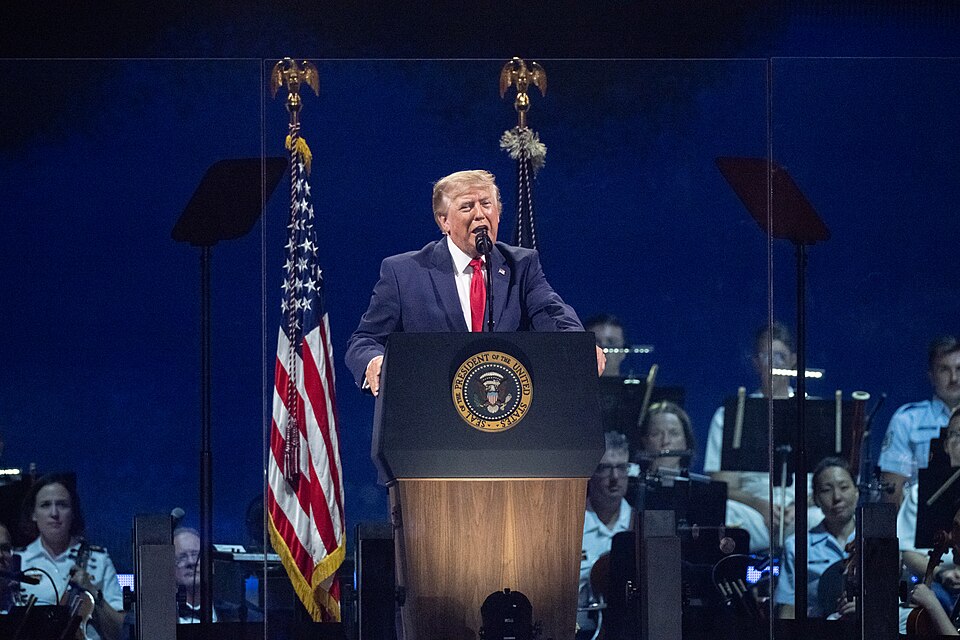
Trump made his demand very clear.
President Donald Trump is renewing his battle with Federal Reserve Governor Lisa Cook, setting the stage for another potentially significant showdown over presidential authority, the independence of the Federal Reserve and the allegations that have followed Cook for nearly a year.
According to a letter obtained by The Hill, White House presidential aide Dan Scavino informed Cook on Wednesday that Trump is considering another attempt to remove her from the Federal Reserve.
The latest development comes after the Supreme Court allowed Cook to remain in office while her legal challenge moved forward.
At the center of the dispute are allegations involving mortgage documents connected to properties in Michigan and Georgia. Cook has denied wrongdoing, while her attorneys have argued that Trump does not have legitimate legal grounds to remove her.
Now, the White House appears prepared to revisit the issue.
White House Gives Cook Three Weeks To Respond
According to The Hill’s account of the letter, the administration believes there is sufficient reason to question whether Cook provided inaccurate information on one or more mortgage agreements.
The letter reportedly gives Cook three weeks to provide a written response explaining the disputed statements and to submit evidence supporting her position.
ABC News first reported the latest White House action.
The new approach is important because the Supreme Court previously raised concerns about whether Cook had received an adequate opportunity to defend herself before Trump sought her removal.
By formally requesting a response before taking additional action, the administration could be attempting to address that procedural problem.
However, the ultimate legal question remains unsettled: Does Trump have sufficient “cause” under federal law to remove Cook from the Federal Reserve Board?
That question could eventually return to the Supreme Court.
Mortgage Allegations Started The Fight
The controversy began last year after Federal Housing Finance Agency Director Bill Pulte raised questions about Cook’s mortgage records.
Pulte alleged that Cook had identified properties in Michigan and Georgia as primary residences in connection with mortgage financing.
Primary-residence classifications can matter because lenders may offer different interest rates, down-payment requirements or other terms depending on how a property will be used.
Trump subsequently moved to remove Cook from the Federal Reserve, an extraordinary action that immediately triggered a legal battle.
Cook challenged the attempted removal and rejected the accusations against her.
Her legal team has also argued that the mortgage dispute was being used as justification for a broader political conflict between Trump and the Federal Reserve.
Supreme Court Blocked Trump’s Earlier Attempt
The dispute eventually reached the Supreme Court, which ruled in June that Cook could remain in her position while the litigation continued.
The decision represented an important victory for Cook, but it did not necessarily settle the larger issue in her favor.
Chief Justice John Roberts focused in part on whether Cook had been given sufficient due process to respond to the accusations before Trump attempted to remove her.
Just as importantly, the court did not make a final determination about whether the underlying allegations could eventually provide sufficient grounds for dismissal.
Roberts indicated that determining whether Cook could legally be removed for cause would depend partly on establishing the facts and evaluating them under the appropriate legal standards.
That leaves the door open for another major court battle.
Trump’s New Strategy Could Change The Case
The latest White House letter could be significant because the administration appears to be proceeding differently this time.
Instead of immediately attempting another dismissal, Cook is reportedly being given several weeks to answer the allegations and present evidence.
If Trump ultimately decides to remove her after reviewing that response, the White House could argue that Cook received the opportunity to defend herself that the Supreme Court previously found important.
Cook’s attorneys are expected to challenge any renewed attempt.
Her legal team issued a statement rejecting the latest allegations and promising to defend her position as well as the traditional independence of the Federal Reserve.
The attorneys maintain that the accusations do not provide Trump with valid cause to dismiss Cook.
Unless the dispute is resolved beforehand, the courts may once again be asked to determine which side has the stronger legal argument.
Why Trump Has Been Fighting The Federal Reserve
The controversy is unfolding against a much larger disagreement between Trump and the Federal Reserve over interest rates and the direction of the U.S. economy.
Trump has repeatedly pushed for lower rates, arguing that expensive borrowing hurts American consumers, businesses and the federal government.
Interest-rate decisions made by the Federal Reserve can eventually affect borrowing costs throughout the economy, including mortgages, credit cards, automobile financing and business loans.
For older Americans, Fed policy can be particularly important.
Higher rates can increase returns on certain savings products, but they can also make borrowing more expensive and put pressure on housing, investment markets and economic growth. Retirees and Americans approaching retirement may therefore experience both advantages and disadvantages when interest rates remain elevated.
The Federal Reserve has historically been given considerable independence so monetary-policy decisions can be made without direct control from elected officials.
Trump’s critics argue that aggressively targeting individual Fed officials could undermine that independence.
His supporters may see the situation differently, arguing that powerful government officials should still face scrutiny and accountability when legitimate questions are raised about their conduct.
Bigger Questions About Presidential Power
The Cook controversy therefore involves far more than a dispute over mortgage paperwork.
It could help determine how much authority a president has to remove members of the Federal Reserve Board.
Congress designed the Fed so its governors do not simply lose their jobs whenever a new president takes office. Federal law provides governors with lengthy terms and allows removal by the president “for cause.”
Exactly what qualifies as sufficient cause — and what process must be followed before removal — has now become central to the Trump-Cook dispute.
If the administration ultimately produces evidence supporting its allegations, Trump could argue that the legal standard has been satisfied.
Cook’s attorneys, meanwhile, are likely to maintain that the accusations do not justify removing a sitting governor and that the White House is attempting to interfere with an institution intended to operate independently.
What Happens Next?
The immediate question is how Cook responds to the White House.
She reportedly has three weeks to provide her explanation and supporting evidence. After reviewing that response, Trump could decide whether to move forward with another attempt to remove her.
If that happens, additional litigation appears highly likely.
The case could eventually force the Supreme Court to answer questions it previously avoided deciding, including what conduct constitutes legal cause for dismissing a Federal Reserve governor and how much procedural protection that official must receive.
The outcome could also establish an important precedent for future presidents.
For Americans watching from outside Washington, the legal arguments may sound technical. But the institution at the center of the fight has enormous influence over the economy.
Federal Reserve decisions can affect homebuyers searching for an affordable mortgage, retirees watching their investments and savings, families carrying credit-card balances, small businesses seeking loans and taxpayers concerned about the cost of servicing the national debt.
That makes the renewed battle between Trump and Cook more than another Washington personnel dispute.
It is becoming a major test of presidential authority, government accountability and the independence of one of the most powerful financial institutions in the United States.
For now, Cook remains on the Federal Reserve Board. Whether she stays there could depend on what evidence emerges next — and potentially on what the Supreme Court ultimately decides.