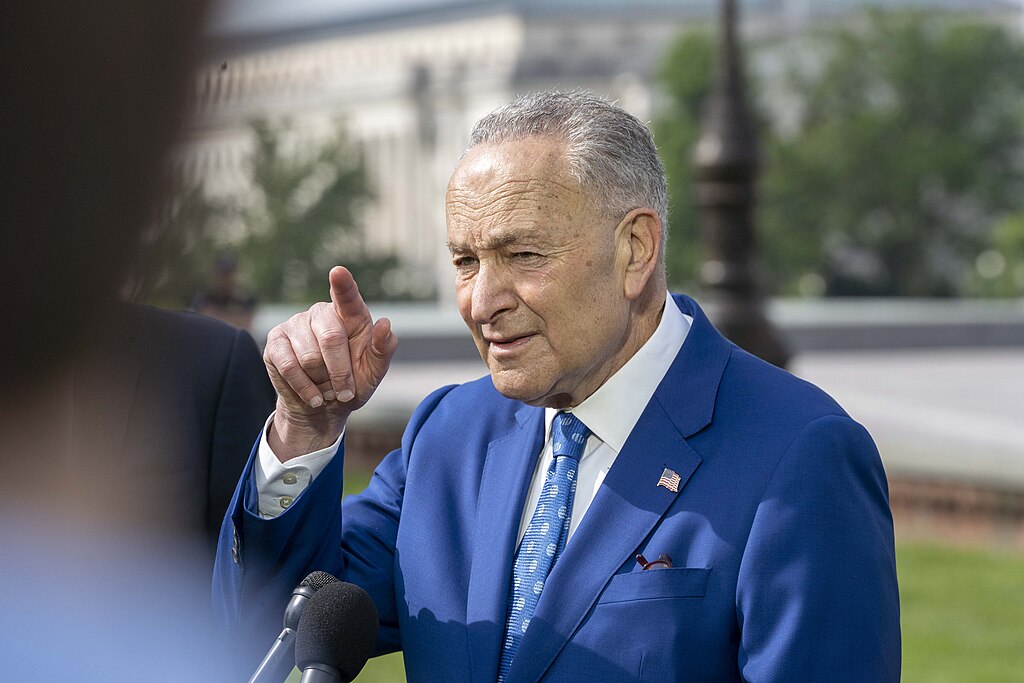
Trump is giving Schumer a chance to do the right thing.
President Donald Trump and Senate Democratic Leader Chuck Schumer appear to be inching toward a temporary agreement aimed at avoiding a partial federal government shutdown ahead of a looming funding deadline.
According to sources familiar with the discussions, the talks center on separating funding for the Department of Homeland Security (DHS) from a larger group of House-passed appropriations bills. While no final deal has been reached, negotiations remain active and are reportedly moving in a direction Democrats favor.
A White House official emphasized that President Trump has consistently prioritized keeping the government operating and avoiding disruptions that could impact public safety, disaster response, and essential services.
The official said the administration has been engaging both parties to prevent another shutdown that could delay critical resources Americans depend on.
At issue is a six-bill funding package scheduled for Senate consideration. Schumer and Senate Democrats want DHS funding removed from the broader package and instead passed as a short-term extension.
Democrats argue the delay would allow Congress more time to debate changes to Immigration and Customs Enforcement (ICE) and Customs and Border Protection (CBP). Schumer has accused federal immigration agencies of contributing to instability in communities, a claim Republicans strongly dispute.
The Democratic leader is pushing for several policy changes, including limits on ICE patrol operations, tighter rules on warrants, new federal use-of-force standards, and requirements that officers display identification, wear body cameras, and refrain from using face coverings during enforcement actions.
Despite those demands, some Republican senators are open to separating DHS funding if it allows Congress to approve the remaining government funding bills before the deadline. Members of the Senate Appropriations Committee are particularly focused on ensuring continued funding for the Department of Defense, Health and Human Services, Transportation, and other key agencies.
One Republican lawmaker noted that lawmakers face a practical choice: move forward with the bills that can pass now, or risk broader funding lapses by holding everything up.
Republican sources say the fate of the overall package now depends largely on negotiations between Schumer and the White House. Senate leadership has signaled that the administration is open to discussions, but any final agreement will require Democrats to decide how far they are willing to push their demands.
As the deadline approaches, Washington is watching closely to see whether this unusual moment of bipartisan negotiation leads to a temporary compromise—or whether familiar gridlock once again puts the government at risk of a shutdown.